Beautiful Dining Room Designs

As a self-proclaimed lover of food, I believe the dining room is the most important room in a home (next to the kitchen, of course), so picking out a table, choosing the right chairs, and adding that perfect rug to tie it all together are very important. With so many ways to style the dining room, from rustic wooden tables to sleek touches of gold, here are some favorite looks to give you some much-needed inspiration.

dining_room_feature

Clean & Neutral
Go simple with natural tufted chairs, a sleek wooden table, and tons of white
flowers. The neutral palette is really versatile, great for changing up your
tabletop for different occasions.

dining

Modern & Bold
You can still keep your dining room relatively neutral with bold, modern
pieces like these exaggerated wooden chairs and metal taxidermy.
The combination is effortless.
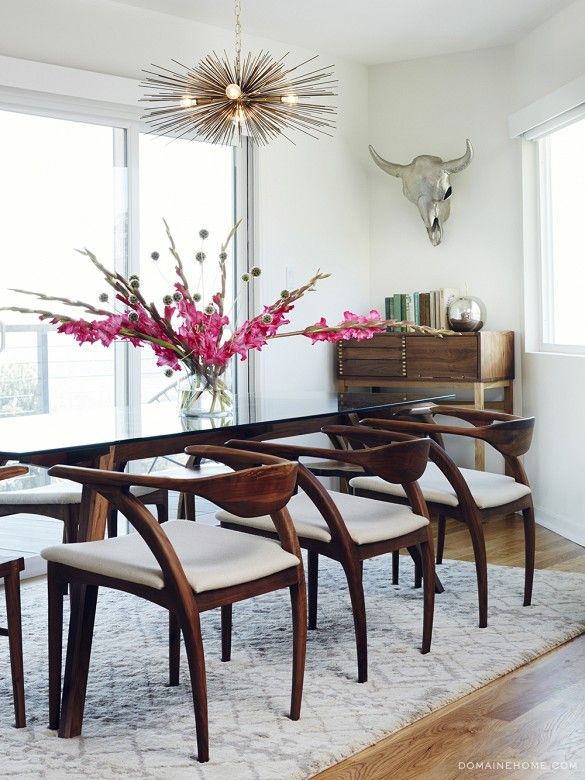
dining 2

Inspired by Scandinavian Style
We’re always a fan of Scandinavian style, especially this simple
combination of light wood and modern white chairs. The faded palette
and modern silhouettes are staples of Scandinavian design.

dinnig 3

Mix & Match
Love the idea of mixing and matching your dining room chairs.
Choose one color palette to keep the look cohesive.


dinindg

Beautiful Commute

      I have to say, there is isn’t a better way to commute than by ferry. Whether it’s a rare sunny day or a dreary rainy one, every day is an opportunity to appreciate the beauty that is the Pacific Northwest, a garden of Eden if there ever was one. Seize the day.
      ​​​

      Beautiful Lithography Stones

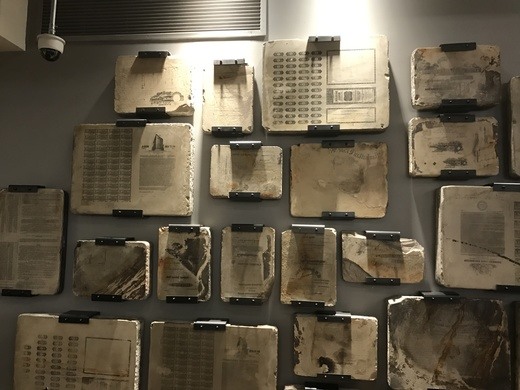
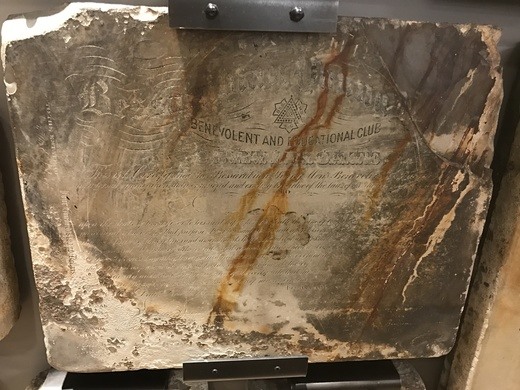
      n 2011, while the REI store in the Puck Building in Manhattan’s SoHo district was undergoing renovation, workers made an unexpected discovery. Hidden behind one of the walls of the cellar were more than 100 lithography stones from the building’s days as a printer. They are now on display on the store’s lower floor.

      1 REI  3 rei 4 rei

      The historic building got its name from the magazine Puck, the first wide-reaching humor publication in the United States, which was
      founded in 1871 and moved to lower Manhattan in 1887. It shared the space, in a mutually beneficial relationship, with its printer, J. Ottman Lithographic Company. Their shared headquarters was the largest building in the printing district at the time.

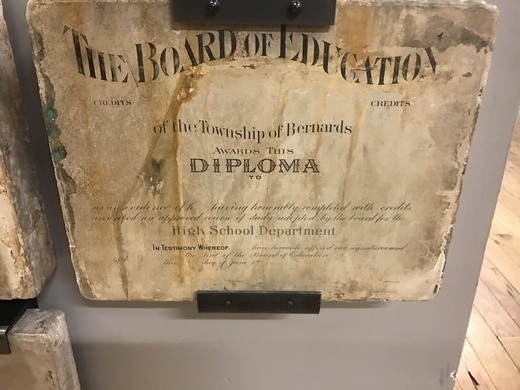
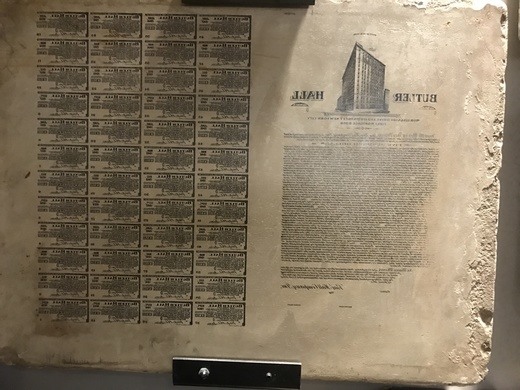
      J. Ottman Lithographic Company printed many things beyond the Puck magazines, including theatrical posters and board games. Among the works now hanging on the REI wall are a high school diploma, a certificate of election, and a mortgage bond. Some of the litho stones are in rougher shape than others.

      7 rei.jpg 5 rei 6 rei

      Most of the writing and images on the stones is “backwards,” standard practice so that the final print is the reverse of what is seen on the plate or stone. Some, though, were prepared for offset printing, which involves an additional
      step between the plate and the final product. The inked image, prepared “forwards,” or as it would be seen in the final product, is first transferred to a rubber blanket, reversing
      the image once, and then to the final surface, setting it right.

      Puck continued to operate out of the Puck Building until 1918, when it ceased publication. It was known for beautiful, full-color lithographs and sharp political satire. Statues of the magazine’s mascot, Puck, decorate the outside of the building. J. Ottman Lithographic Company shuttered around the same time.
      Other printing companies, and even another satirical magazine, have called the building home since the original tenants left.

      9 rei.jpg 10 rei.jpg 8 rei

      During REI’s renovation, a deliberate effort was made to repurpose materials from the original building. Fixtures from the steam engine that powered the presses are on permanent display, including two flywheels and the governor. Nineteenth century I. P. Frink chandeliers, newly fitted with LED lights, help light the main floor.

       Source: Atlas Obscura

      Beautiful Old World Movie House

      The Wonder Theatres were five giant, lavish movie palaces that opened around
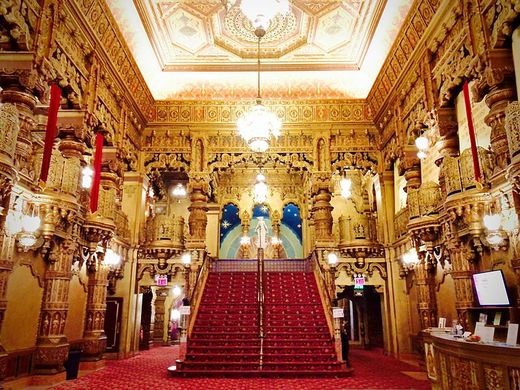
      New York City in 1929 and 1930. While cinemas were plentiful at the time, the Wonder Theatres were a cut above the rest. Built as Loew’s flagship theatres, the opulent venues were designed with all the fabulousness of the Jazz Age, and went on to provide an escape into the fantasy of Hollywood and luxury throughout the Great Depression and Second World War.

      18WONDER-triptych-

      The last of the Wonder Theatres to open was the Loew’s 175th Street Theatre, today known as the United Palace Theater. It debuted on February 22, 1930, with showings of the films Their Own Desire and Pearls and vaudeville performances
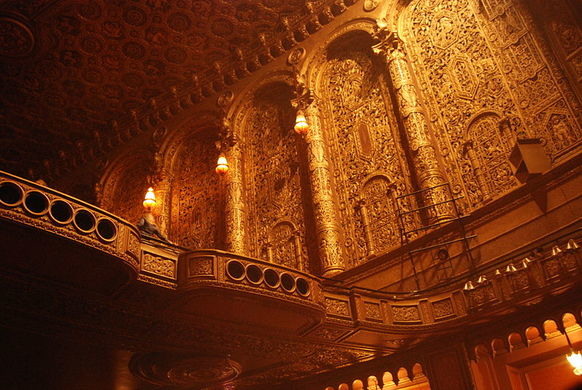
      starring Al Shaw and Sam Lee. The theater is a sight to behold. The lavish interior, much of which is filigreed, features authentic Louis XV and XVI furnishings and ornate chandeliers, while the blocky exterior is reminiscent of Mayan architecture. Its eclectic architectural style, designed by Thomas W. Lamb, was described by The New York Times as “Byzantine-Romanesque-Indo-Hindu-Sino-Moorish-Persian-Eclectic-Rococo-Deco” and a “kitchen sink masterpiece.” With more than
      3,000 seats, it is still the fourth largest venue of its kind in Manhattan.

      2014_United_Palace_from_corner

      Movie palaces eventually fell out of vogue, however, and the grand Wonder Theatres fell into decline and abandon in the late 60s and
      through the 70s. Today, two of the theaters (the Jersey Theatre in Jersey City and Kings Theatre in Brooklyn) still serve as cinemas and performance venues. Another two (the Paradise Theatre in the Bronx and Valencia Theatre in Queens) became churches.
      The United Palace Theater, located in upper Manhattan’s Washington Heights, found a second life as a unique mix of both.

      United_Palace_-_Panorama.jpg

      The former Wonder Theatre still functions as a church, as well as a movie house with a 50-foot screen, and a performance venue that has brought in acts as diverse as Adele, Bob Dylan, Iggy Pop, and the Berlin Philharmonic. It also serves as a cultural and community arts center, opened by Reverend Ike’s son Xavier Eikerenkoetter, who now oversees operations of the historic venue.

      United_Palace_lobby_south_wall_from_main_staircase_crop

       United_Palace_Lobby.jpg

      United_Palace_Balcony

      2014_United_Palace_from_Wadsworth_Avenue

      Atlas Obscura

      Beautiful History of Crayons

      To celebrate National Crayon Month here is the interesting history of crayola crayons. From its earliest days, Crayola has been a color company.  During the last 100-plus years, Crayola has grown beyond our founders’ wildest dreams.  By applying technical innovation, unparalleled quality, consumer satisfaction and product value, Crayola has become the preeminent producer of hands-on products for creative personal development and fun.  Read more about the colorful history here. Oh RIP Dandelion, today it was discontinued.

      crayolaboxes.jpg
      1 and 2: Original box of crayons
      3. Original box of 48 colors
      4. Original box of 52 colors
      5. Original box of 64 colors
      AC0624-0000001.jpg 4-FLESH-V-PEACH-570.jpg3 crayon 2 o-BLUES-AND-REDS-570.jpgcrayon 1

      Retired13.jpg
      Retired colors

      440px-Rubens500_inside
      Original colors

      Crayola_Ad_1905.jpg
      Original Ad – 1905


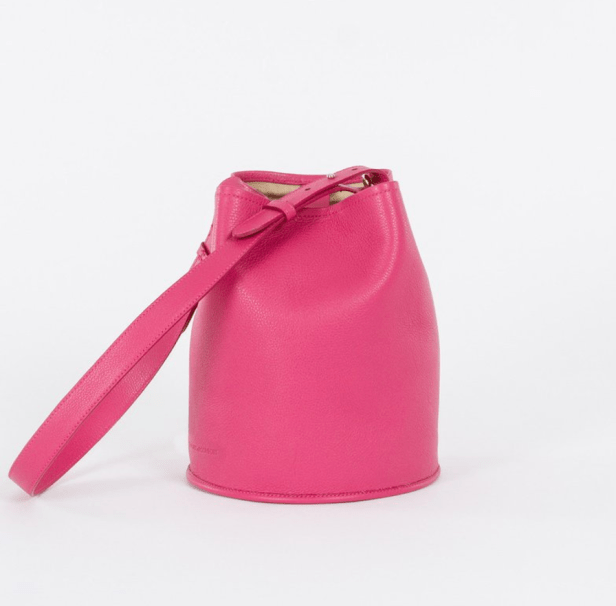
      Beautiful Pink Fashion Trend

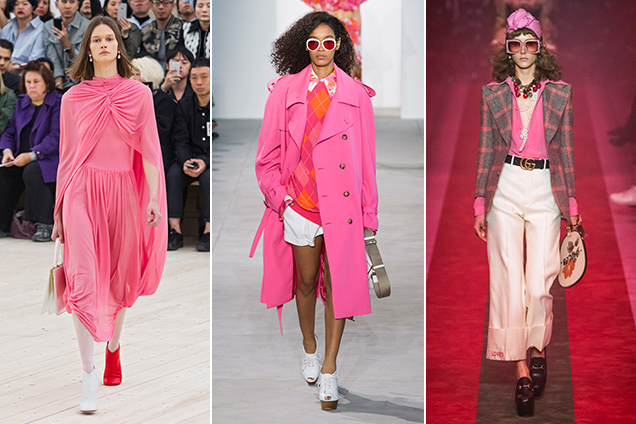
      Pink has been #rebranded. Once a symbol of dated gender binaries, pink is now the color of powerful optimistic statements — Trump-shading pussy hats, shapely, multiethnic Barbie dolls, a cosmetics company that values realism over illusion. Those of us who cast aside our bubble gum pink paraphernalia the moment we grew old enough to shop for ourselves — and those of who still loved the hue but grew sick of the vaguely offensive “girly girl” associations — now have reason to reach for our rose-colored glasses.

      spring-2017-pink-trend.jpg

      fall-2017-pink-trend.jpg

      pinnk 2.jpg

      pink 3.png

      pink 4

      pink 5.jpg pink 1

      pink 6.png

      Beautiful Mood Board Musings

      Inspired by the beautifully sculptural effect of curved architectural walls, the work of French interior designer Francois Champsaur, has a beautiful smooth timber finish.

      Trocadero_1.jpg
      Trocadero Apartment by Francois Champsaur

      Bold in black and incredibly textural, this piece was designed by CM Studio.
      It features a distinctive curved batten pod that cleverly conceals the apartment’s bathroom.

      mood 2.jpg
      CM Studio / Photograph by Kelly Geddes

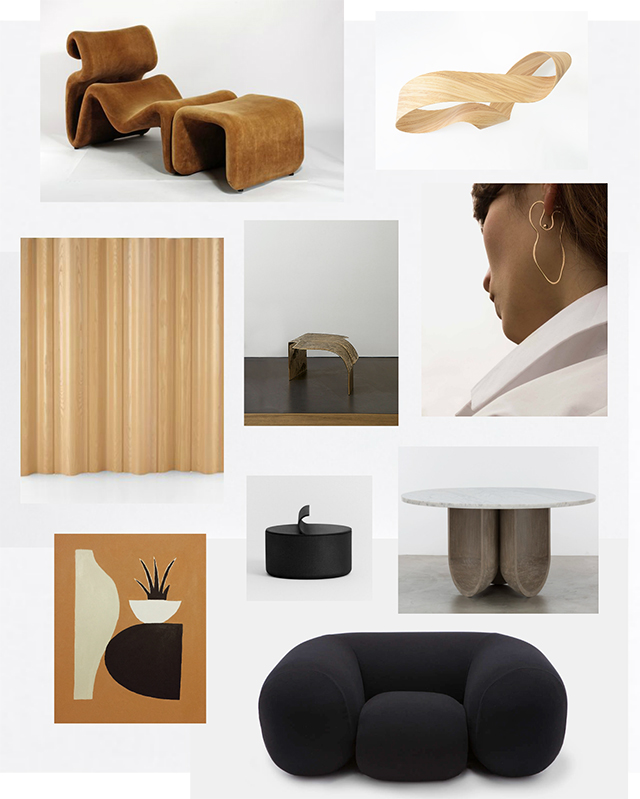
      Curved walls are visually interesting and work well to soften sharp lines of an
      interior space. The same effect can be created with a room divider, furniture,
      or smaller design pieces such as ceramics and art. Here are some examples.
      mood 3.jpg

      Beautiful Photography

      We all go through childhood, but no two experiences are alike. Whether it’s culture, class, and/or geography, it all shapes these formative years in a powerful way. But despite these differences, as young people, we each explore the world around us with the same sense of wonder and imagination. These varied snapshots highlight a universal truth about life—this juxtaposition of emotion starts when we’re young and never ends. We just grow older and wiser. Can you see yourself in any of these?

      01.pic olga ageeva.jpgPlaying with light, by Olga Ageeva, Russia

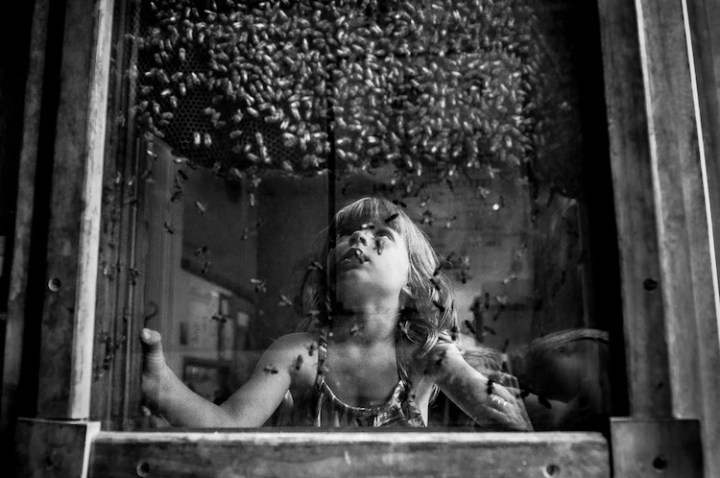
      02.pic oriano.jpgLooking Out, by Oriano Nicolau, Spain

      03.pic anna.jpgThe Horse Whisperer, by Anna Ajtner, The Netherlands

      04.pic olga.jpgSleeping, by Olga Ageeva, Russia

      05.pic hutchins.jpgLooking For the Queen, By Hutchins, Poland/USA

      06.pic zhou.jpgChildren of the Indian Ocean Seaboard, Guomiao Zhou, China

      07. batman annaBatman, Anna Kuncewicz, Poland

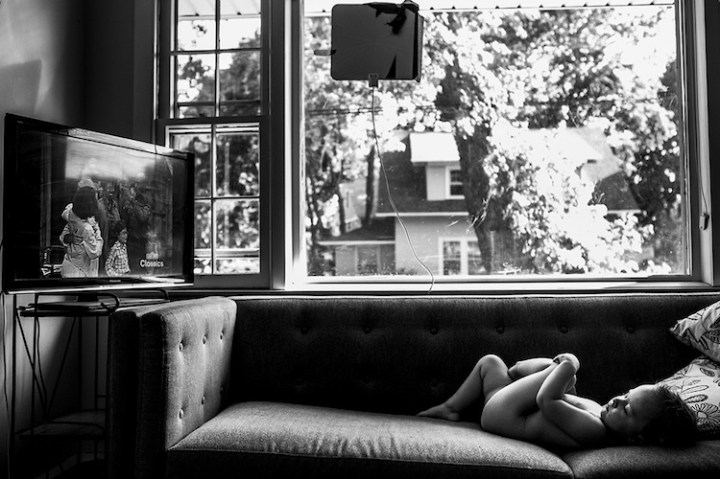
      08.chelseaClassic Couch Potato, Chelsea Sibereis, USA

      09.boyhood.jpgBoyhood, Alicja Pietras, Poland

      10.karen
      Double, Karen Osdieck, USA

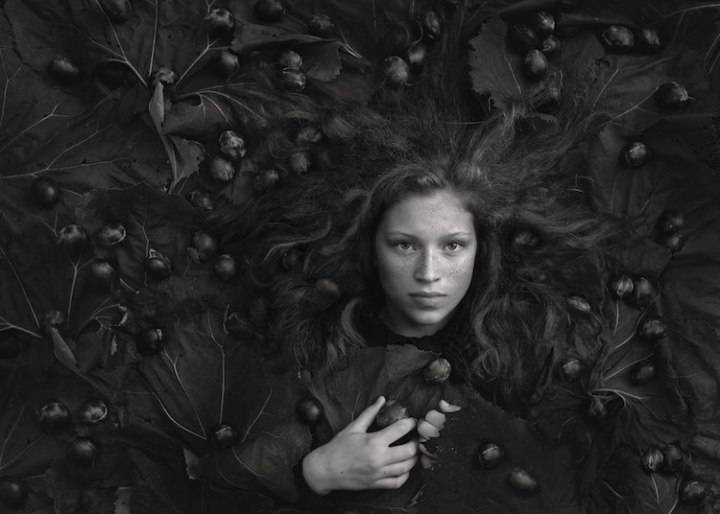
      11.plums.jpg
      Plums, Mariola Glajcar, Poland

      Beautiful St. Paddy’s Day

      St. Paddy’s Day is definitely an homage to Ireland, but there’s no denying that it also pays tribute to something a little more universal – booze. And while you may be thinking “What the heck does alcohol have to do with green design?” there are actually a keg’s worth of hooch-related eco innovations out there that you might not know about yet.

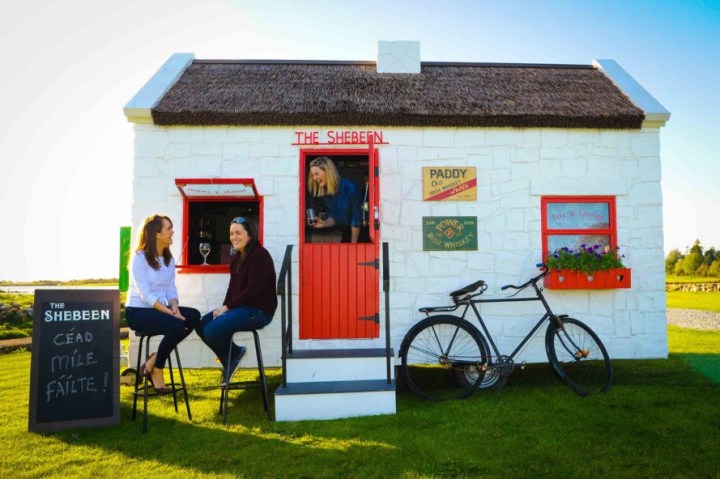
      TINY IRISH PUB ON WHEELS

      2Shebeen-Tiny-Irish-Pub.jpg
      When Irish cabinetmaker John Walsh decided to convert his rusty old caravan into a tiny pub, the world’s most charming St. Patrick’s Day hotspot was born. The Shebeen is literally translated into “an illicit bar where alcohol is sold illegally.” The mobile booze cruiser was so popular in Ireland, the people of Boston commissioned another one to be brought to the states.


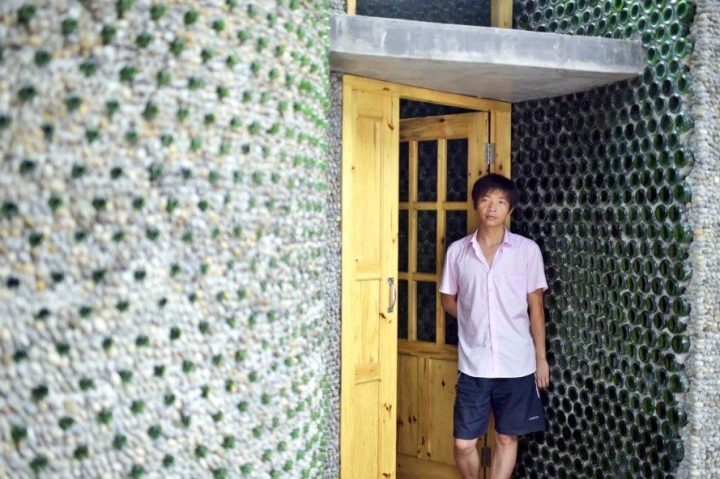
      ARCHITECT BUIILDS HIS OUSE OUT OF 8,500 BEER BOTTLES

      3Man-builds-his-house-out-of-beer-bottles

      This brings new meaning to the song 99 Bottles of Beer on the Wall. Aspiring architect in Chongqing city, China designed and constructed his very own office with 8,500 recycled beer bottles. The impressive upcycled structure gets its sturdy foundation from 40 layers of beer bottles. The entire construction took four months and $11,000 to complete.

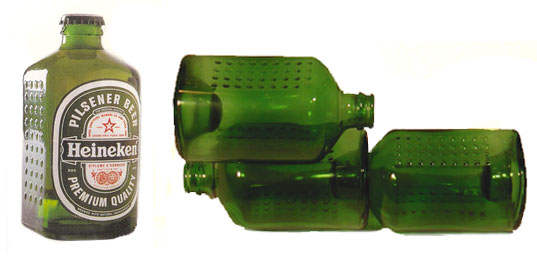
      A BEER BOTTLE THAT DOUBLES AS BRICK

      4top-green-booze-stories-heinecke.jpg

      Have your brick and drink it too? Famed beer brewer Alfred Heineken and Dutch architect John Habraken came out with their Heineken WOBO (world bottle) brick all the way back in 1963, but the principle behind it still rings true today. As you probably already guessed, the idea behind the boozy brick was that thirsty people could drink their fix of beer from the WOBO and reuse it to build structures. Cheers to that.

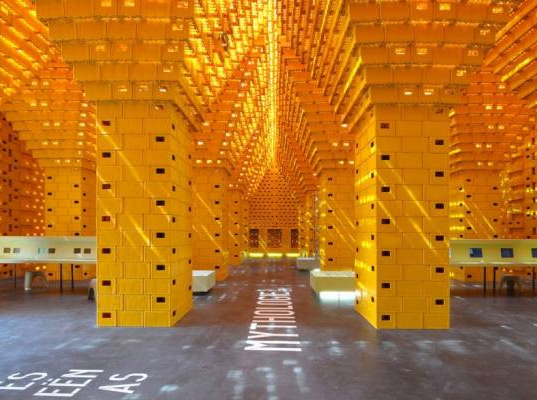
      A PAVILION MADE OF 33,000 BEER CRATES

      5top-green-booze-stories-beer-crate-.jpg

      It must have taken a lot of frat parties to empty out the 33,000 yellow beer crates that architects SHSH stacked atop one another to create this intoxicating pavilion. Using the crates like giant legos, the design features interesting architectural touches like columns, arches and even domes inside.


      Source
      http://inhabitat.com