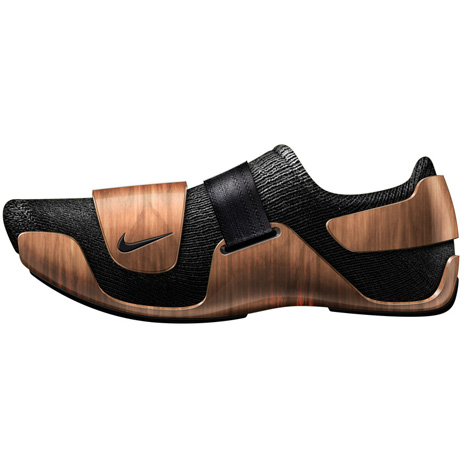
French designer Ora-Ïto has developed a conceptual
trainer with curved veneer sections to reference the
work of Modernist furniture designers
Charles and Ray Eames.
Really, Seriously?
I’ll take the chair over the shoes any day.

Beautiful conversations, people, places, design+photography
French designer Ora-Ïto has developed a conceptual
trainer with curved veneer sections to reference the
work of Modernist furniture designers
Charles and Ray Eames.
Really, Seriously?
I’ll take the chair over the shoes any day.
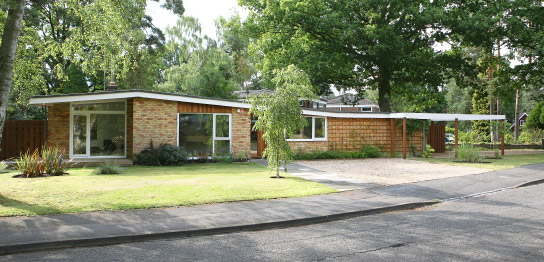
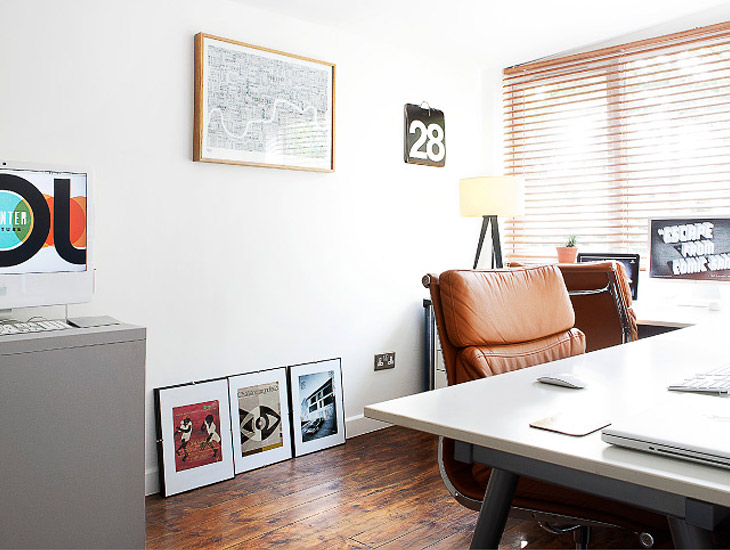
This beautiful Bungalow house designed by architect
Athelstan Whaley as a part Edgcumbe Park resort was
for years owned by a David Weston & Scott Mycock
and used as a home and studio. The house has been
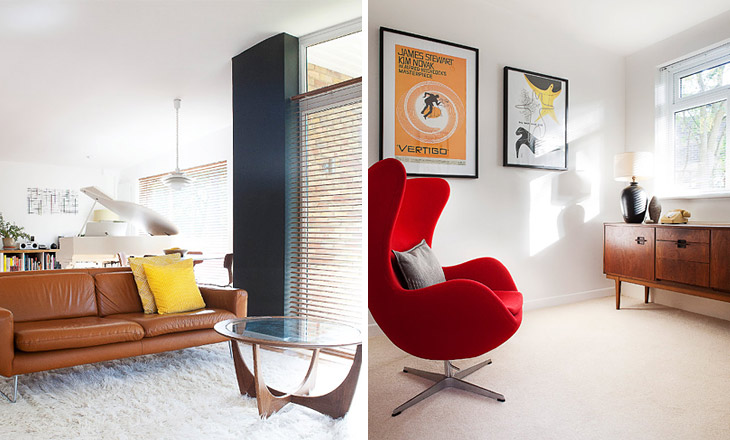
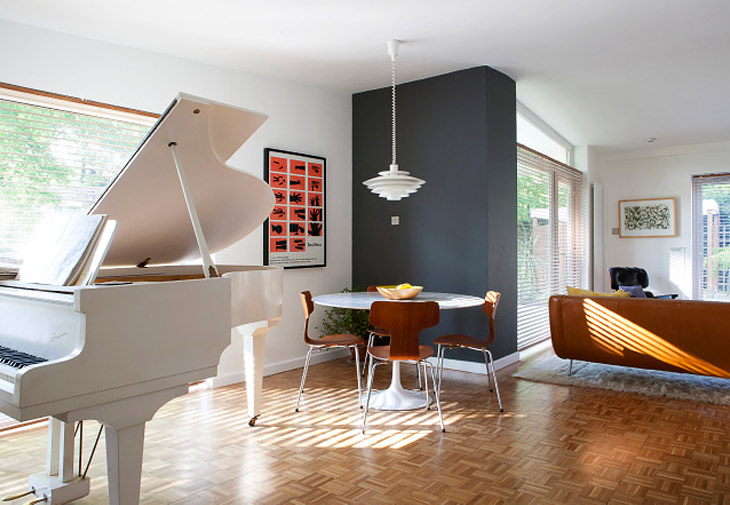
nicely renovated and its design is spot on – classical
modernist posters, iconic mid century modern furniture
like Eames Lounge chair, Noguchi Butterfly stool,
Jacobsen Egg chair and many others are present.
Interesting fact is that it was also used as a location
for the 1966 film Fahrenheit 451.


The Invisible Architect of Invisible Architecture
At the height of his popularity, R. Buckminster Fuller,
the visionary inventor best known as the father of the
geodesic dome, was on a mission. Fuller repeatedly
referred to his great friend, the architect Knud Lonberg-Holm
—a “really great architect of the Nysky (New York skyscraper)
age”—whom Fuller said “has been completely unrecognized
and unsung,” and whose “scientific foresight and design
competence are largely responsible for the present world
around the state of advancement of the building arts.”
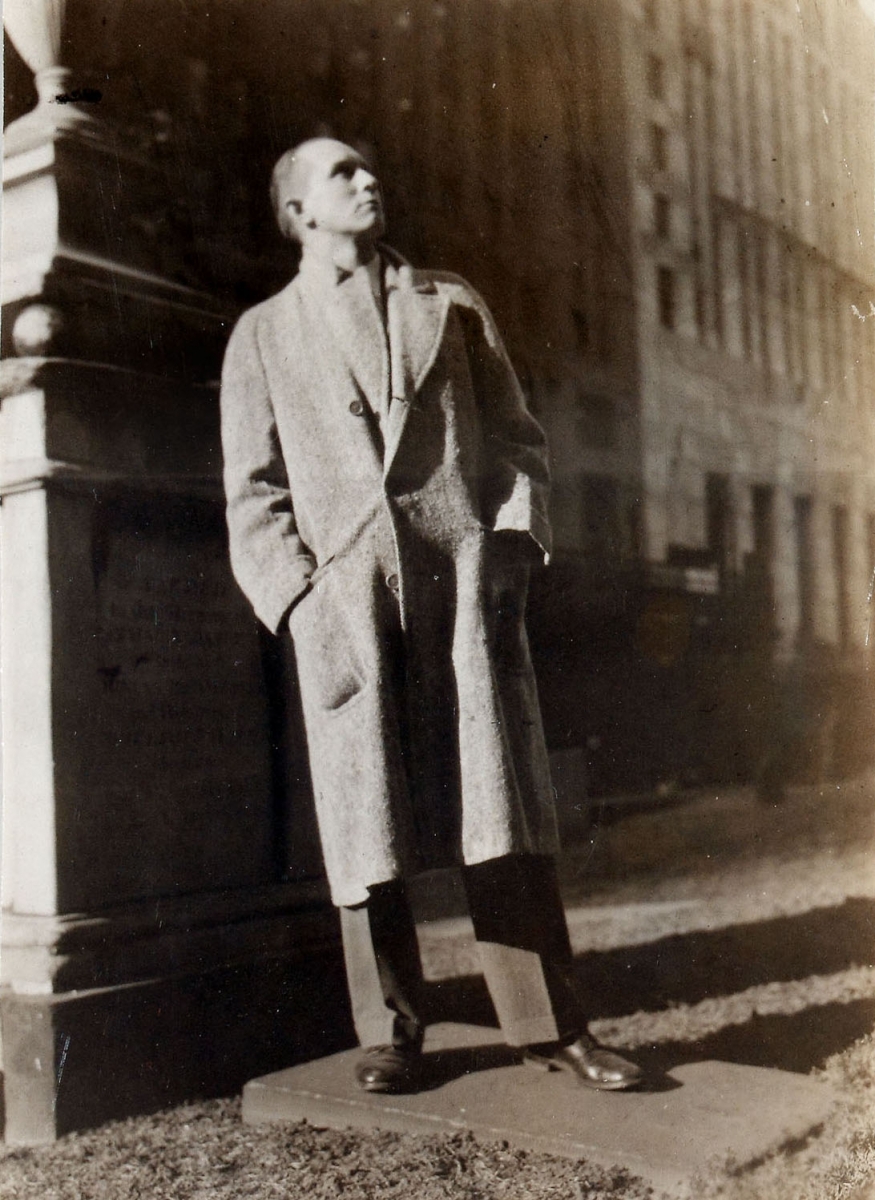
Knud Lonberg-Holm (1895-1972),
an overlooked but highly influential
Modernist architect, photographer,
and pioneer of information design,
is the subject of an exhibition at the
Ubu Gallery in New York City,
through August 1, 2014.
I stumbled upon a fascinating article about
the architect Lonberg-Holm. He is one of the
most overlooked yet influential architects
of the 20th century. Knud Lonberg-Holm
told Buckminster Fuller that “the really great
architect will be the architect who produces
the invisible house where you don’t see roofs
or walls,” Fuller explained in House & Garden.
“I’ve thought about this, thought about it a lot,
the ultimately invisible house—doing more with
less and finally coming to nothingness.”
Lonberg-Holm’s modernity and exquisite
techniques were well ahead of his time.
Read the fascinating article here.
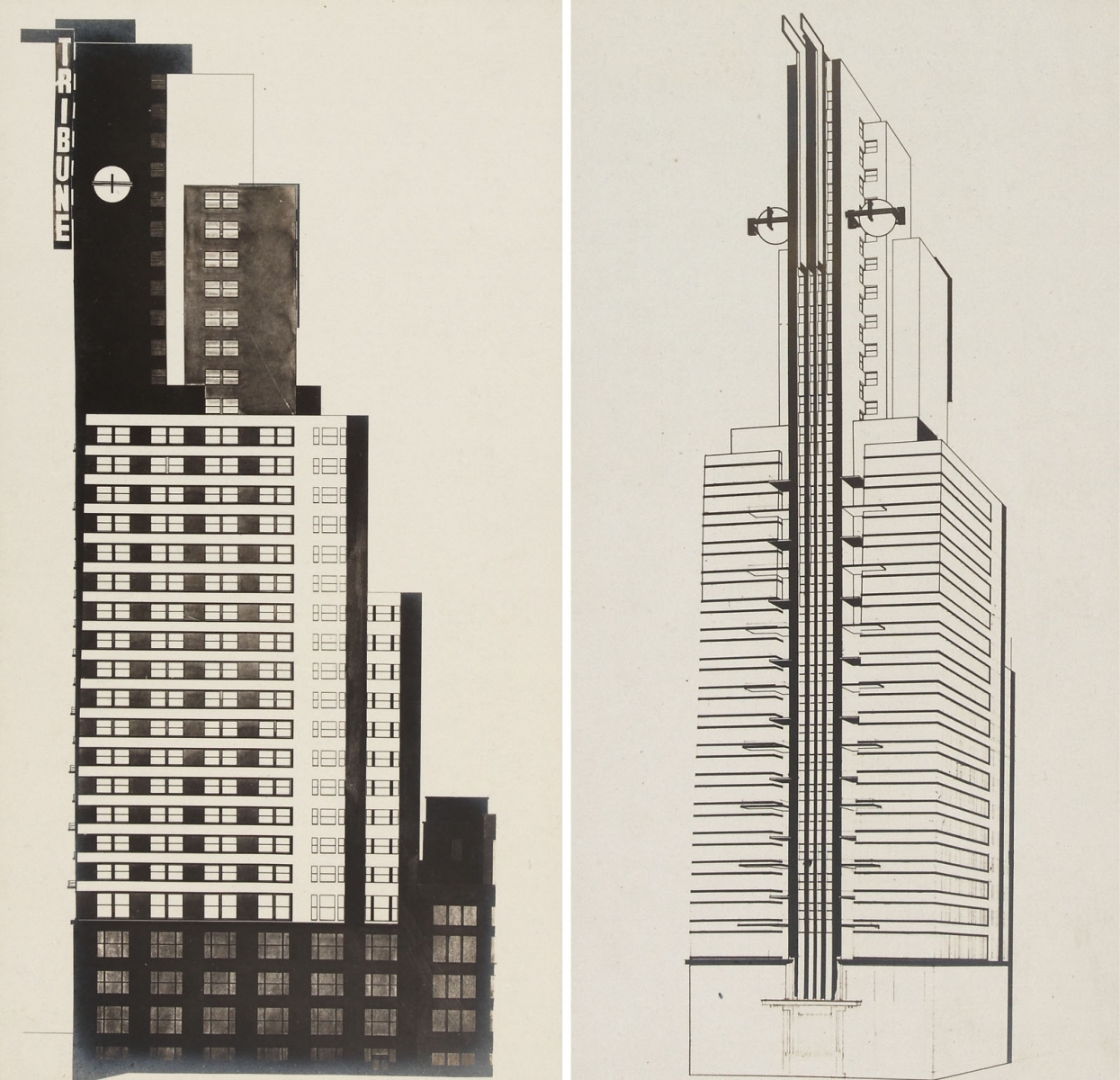
Chicago Tribune Tower
This design of a side elevation for the 1922 Chicago
Tribune Tower competition, by Lonberg-Holm,
favored a functional composition that was devoid
of historical styles. It featured an abstract,
black-and-white pattern to articulate its frame and a
vertical sign spelling “Tribune” in large block letters,
flanked by two round lamps reminiscent of automobile
headlights. Lonberg-Holm never submitted his entry
for the competition, but it was published in a number
of books by avant-garde architects like Le Corbusier,
Walter Gropius, and J.P.P. Oud.
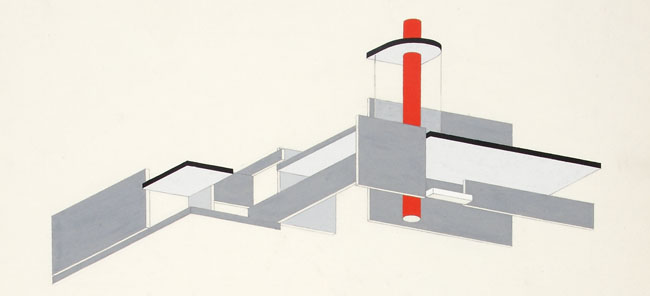
Radio Broadcasting Station, Detroit
This design, ca. 1925, was included in the landmark
1927 Machine Age exhibition—advertised as “the
first International Exposition of Architecture to be
held in America.” The New Yorker critic Muriel Draper
reviewed the project and wrote: “The delicacy and
exquisite technique of execution shown in the plans may
have much to do with it, but a glass tower with a visibly
spiralling staircase took me straight up in the air while
the simple, solid proportions of the building itself kept
my feet on the earth. Pleasant sensation.”


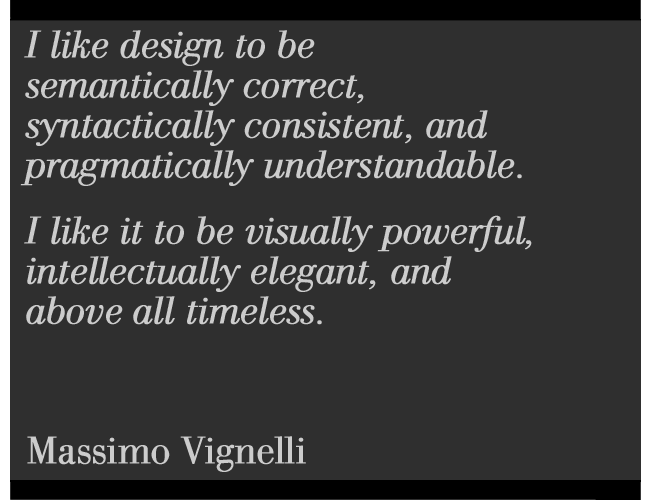
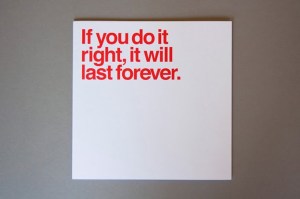
RIP Massimo Vignelli
I could live here, simply stunning.
Never mind how they built the spaces
hanging over the edge.

How lovely is this idea, a vase in the shape of a book
to put between books on a bookshelf?

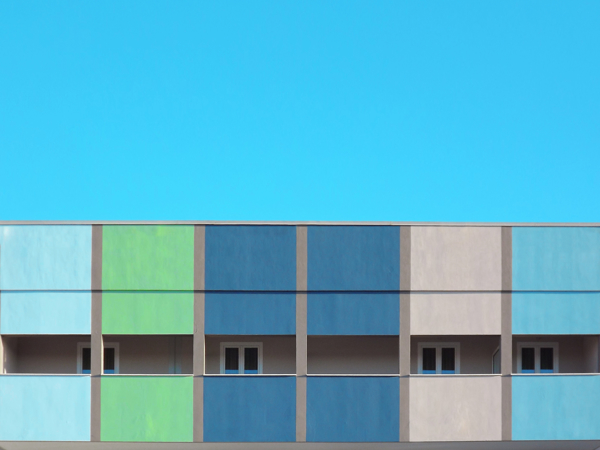
Today I learned about Skymetrics based on these
colorful, geometric architectural images. I’ve never
been so good at math but I’ve always liked geometry,
shapes and color.
The word skymetric is a construction composed
by: sky and -metric (geometric). The subject highlights
the decontextualization of places and architectural
spaces in order to alter the natural structure.
These places have in common the fact that all are
square, regular and schematic, so achieving geometric
shots in a minimalist context, where the simplicity and
cleanliness reign supreme. Another point in common is
the sky, in fact each shot shows with a light blue background
that decisively contrasts the brilliant colors of the shapes.
I love the colors, shapes and composition.






Most beautiful and unique bathroom
design I’ve ever seen. The simplicity
of materials is beyond belief. I never
thought a bathroom could be so elegant.
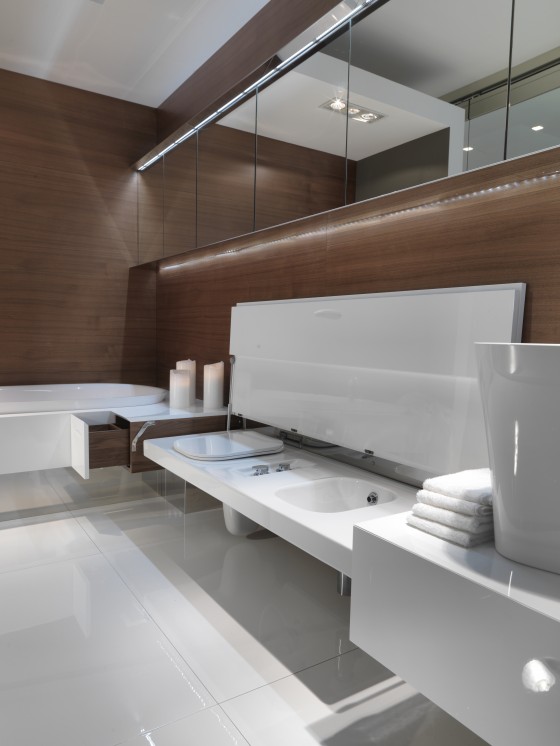


‘Level 45’ bathroom system by Naghi Habib for Falper
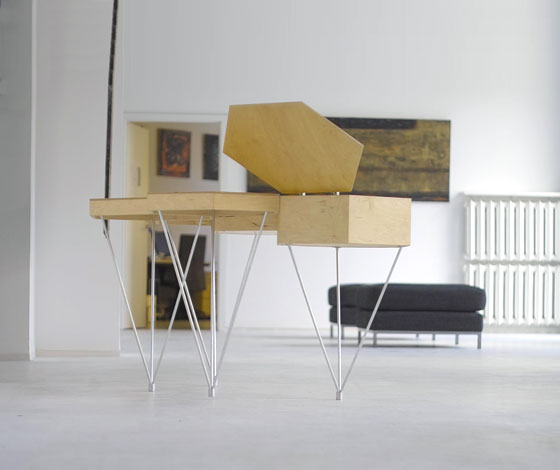
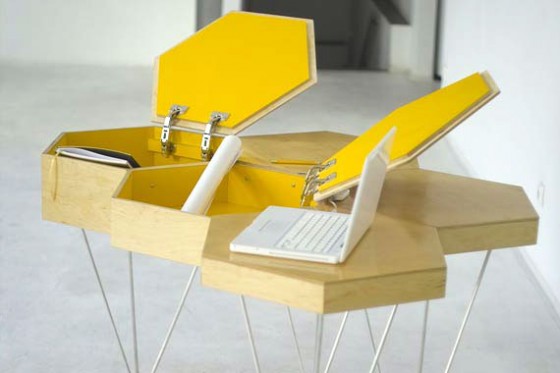
I would love to own a ‘Cloud’ table
designed by Anna and Marek Lorens.
Composed from a number of hexagonal
elements, the multi-functional table is
functional, beautiful, and playful all in one.
Made of plywood-and-aluminium it is available
in variety of configurations and finishes as well
as in a downsized, children’s version. I want.
Check out their website. They make some pretty
cool stuff.


I admire the creative design work done by Studio O+A.
They just get it right every time. Their latest “Star Wars”
inspired office for Giant Pixel Corp. located in
Silicon Valley, echos a cross between the look of
Charles and Ray Eames’s workshop and The Jetsons.
To capture a 1960s-era, but still futuristic look,
Cherry and O+A designer Neil Bartley settled on a
spare office with a few marquee pieces, including a large
perforated-steel screen that makes up the entryway.
The screen reads the opening crawl from Star Wars:
“A long time ago, in a galaxy far, far away…”
Check out all the wonderful work by Studio O+A.


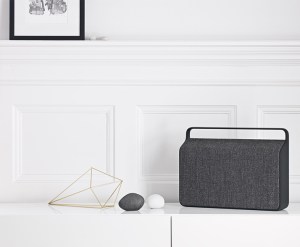
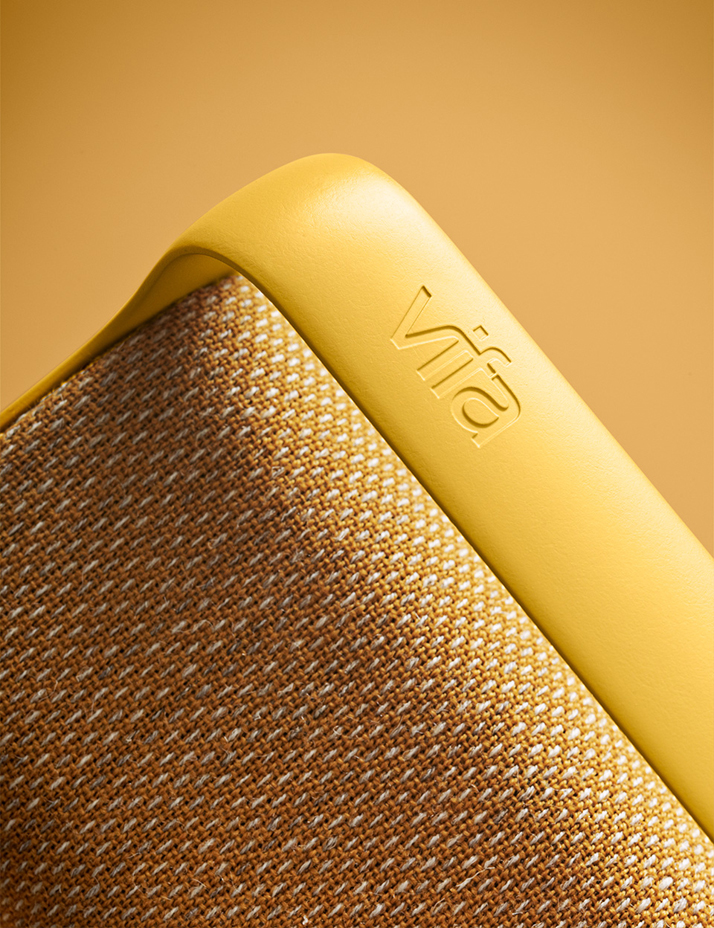
This speaker by Vifa has got to be the classiest speaker
ever invented. I so want one. The vibrant colors,
simple lines and textures are absolutely divine.
A very stylish designed wireless speaker indeed.




 Beautiful Musings