Open House London has officially released the list of over 800 buildings open to the public this fall. This year, a range of exciting architecture is featured, including the new US Embassy by KieranTimberlake, Maggie’s Barts by Steven Holl Architects, and Bloomberg European Headquarters by Foster + Partners, the world’s most sustainable office building. Here is a must-see list of buildings to discover.
 MAGGIE BARTS
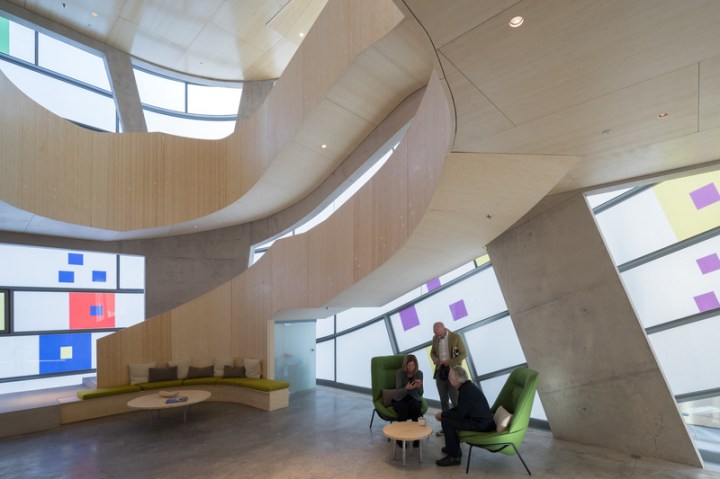
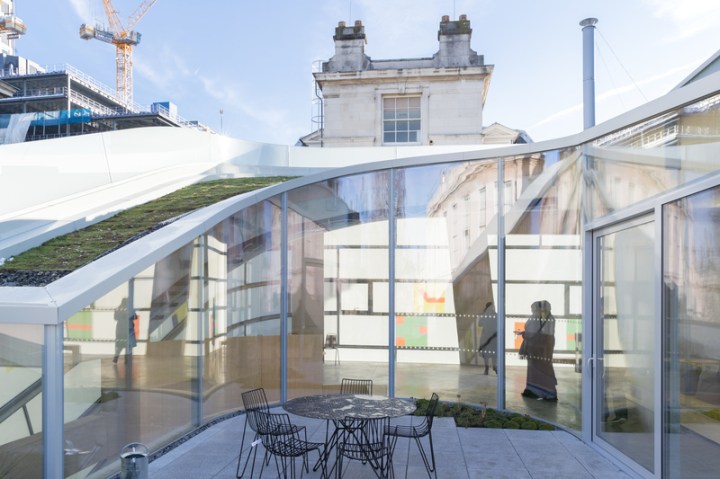
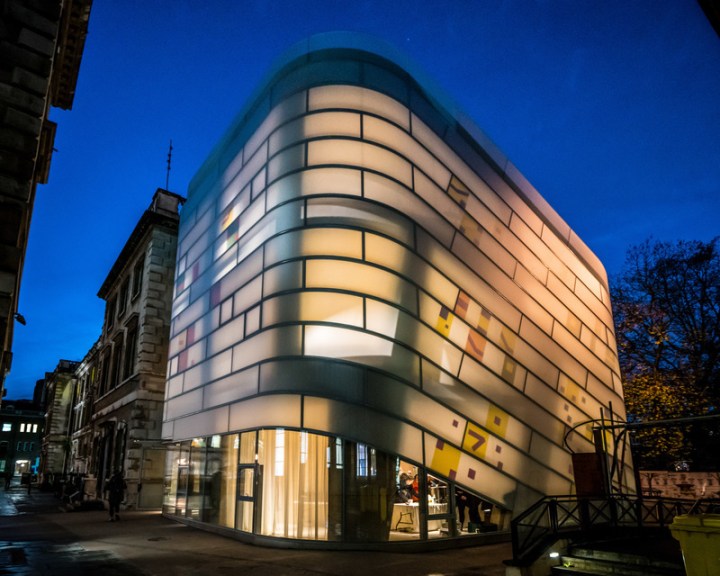
Maggie’s Centers are unique, welcoming and uplifting places with qualified staff on hand to provide free practical, emotional and social support for people with cancer, their families and friends. Maggie’s Centers are designed to feel more like a home than a hospital, with no reception desk, no signs on the wall, no name badges and a big kitchen table at their heart. This approach supports the informal relationships between staff and visitors, and is an important part of the unique support they offer.
U.S. EMBASSY
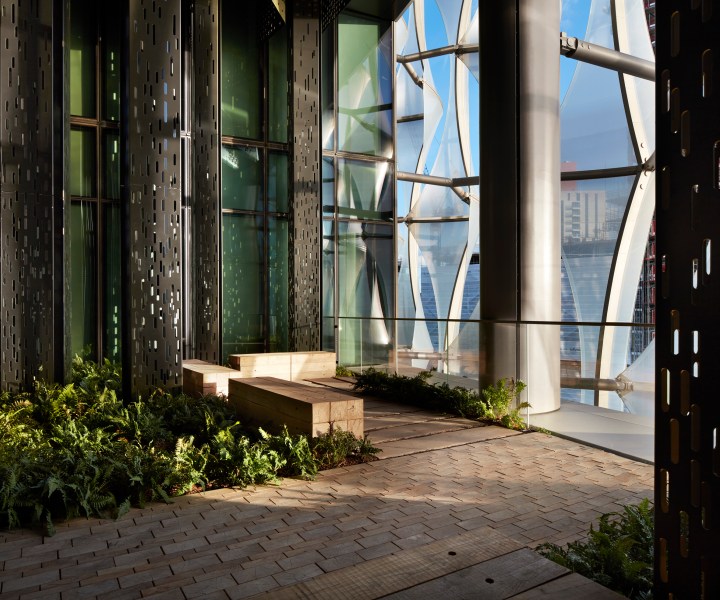
The new U.S. Embassy, by KieranTimberlake, in Nine Elms reflects the best of modern design, incorporates the latest in energy-efficient building techniques, and celebrates the values of freedom and democracy. The Nine Elms district, a South Bank industrial zone under intense redevelopment, is a unique setting for the new Embassy. The Embassy stands at the center of this burgeoning area of London, with a public park containing a pond, walkways, seating, and landscape along its edges. Curving walkways continue into the interior of the building with gardens on each floor that extend the spiraling movement upward.
 Kieran Timberlake has completed work on the US Embassy in London, a glass cube swathed in shimmering sails of plastic that is set on a plinth and surrounded by a moat-like pond on the edge of the River Thames.
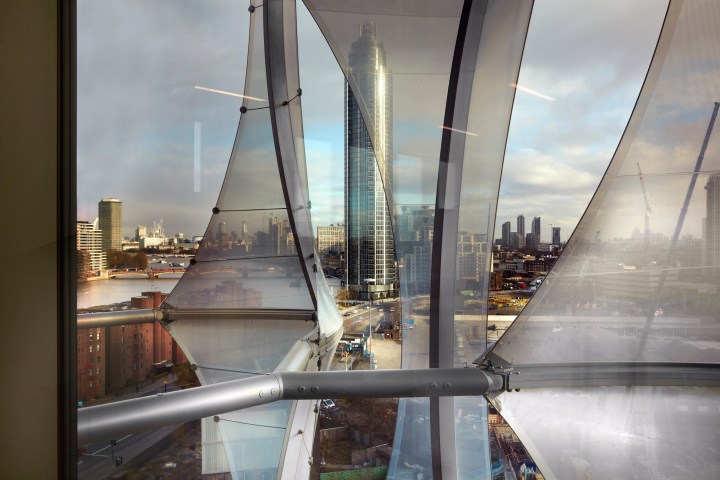
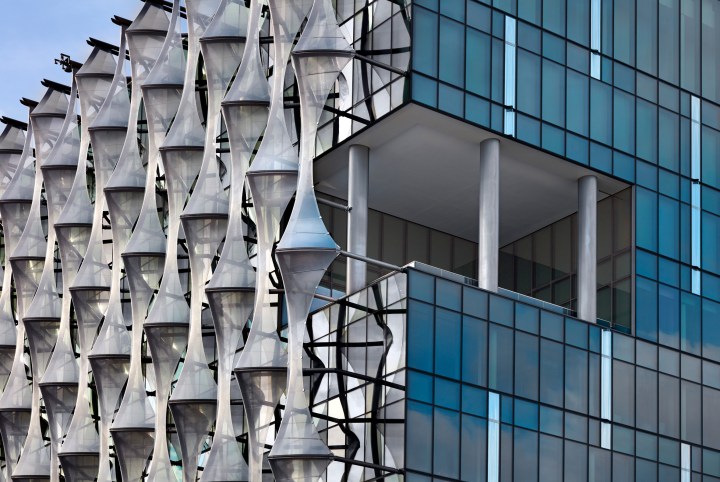
The building, which replaces the previous Eero Saarinen-designed address in Mayfair, has been engineered to balance impenetrable security standards with a visual language of openness. The 12-story cube has a facade of laminated glazing enveloped on two sides with a transparent film of ethylene tetrafluoroethylene (ETFE), the same type of plastic use for the bio-domes in the UK’s Eden Project.
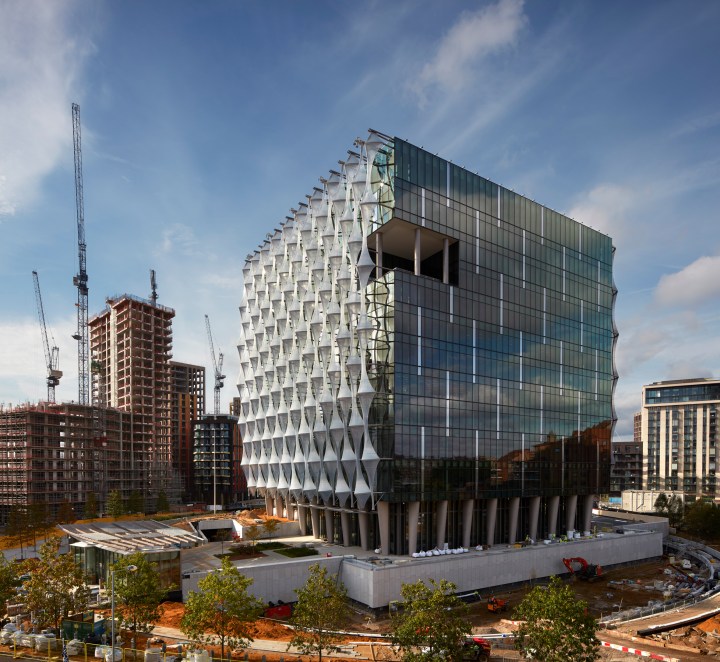
 The “transparent crystalline cube” is intended to symbolize “transparency, openness, and equality”. The unusual form of the building’s facade is designed to minimize solar gain and glare while still allowing natural light in. The reflective facade shifts in color according to the weather and the position of the sun.
ROYAL ACADEMY OF MUSIC – THEATER AND RECITAL HALL
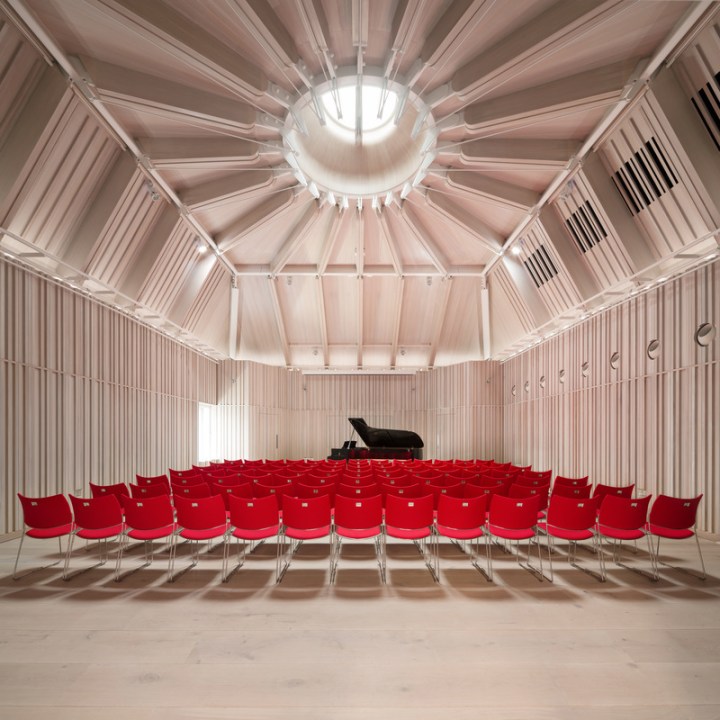
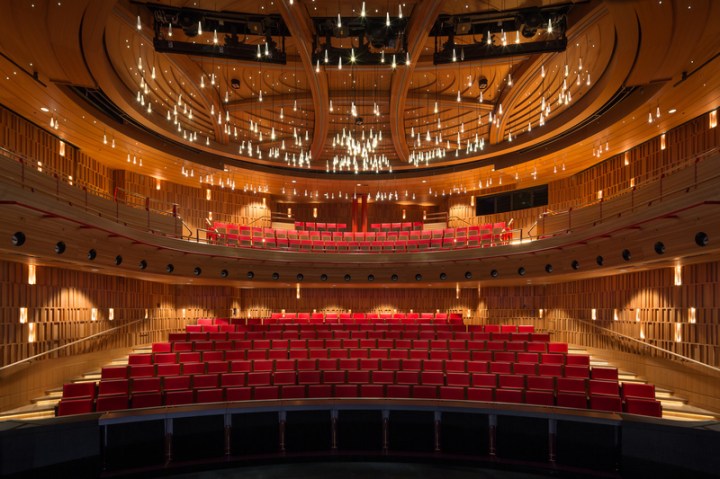
The Royal Academy of Music’s Theatre and new Recital Hall project has created two distinct, outstanding performance spaces for Britain’s oldest conservatory. Designed for both opera and musical theatre productions, The Susie Sainsbury Theater sits at the heart of the Academy. Inspired by the curved shapes of string instruments, the 309-seat cherry-lined Theater has been acoustically refined to deliver excellent sound qualities. Within the old concrete walls, the Theater incorporates 40% more seating than previously through the addition of a balcony, as well as a larger orchestra pit, a stage wing and a fly tower. All seats have unimpeded views of the stage, while the larger orchestra pit allows for an expanded repertoire choice, from early to modern opera and musical theatre.
BLOOMBERG EUROPEAN HEADQUARTERS
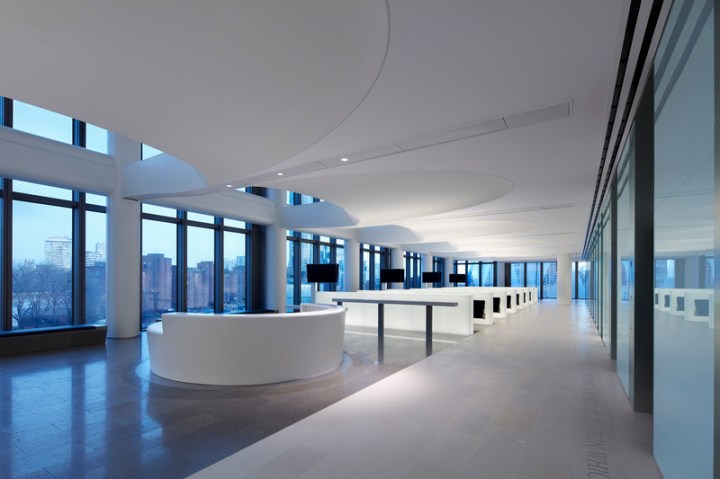
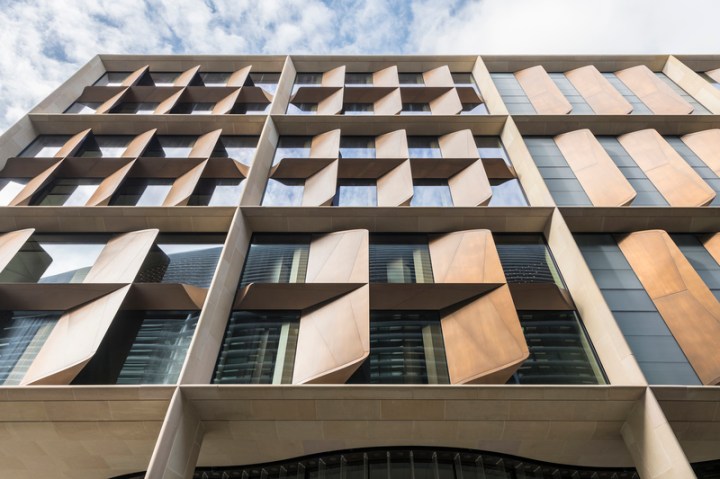
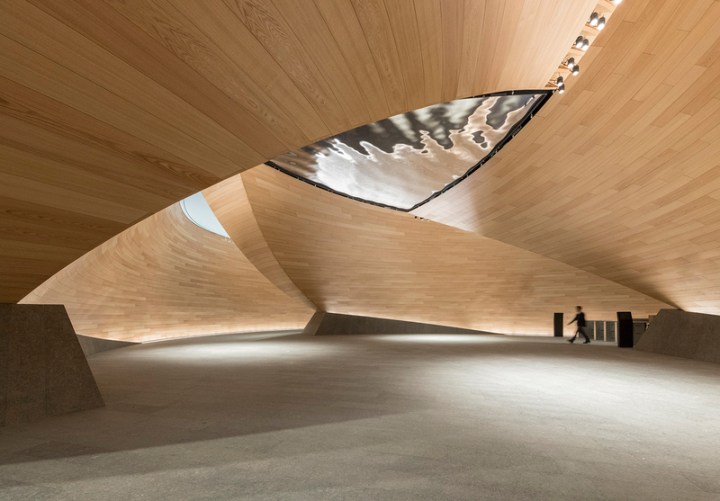
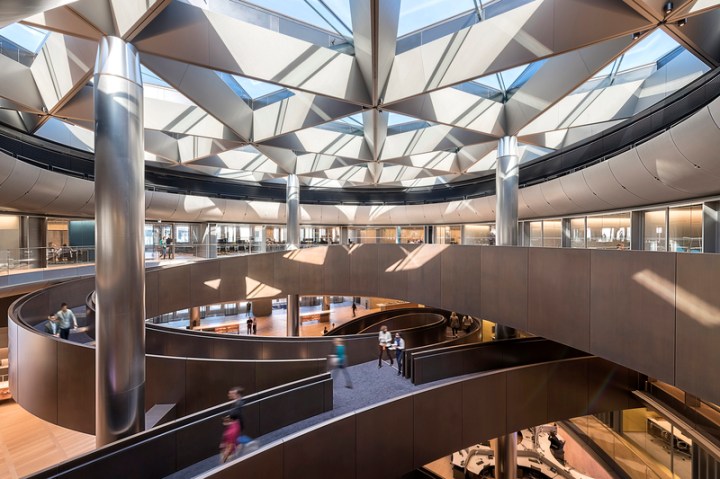
Bloomberg’s European Headquarters is the world’s most sustainable office building. Home to the financial technology and information company’s 4,000 London-based employees, its unique design promotes collaboration and innovation. In its form, massing and materials, the building’s exterior is respectful of its historic setting – a natural extension of the City that will endure and improve the surrounding public realm. Inside, its dynamic, contemporary interior is a highly specific response to the global financial information and technology company’s needs and embodies the organizations core values of transparency, openness and collaboration. Above all, the building sets a new standard in sustainable office design, with a BREEAM Outstanding rating of 98.5% – the highest design-stage score ever achieved by any major office development. The development uses 70% less water and 35% less energy than a typical office building.
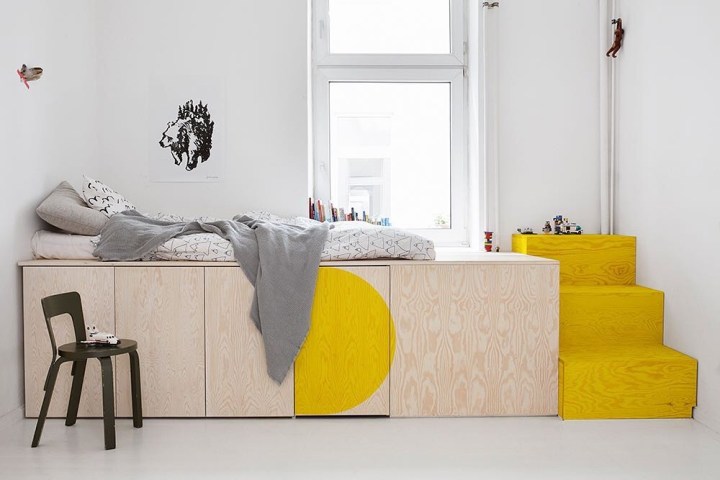 Custom made beds aren’t for everyone. But if you’re a handy DIY’er or happen to know a good carpenter, they can be a great option for a kids room. Custom made beds allow you to make the most of the space you have, allows for extra storage, are ideal in shared rooms and they can be space saving in small or awkwardly shaped rooms. The benefits are endless and while they require more effort than a shop bought bed, they are totally worth it in the end.
 This is an easy to recreate idea for a shared room or even for one child. The beds take up as little space as possible and there is accessible storage under the bed. Living the minimal look which is both practical and stylish. And the best part is that when your kids outgrow the room or want separate rooms, this bed goes back to being a beautiful storage cabinet.
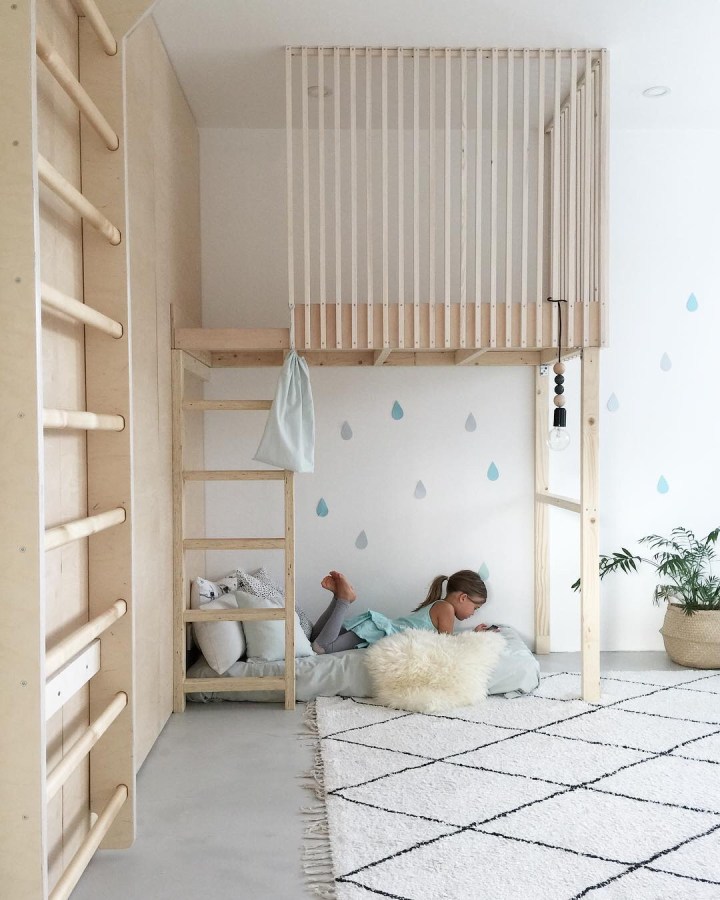 Bunk beds are always a fun idea. It’s a simple design that doesn’t take much space and we love how light it looks. Bunk beds can sometimes look bulky and heavy but here the use of plywood and having just a mattress on the floor as the second bed, makes this one blend in beautifully.
 Bunk beds don’t always have to be for two. A single high bed is great for making the most of floor space like in the room above. Besides the bed, there’s so much more to love about this room. Plywood is used to create a cozy reading nook and divider – the other side is the sibling’s room. One room has been cleverly been divided so each child gets their own space.
 Making single plywood beds is yet another idea and it’s especially appealing as they are much easier to make than bunk beds. The design you go for can be anything but here are two beds that are so simple in design, yet so beautiful. One is a plywood box with wheels, making it very practical as a spare bed that can easily be moved around from room to room. And the other is a box with a platform to place a mattress on. If you wanted, you could easily turn the box part into storage for toys or books.

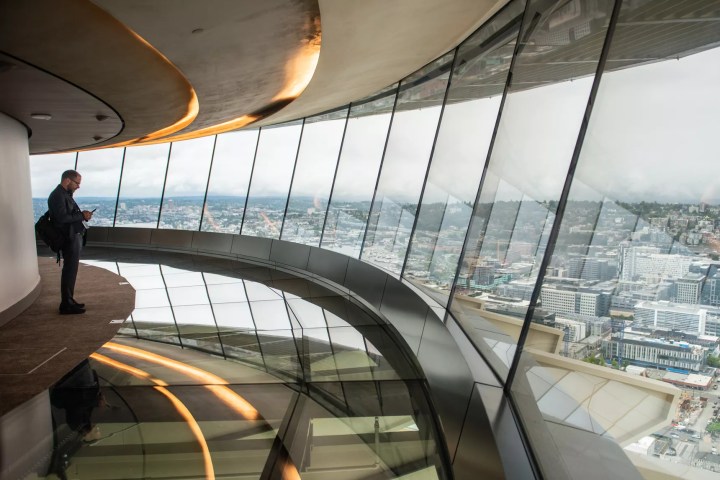




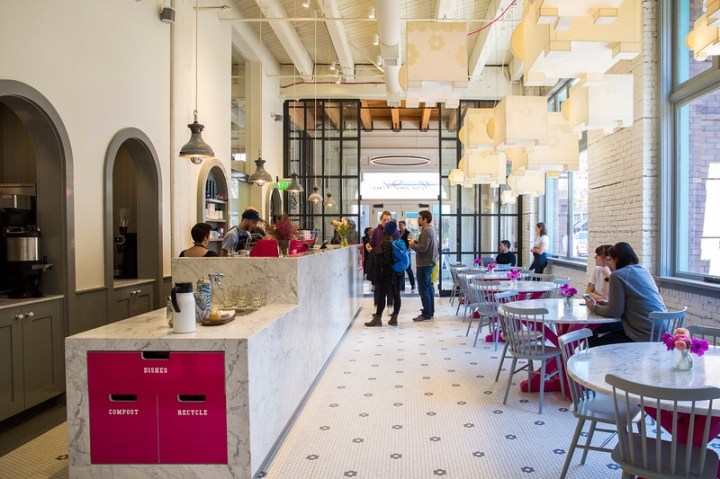
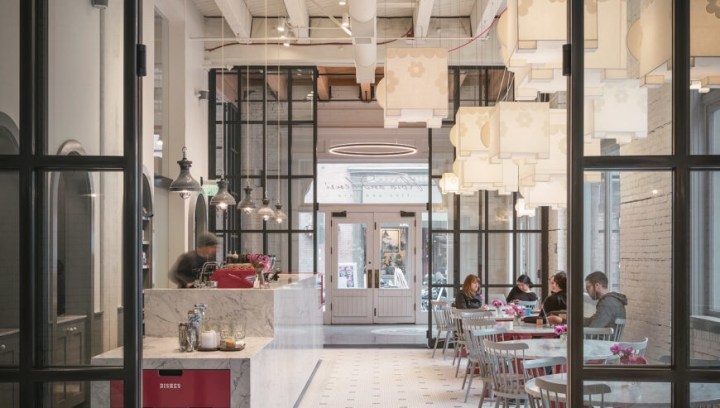
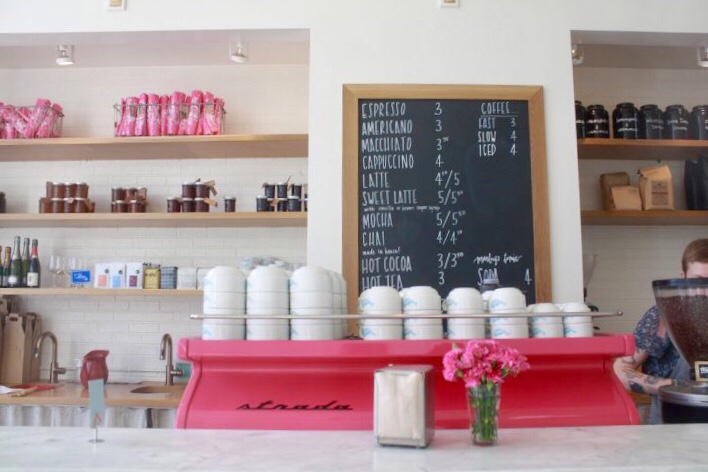
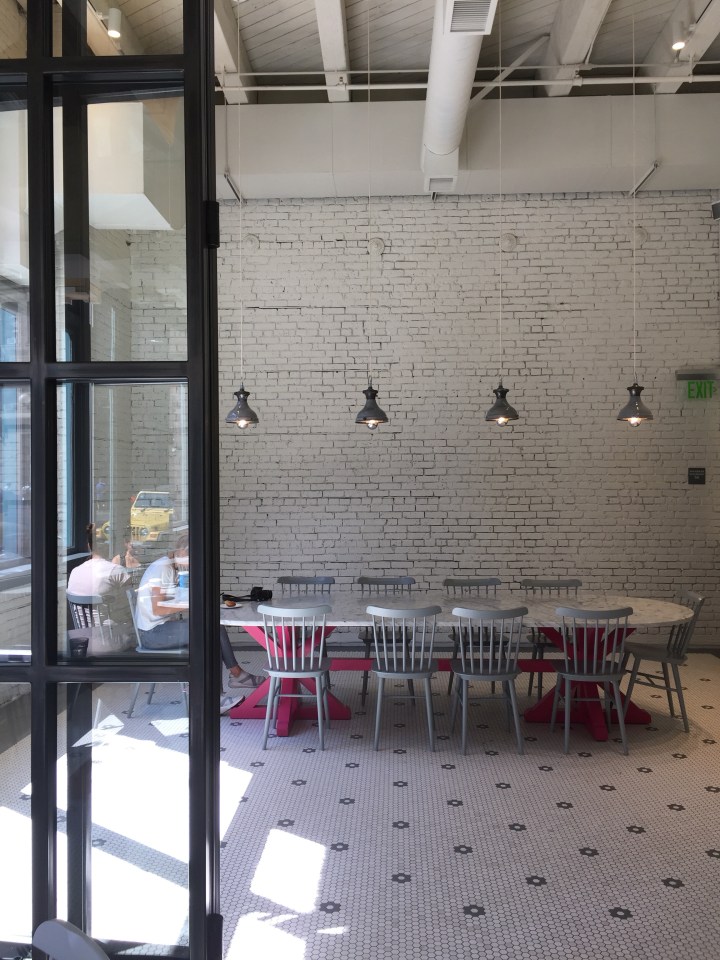
 General Porpoise, known for its luscious sugar-coated doughnuts oozing with fillings like lemon curd, strawberry rhubarb jam, and vanilla custard, recently opened at 401 1st Ave. S in the Merrill Building, at the corner of 1st Ave. S and S Jackson St. With 30 seats, the shop will serve the pastries fans have come to know and love. The new shop’s next-door neighbor is Flora and Henri, the home of bespoke products for children, women, and home, whose bright, airy, whimsical aesthetic perfectly suits Erickson’s Sea Creatures group and the duo’s design firm, Price Erickson. The cafe is gorgeous with soaring, large-timber ceilings, white brick walls against bright magenta accents, a meeting room, and a marching troop of papered-elephant lanterns by local artist Jeffry Mitchell, as well as massive windows to let in light and show off the interior. When in Seattle, pay a visit.






















 .
.

 The image is instantly familiar; the house, all dramatic angles, concrete, steel and glass, perched indelibly above Los Angeles, with Hollywood’s lights resembling a circuit board below it. Inside, two women sit, stylish and relaxed, talking casually behind the monumental floor to ceiling glass walls. One of the world’s most iconic photographs,
 Buck was a former professional footballer who worked as a graphic designer and sign painter. He spent his first few years as a landowner hauling broken blocks of concrete to the site in attempt to improve its precarious foundation. He and Carlotta ferried their finds, load by load, back to Woods Drive in the back of Buck’s Cadillac, hopeful the reinforcements would prevent the land from sliding. Buck’s dreams for the house began to take shape over the following two years, and eventually, he made a model of the future Stahl House. His grand designs, however, were promptly rejected by several notable architects.
 Carlotta recalled Buck continually telling prospective architects “I don’t care how you do it, there’s not going to be any walls in this wing.” Until they hired Pierre Koenig in 1957, an ambitious young architect determined to build on a site nobody would touch, it seemed unlikely the house would ever exist. Pierre described the process of building Stahl House as “trying to solve a problem – the client had champagne tastes and a beer budget.” He was interested in working with steel, and despite being warned away from it by his architecture instructors, possessed great aptitude for it. He’d experimented with a number of exposed glass and steel homes before he created Case Study 21, or The Bailey House in 1958 and 1959, and his skill for designing functional spaces with simplicity of form, abundant natural light, and elegant lines would eventually make him a master of modernism. Stahl House, completed in 13 months and costing 37,500 USD, further demonstrated Pierre’s flair for working with industrial materials, particularly steel, glass, and concrete. The project put him on the map as an architect with an incredible eye for balance, symmetry, and restraint. The 2,040 m² house was, as Buck insisted, built without walls in the main wing to allow for sweeping 270º views. Three sides of the building were made of plate glass, unheard of in the late 1950s, and deemed dangerous by engineers and architects. This design feature required Pierre to source the largest pieces of glass available for residential use at the time. With two bedrooms, two bathrooms, polished concrete floors, and a very famous swimming pool (a fixture in countless films and fashion editorials) Stahl House was an immediate mid century icon.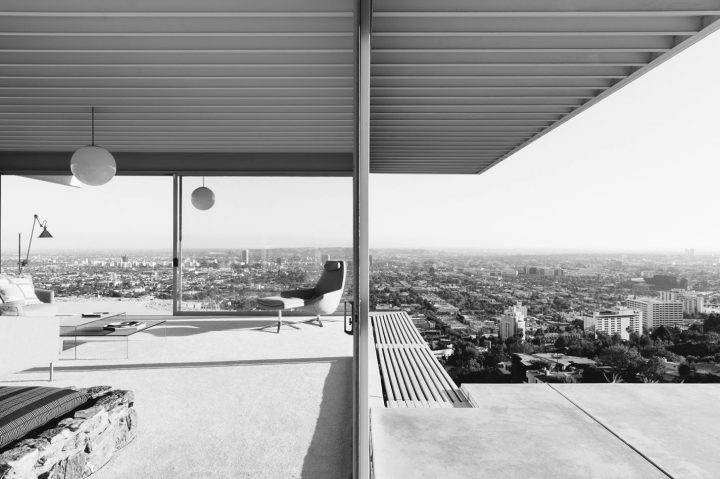



 Beautiful Musings