Martin Scorsese Plays Vincent Van Gogh in a Short, Surreal Film by Akira Kurosawa.
ENJOY!
Beautiful conversations, people, places, design+photography
Martin Scorsese Plays Vincent Van Gogh in a Short, Surreal Film by Akira Kurosawa.
ENJOY!
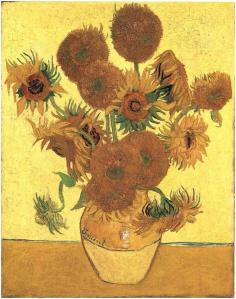
The word yellow comes from the Old English geolu. Yellow is associated with sunshine,
knowledge, and the flourishing of living creatures, but also with autumn and maturity.
The yellow sun was one of humanity’s most important symbols and was worshiped as
God in many cultures. According to Greek mythology, the sun-god Helios wore a
yellow robe and rode in a golden chariot drawn by four fiery horses across the
heavenly firmament. The radiant yellow light of the sun personified divine wisdom.
The oldest yellow pigment is yellow ochre, which was amongst the first pigments
used by humans. Egyptians and the ancient world made wide use of the mineral
orpiment for a more brilliant yellow than yellow ochre. In the Middle Ages,
Europeans manufactured lead tin yellow. They later imported Indian yellow and
rediscovered the method for the production of Naples yellow, which was used by
the Egyptians. Modern chemistry led to the creation of many other yellows,
including chrome yellow, cadmium yellow, lemon yellow, and cobalt yellow.
Coolest catwalk I’ve walked across is in
Seattle City Hall. Blue Glass Passage,
it symbolizes a bridge over water.

Blue is the color of sky and water. From the time of the ancient Egyptians, the blue depths of water personified the female principle, while sky blue was associated with the male principle. Blue is the color of all heavenly gods and stands for distance, for the divine, and for the spiritual. Blue is also the symbol of fidelity. Blue flowers, such as forget-me-nots and violets, symbolize faithfulness. According to an old English custom, a bride wears blue ribbons on her wedding gown and a blue sapphire in her wedding ring.
In the English language, blue sometimes refers to sadness. The phrase “feeling blue” is linked to a custom amongst old sailing ships. If a ship loses her captain, she would fly blue flags when returning to home port.
In German, to be “blue” (blau sein) is to be drunk. This derives from the ancient use of urine (which is produced copiously by the human body after drinking alcohol) in dyeing cloth blue with woad or indigo.

Picasso, The Blue Room, 1901

Vincent van Gogh, Starry Night, 1889
The first blue pigment was azurite, a natural mineral. Soon thereafter, Egyptians manufactured Egyptian blue, which quickly spread throughout the ancient world. During the Middle Ages, the recipe for Egyptian blue was lost, so azurite and expensive ultramarine from Afghanistan were the only sources of blue available. In the 15th century, smalt, a finely ground blue glass, came into use for painting. The first pigment produced due to the advancement of modern chemistry was a blue, Prussian blue, which was soon followed by cobalt blue and cerulean blue.





 Beautiful Musings