
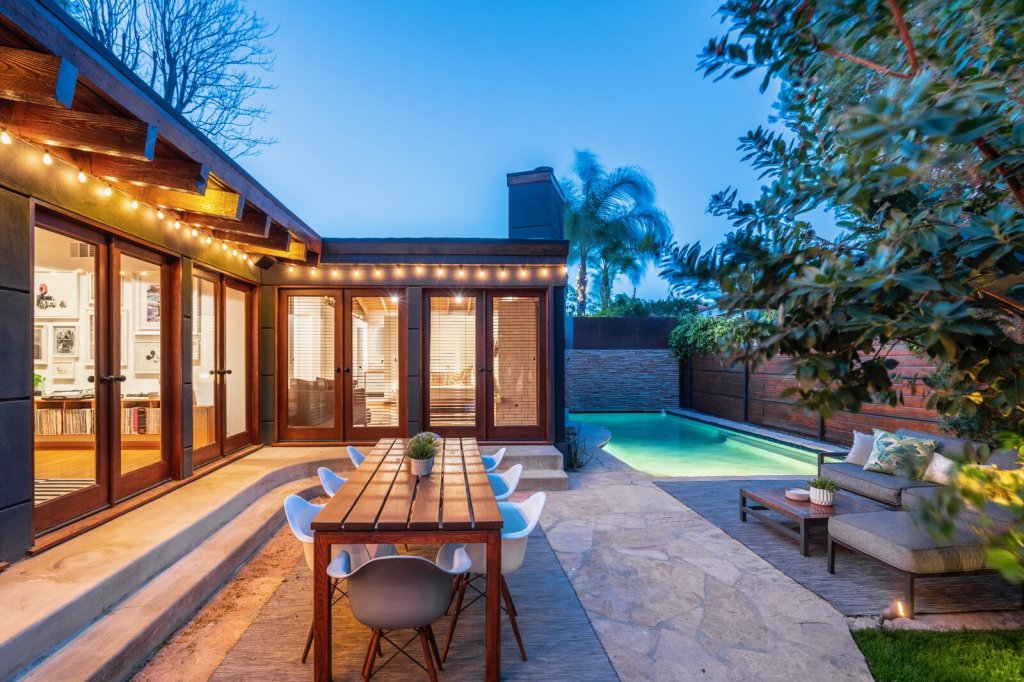
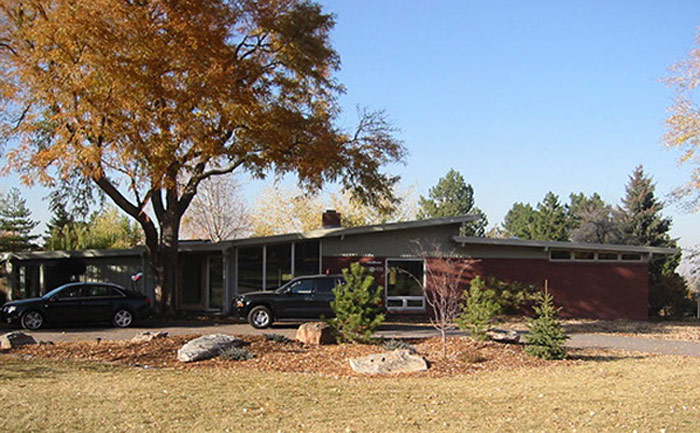
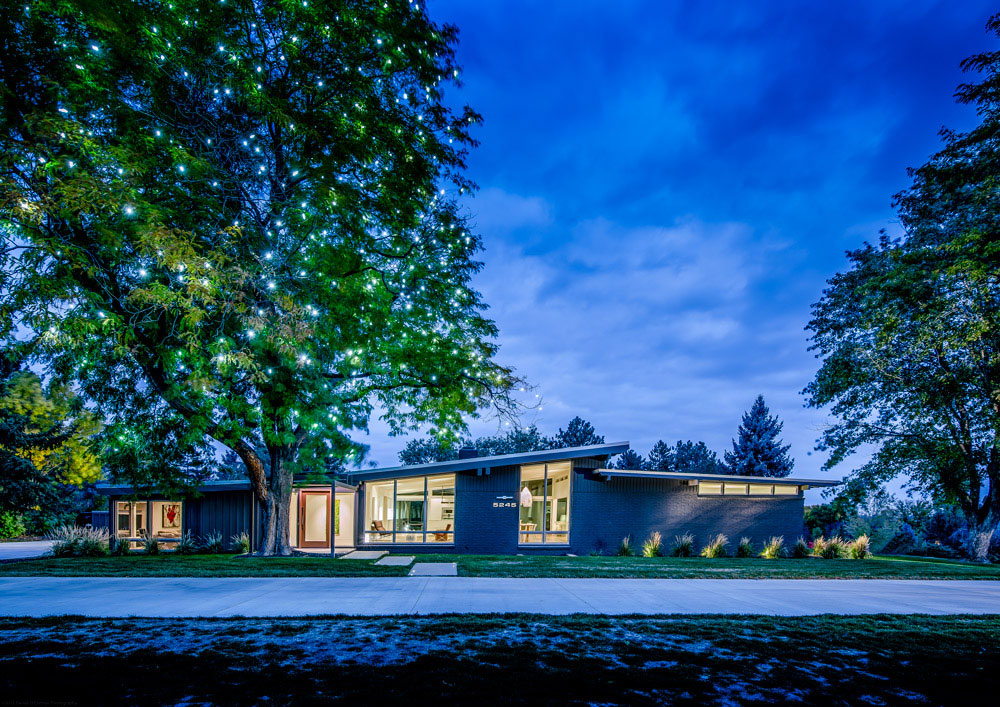
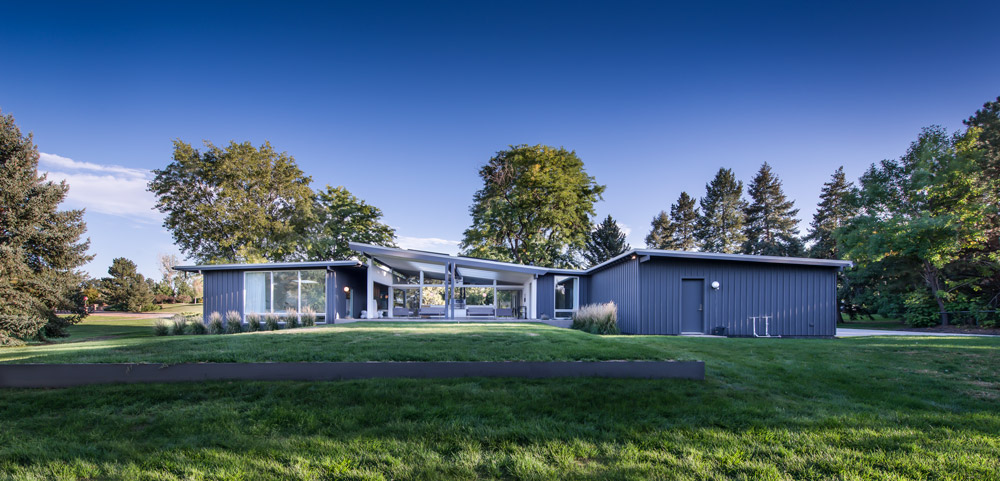
Built in 1947, the pristine three-bedroom home is nestled into a large lot with a backyard pool and guest cottage. A striking midcentury, the home sits tucked away on a gated, oversized lot in the tree-lined Chandler Estates neighborhood. Architect Leonardo Chalupawicz redesigned the home in 1997, and it recently underwent another transformation in 2020 by its current owners, Nicky Buerger, an interior designer and stylist, and Steve Clarke, a creative director at an advertising agency.

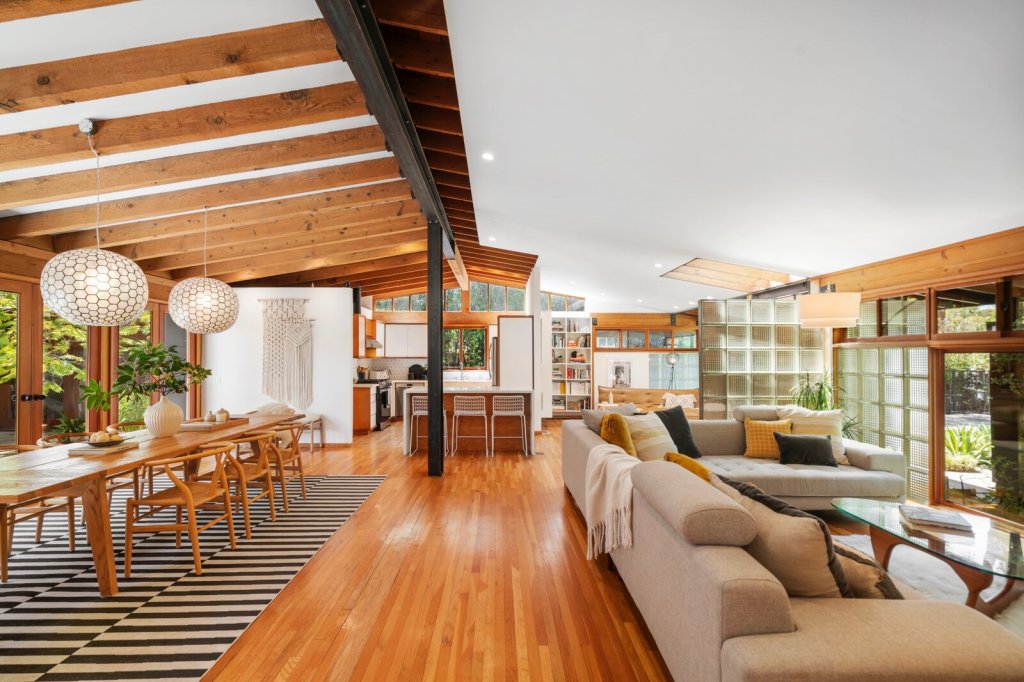
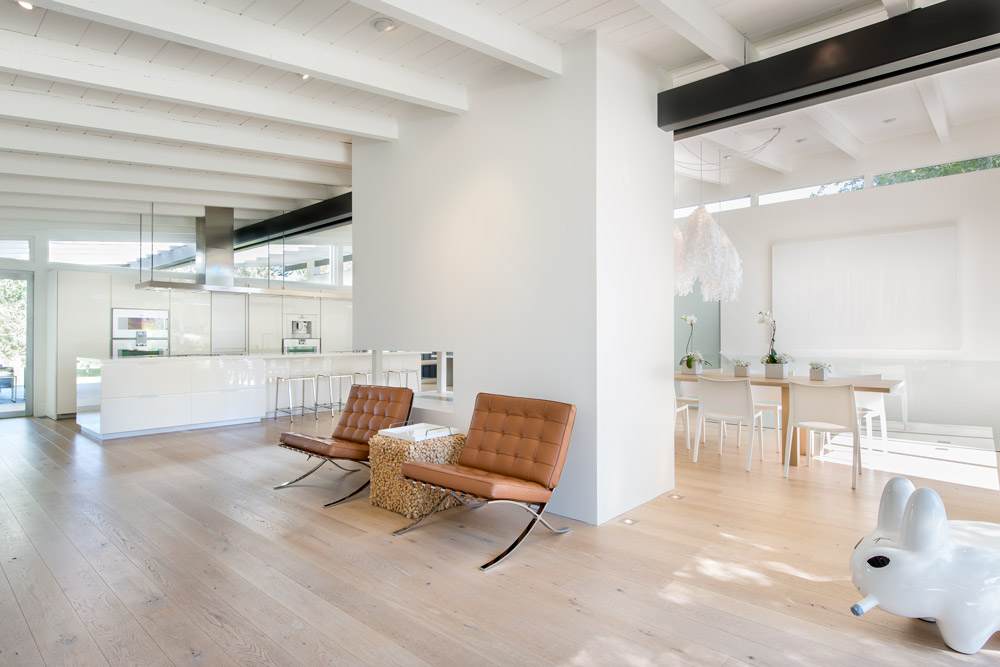
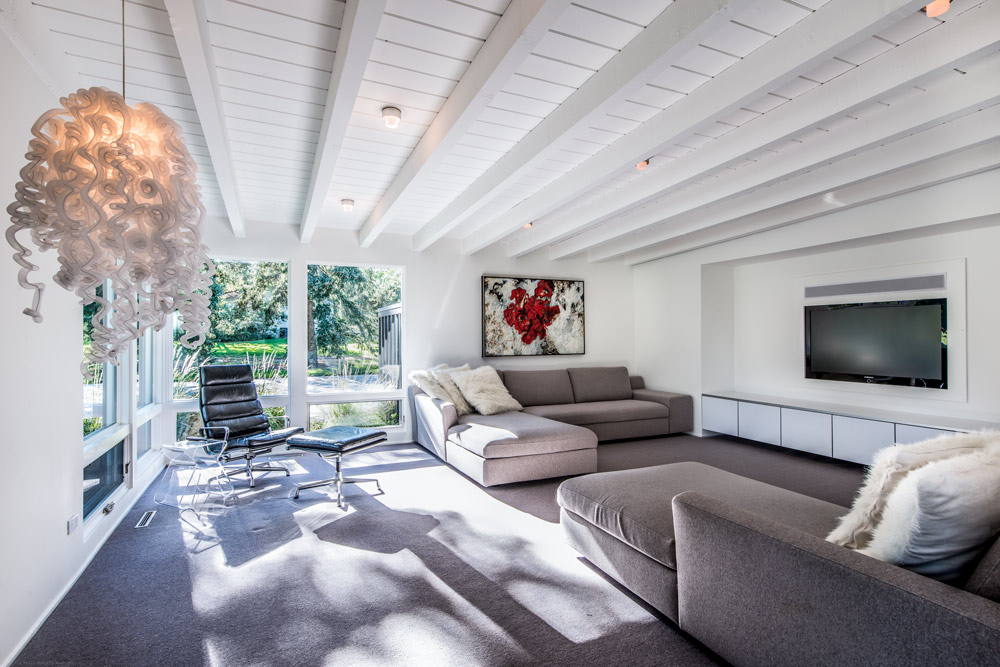
For the remodel, the couple sought to “create a serene yet practical environment,” while retaining the original midcentury aesthetic. To optimize natural light, the couple fine-tuned the 2,300-square-foot home with an open, free-flowing layout. Upon arrival, a generous foyer leads to a sun-filled sitting area, and the kitchen and living room lie just around the corner.

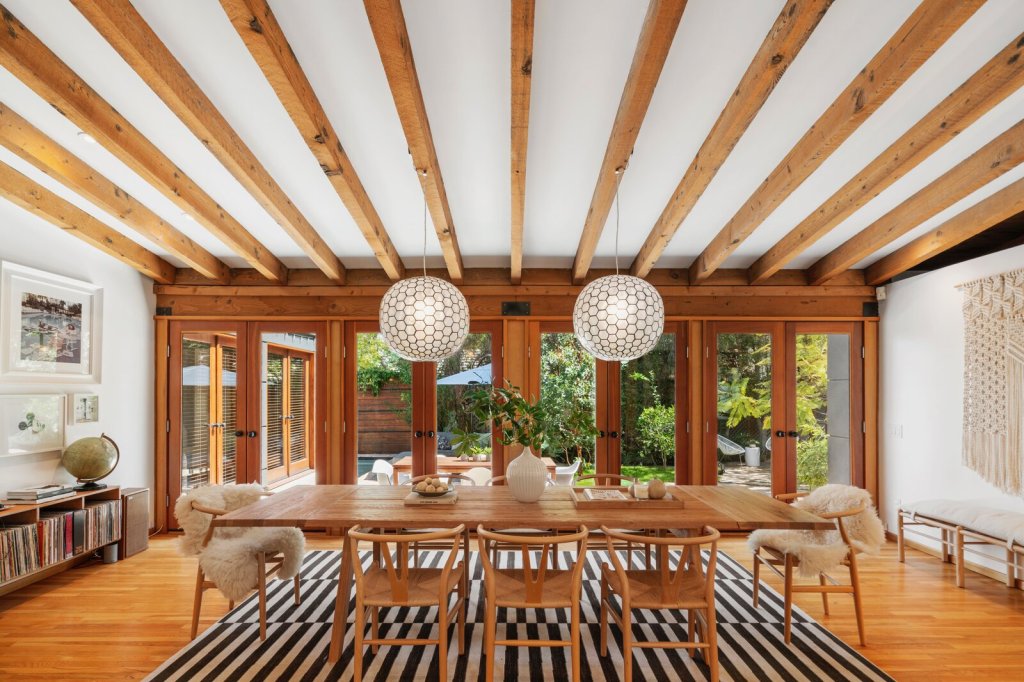
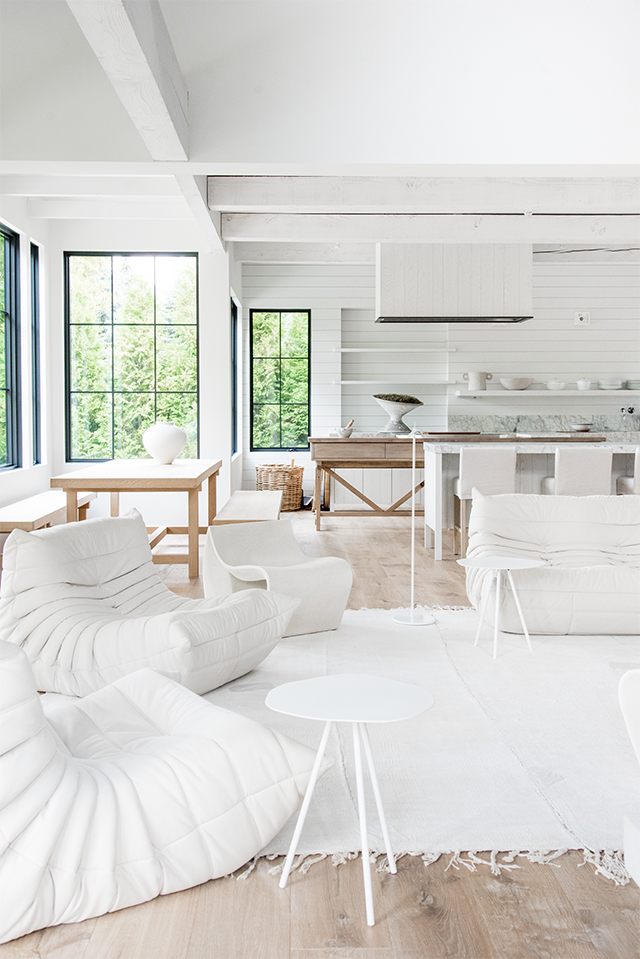
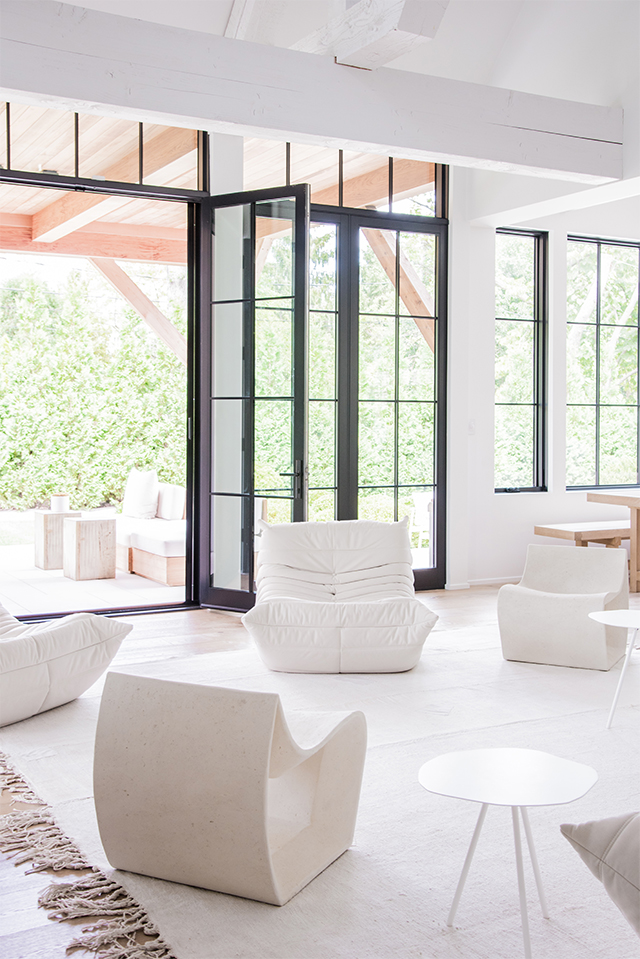
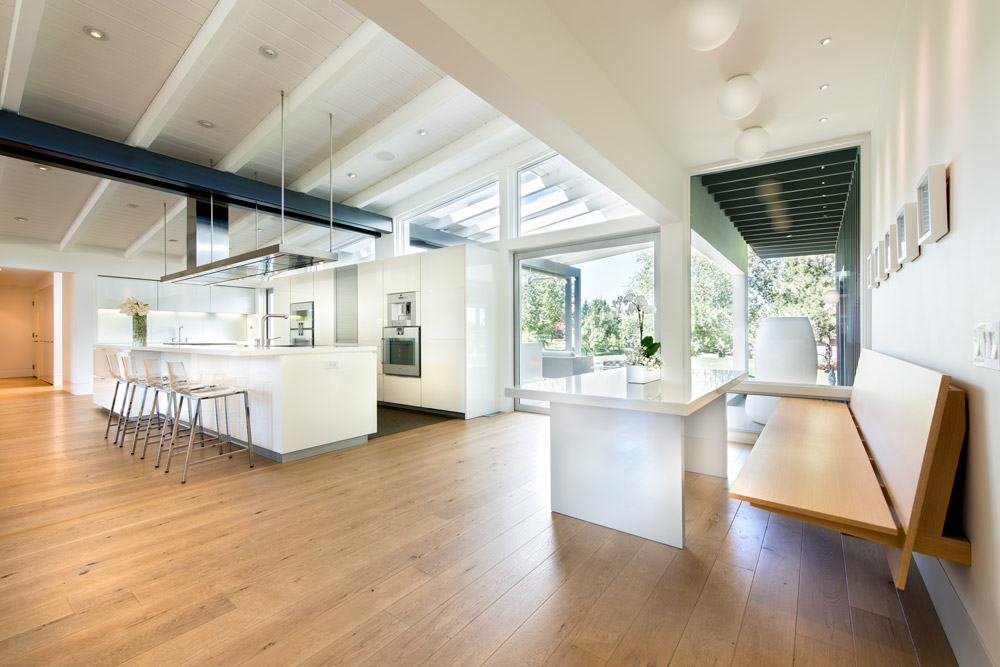
Exposed beams span the merged living spaces, complementing the refinished hardwoods and wood-framed French doors that line the back wall in the dining area. Original redwood beams and vintage plywood were repurposed to make new furniture—including bookcases and a bench—to create a connection to the home’s past life.
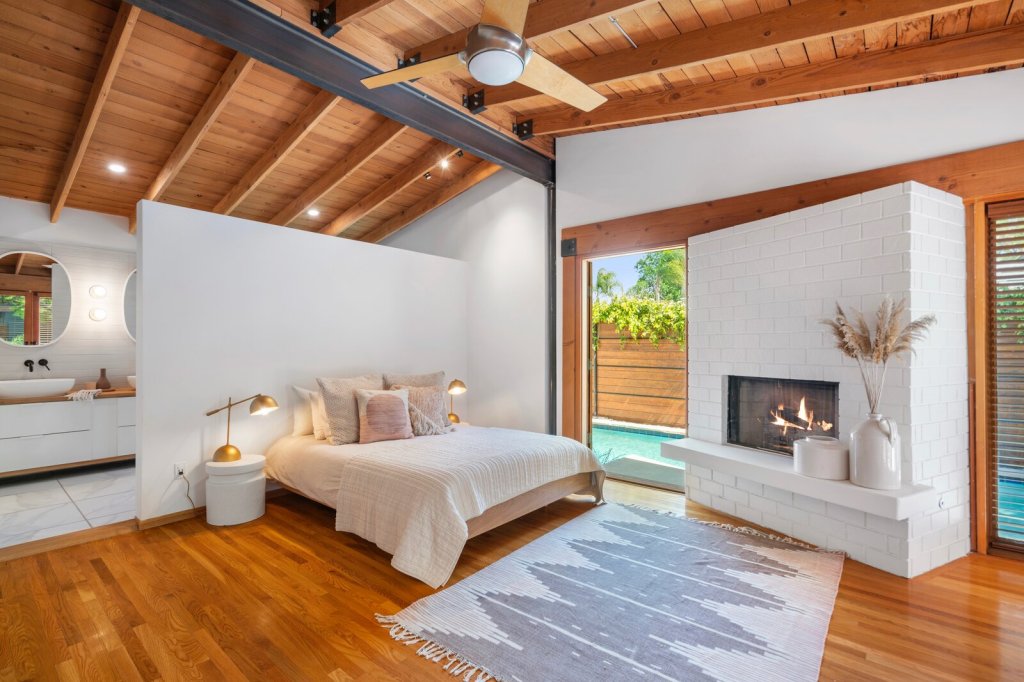
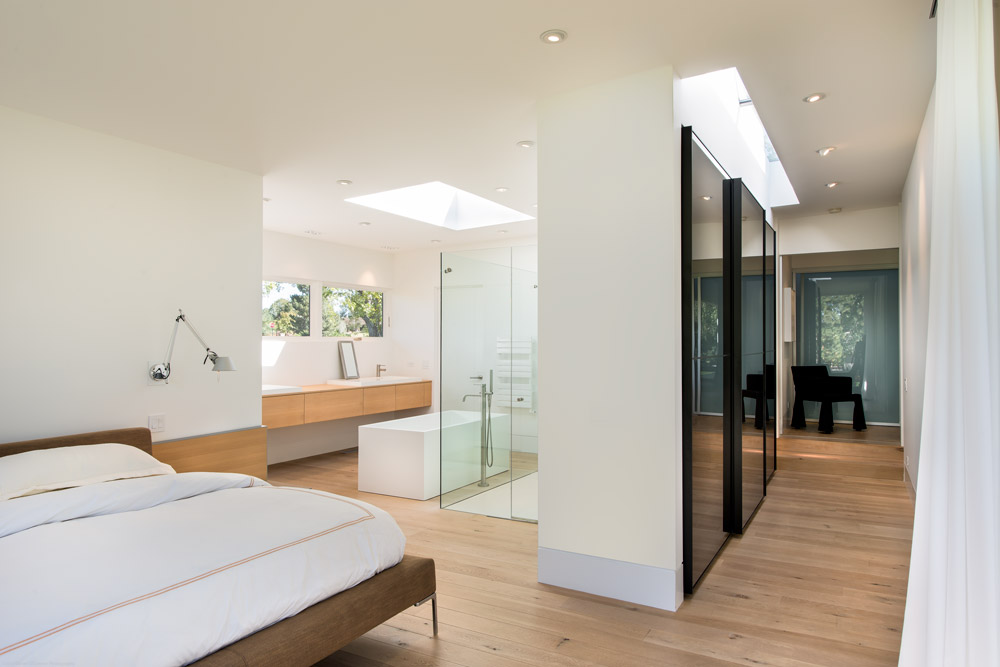
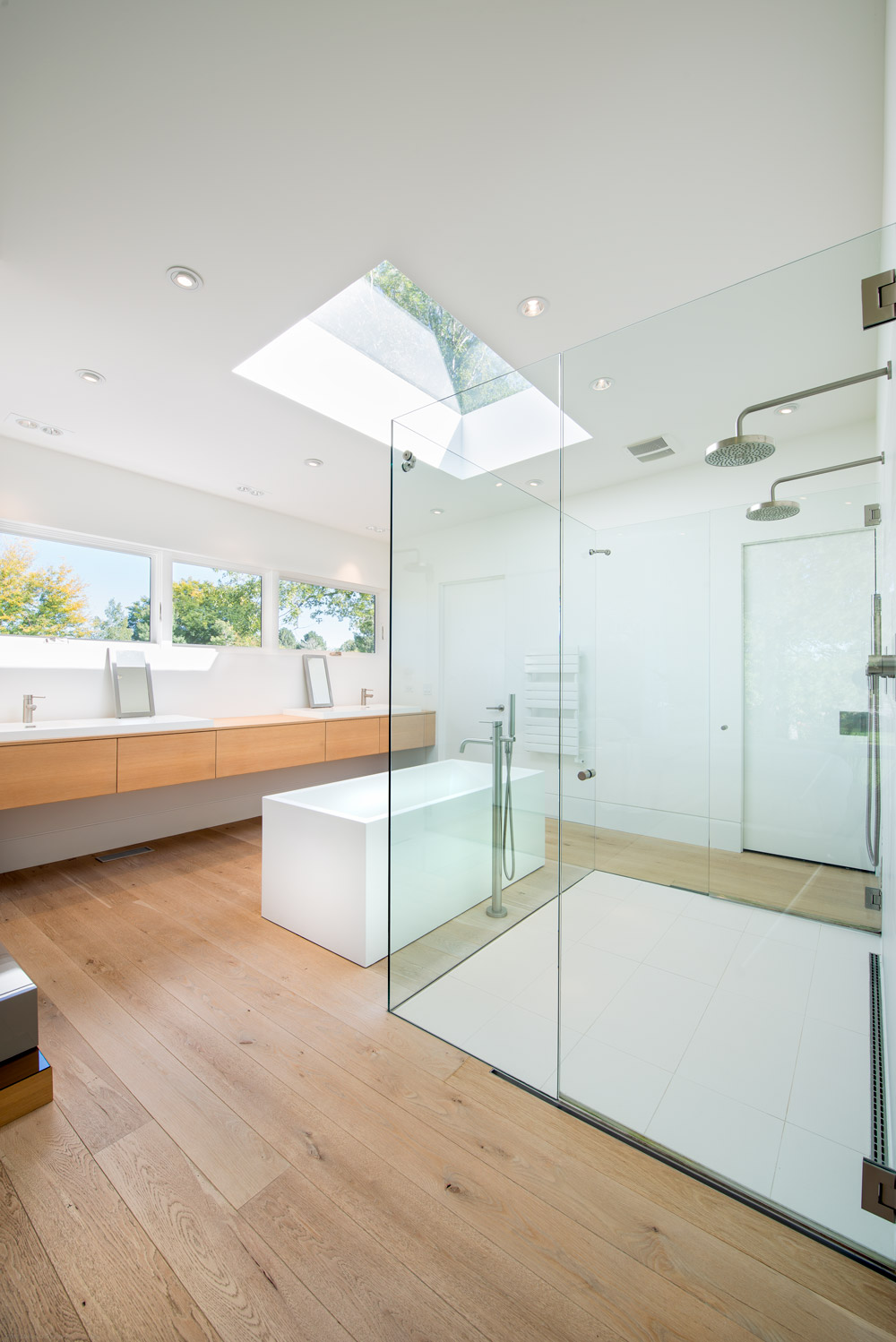
The home’s three bedrooms are located away from the living areas. The primary bedroom suite offers pool views, a fireplace, dual walk-in closets, and a spa-style bath. The two-and-a-half additional baths are outfitted with designer finishes and original glass blocks that channel daylight.


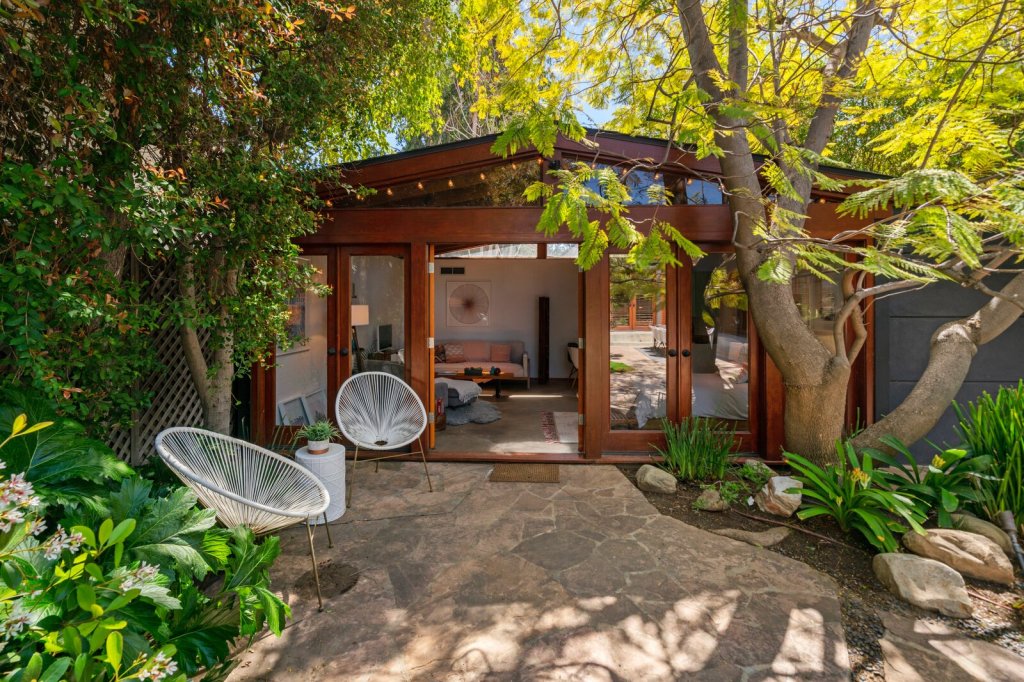
In the backyard has a lush lawn along with a swimming pool and secluded guest cottage, which features a bedroom, bathroom, and well-equipped kitchenette. By infusing warm, soft textures throughout the property, the cottage has a tranquil, restful space that flows seamlessly from indoors to out.





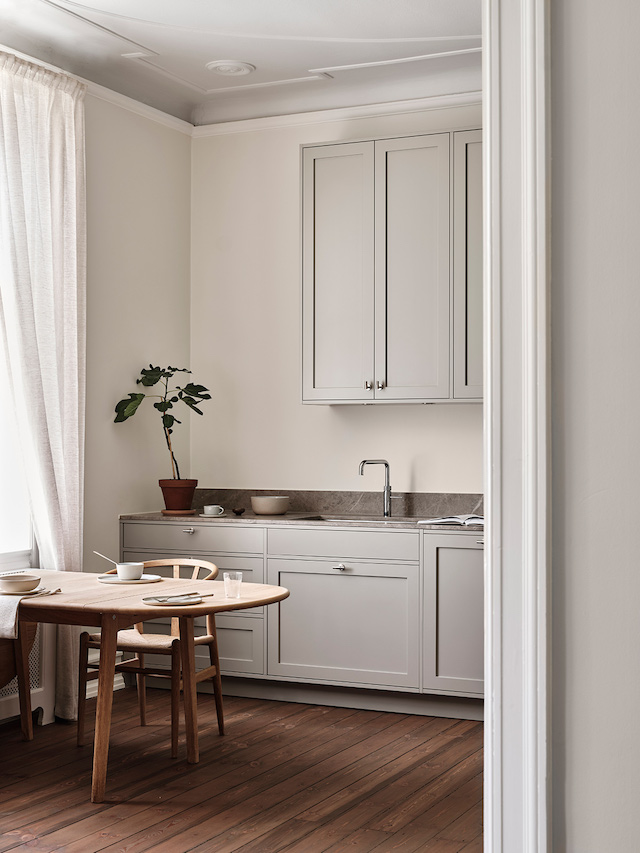
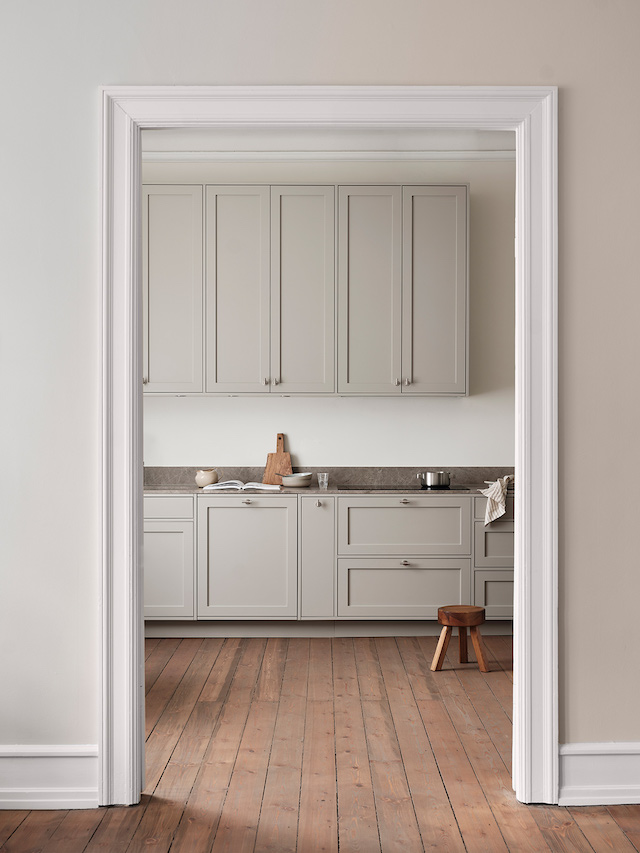
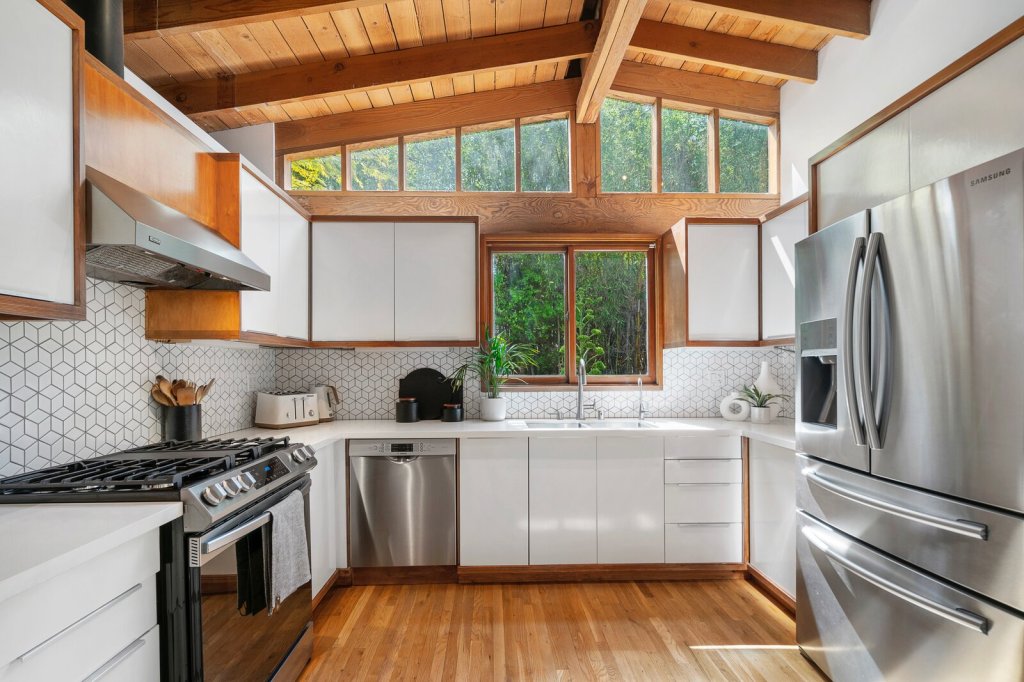
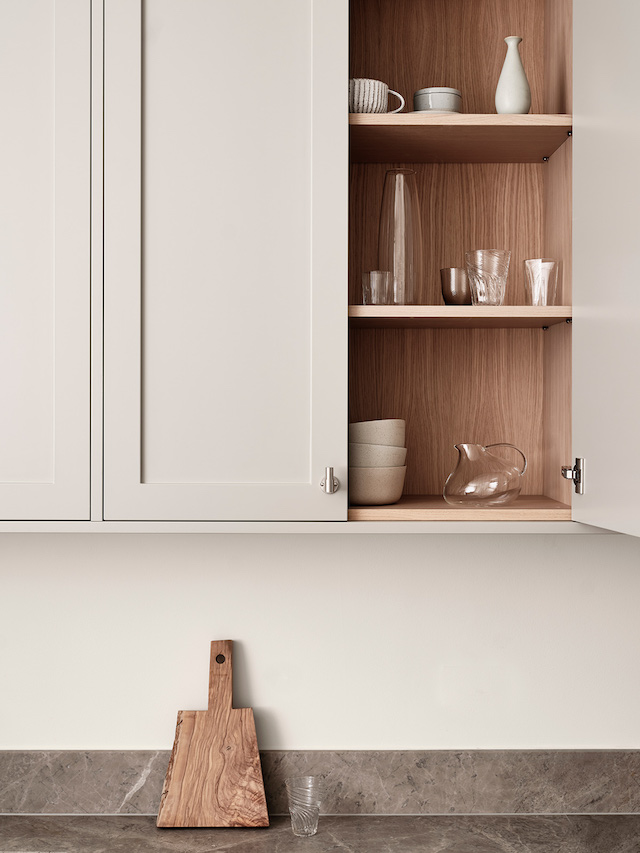
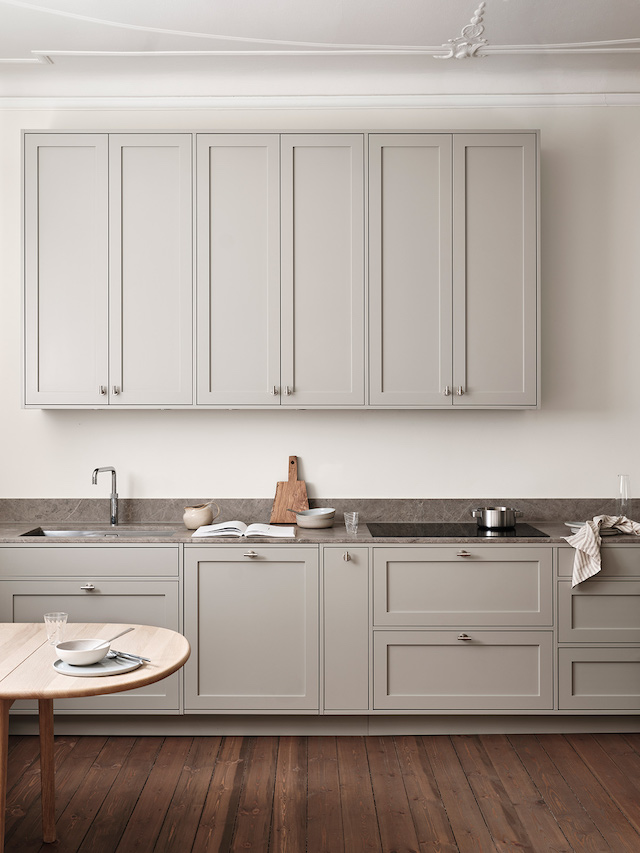
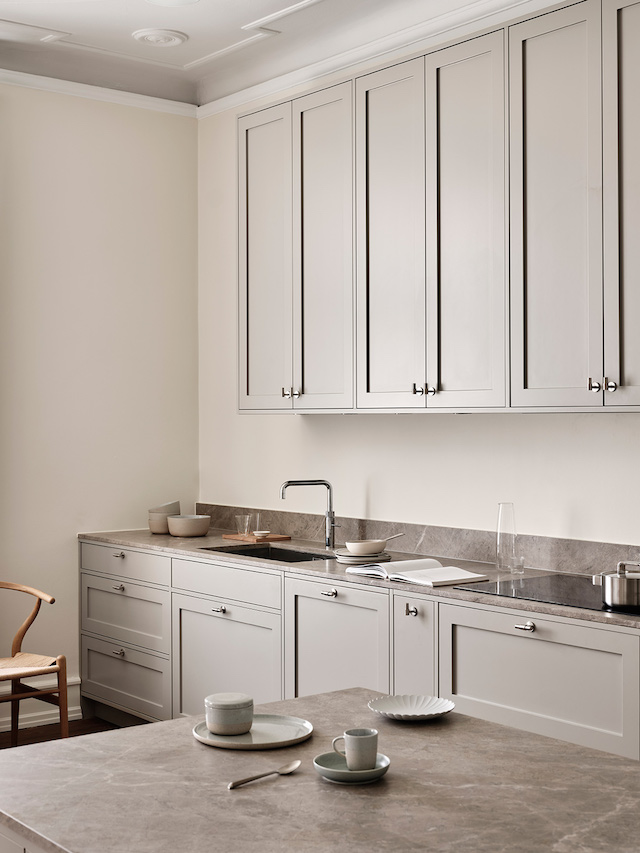
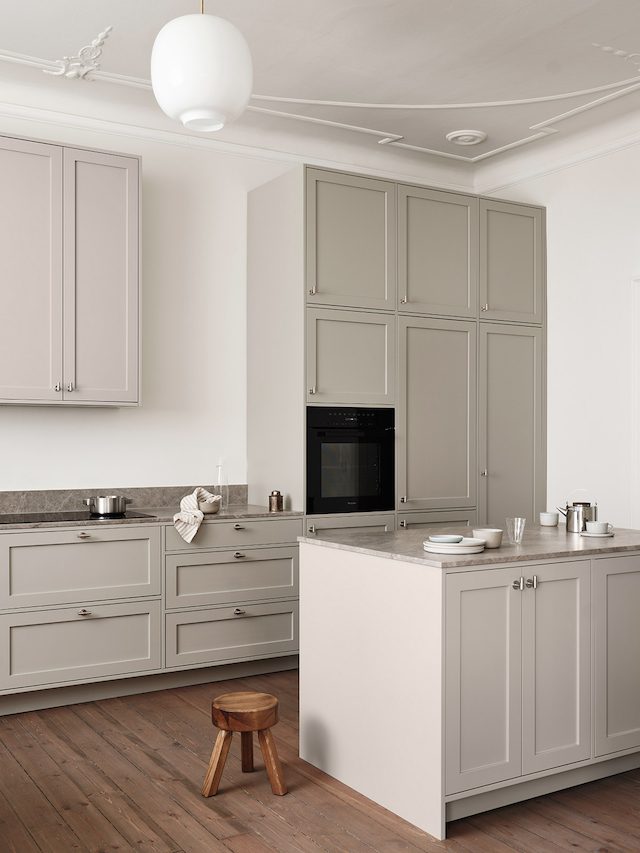
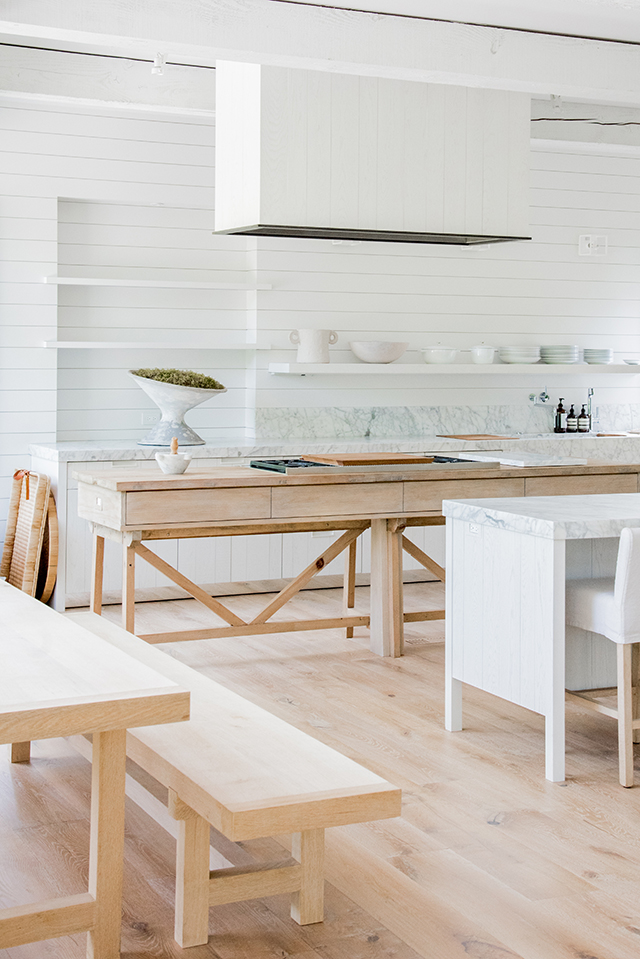
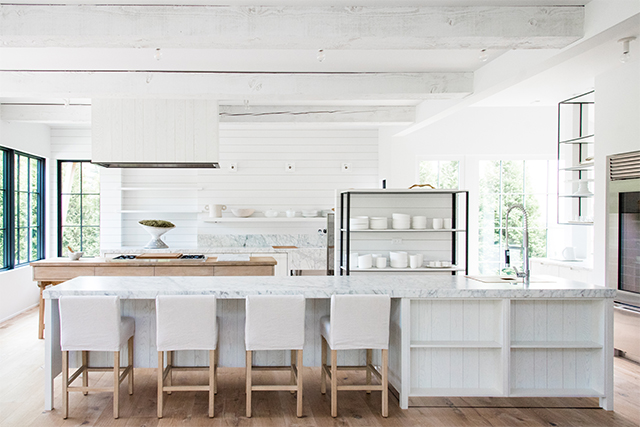
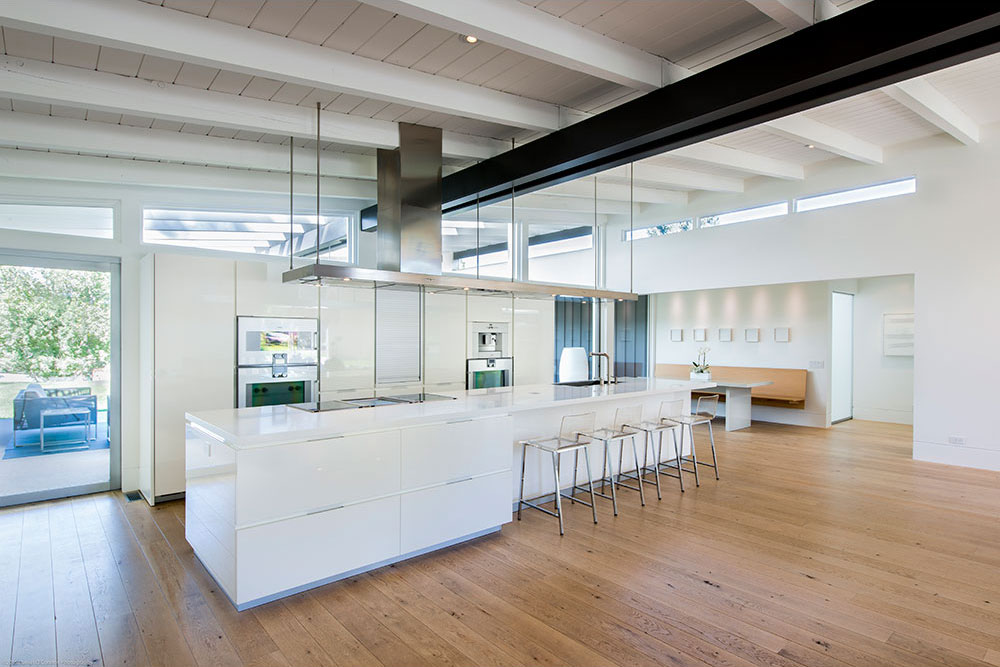
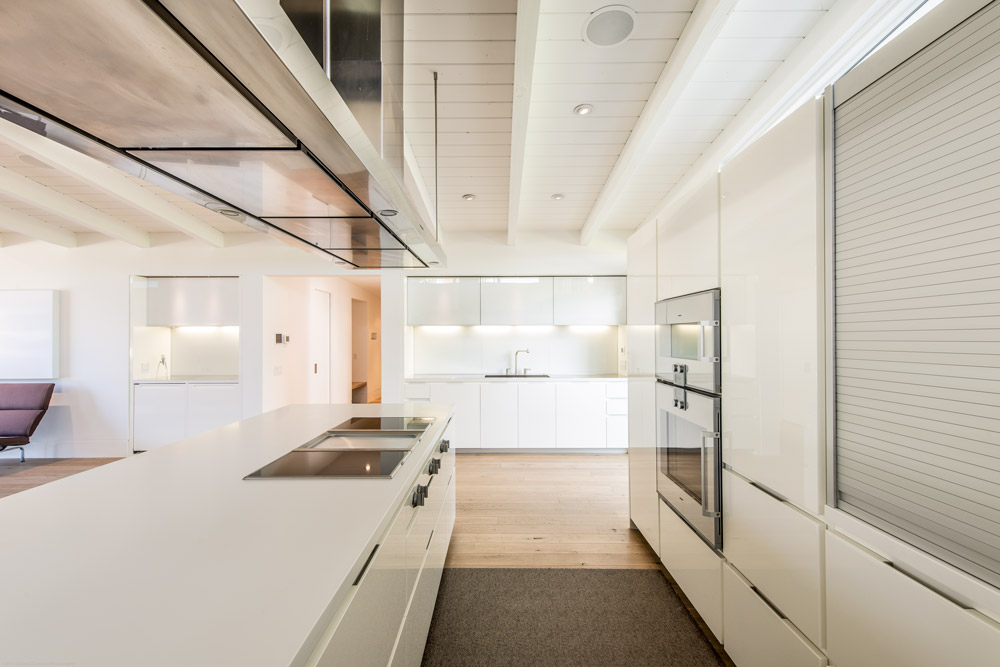
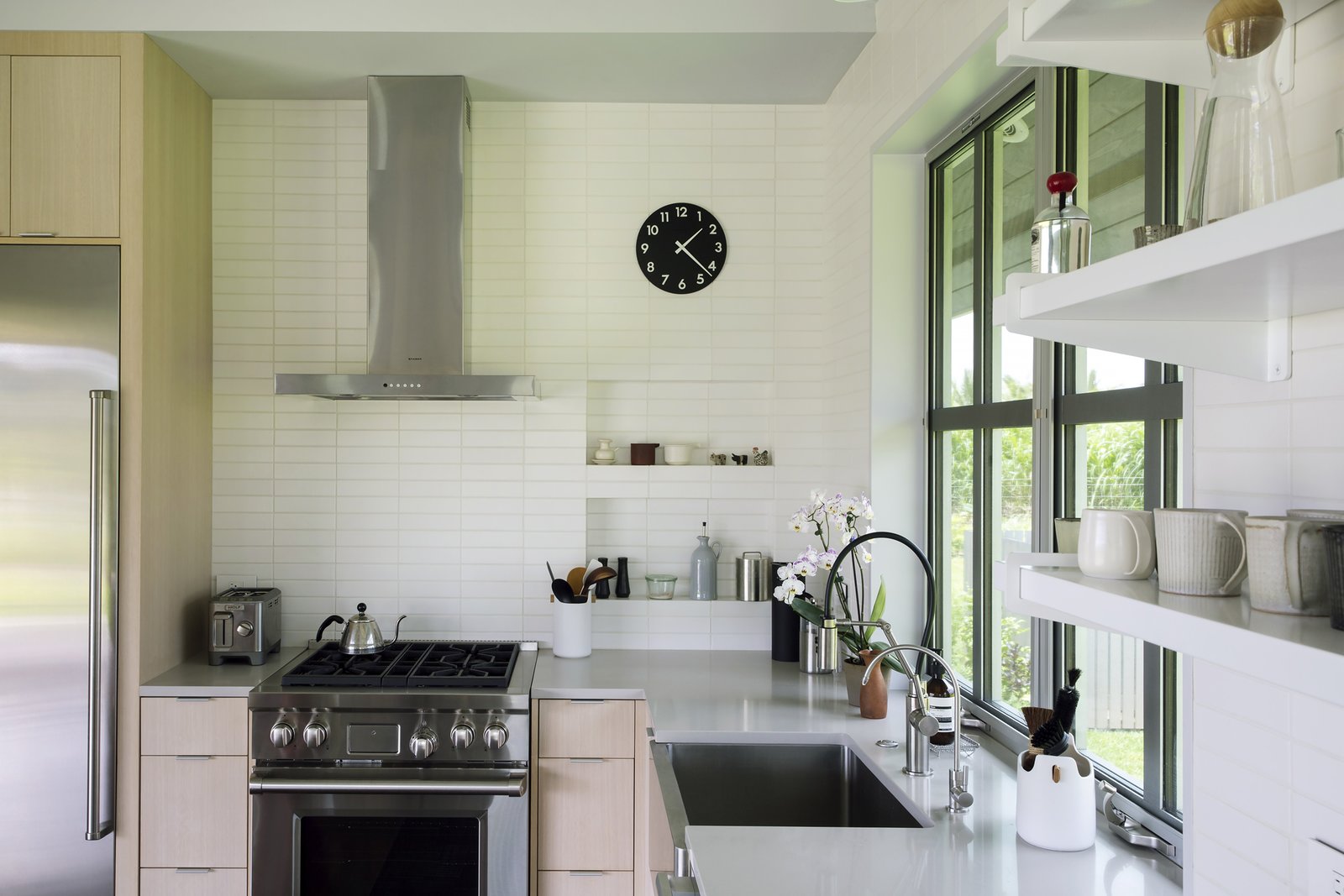
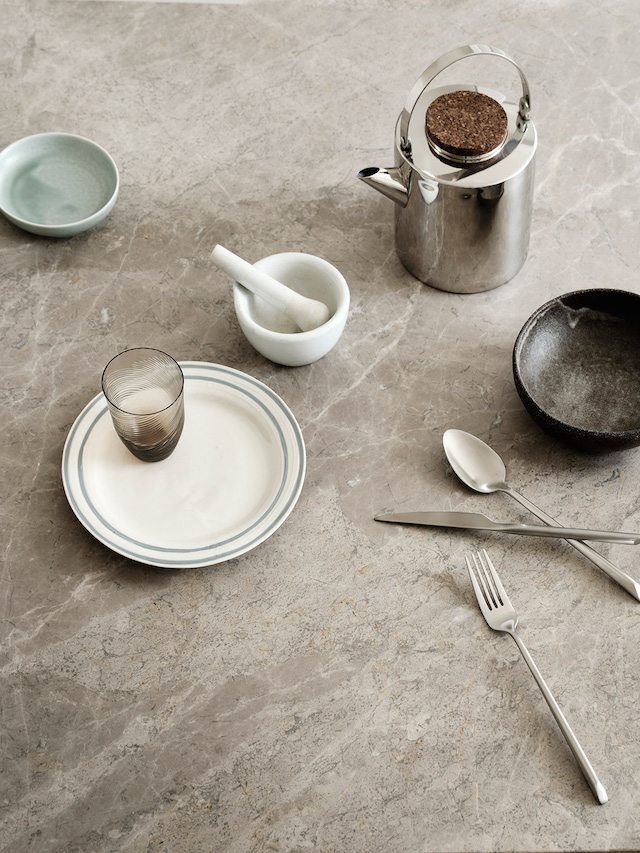 Staying true to the minimalist aesthetic of the space, the decision not to cover the entire wall with cupboards is also in keeping with the style of Shaker kitchens. The kitchen demonstrates beautiful attention to detail, as can be seen inside the cabinets and drawers, which feature a warm white pigmented oak.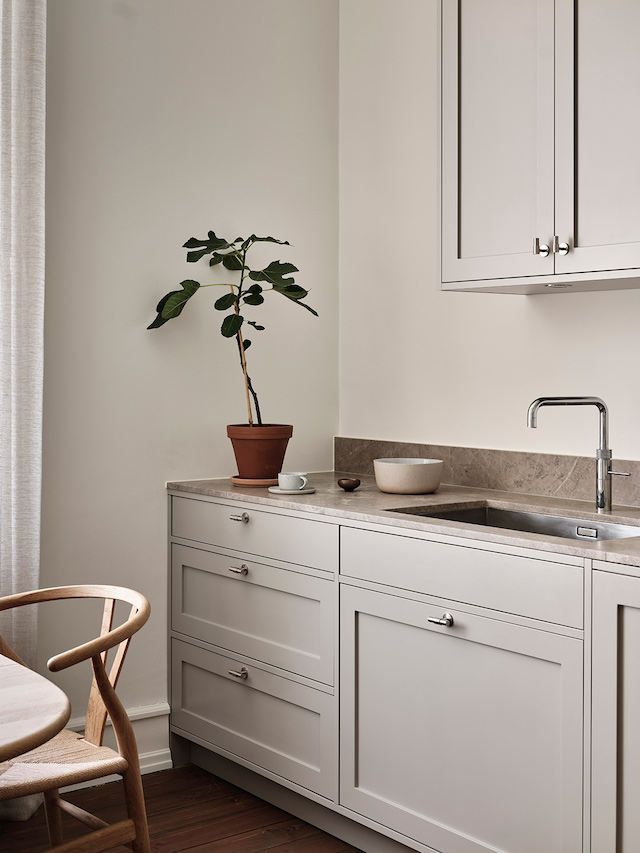
 I love the idea of Old is New Again. I also believe that when we experience global disasters such as the current pandemic, we learn to appreciate history even more – especially Italy.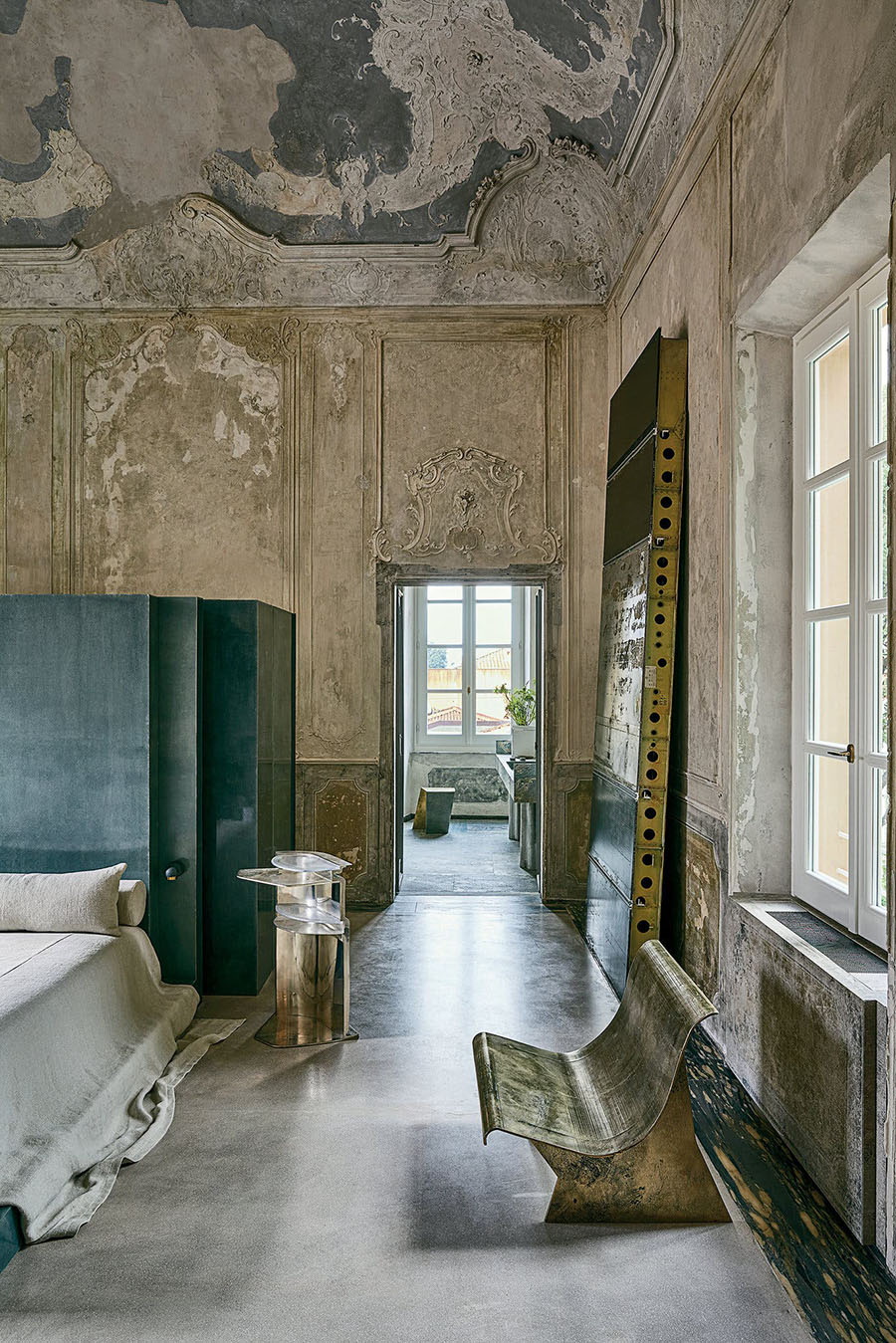
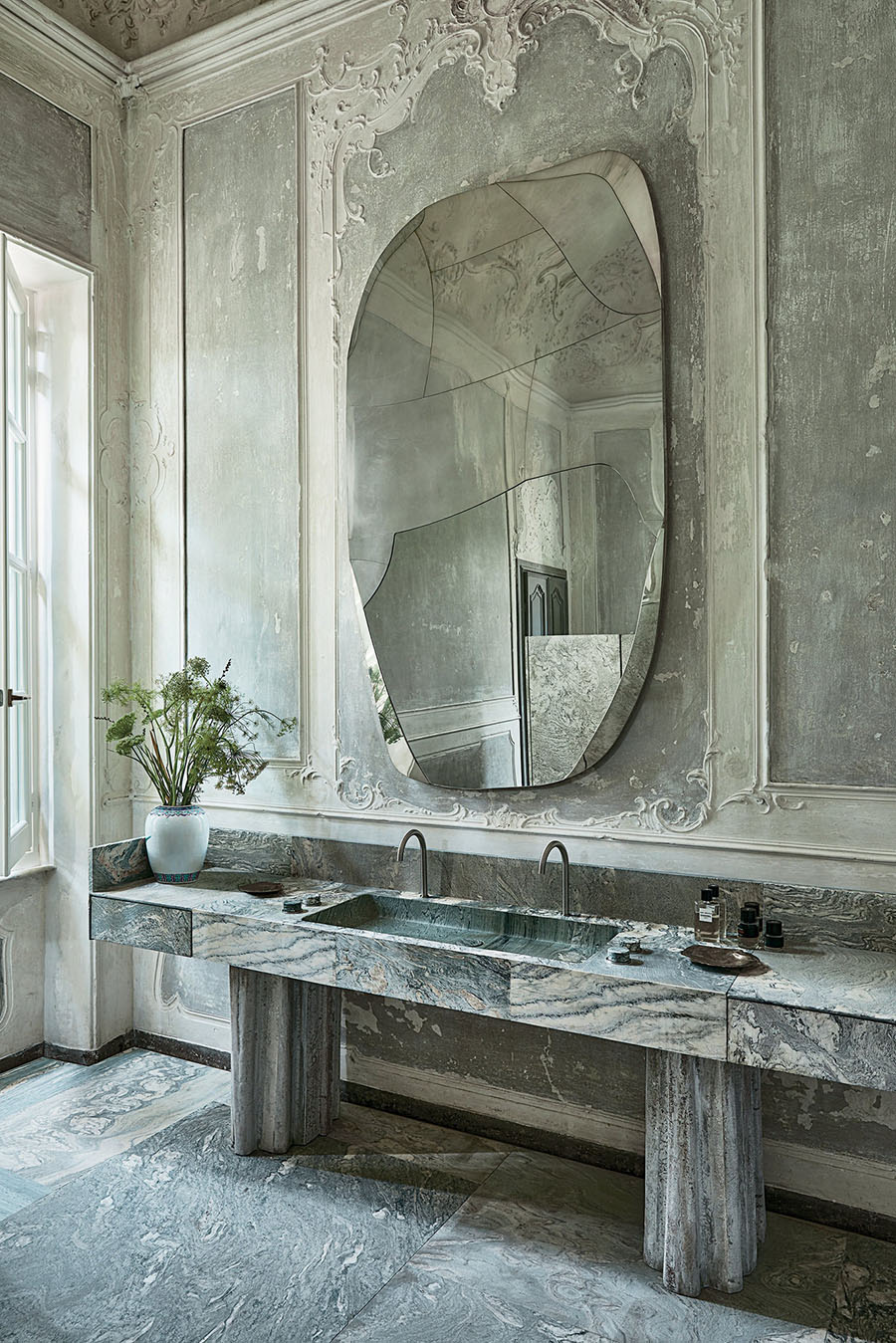
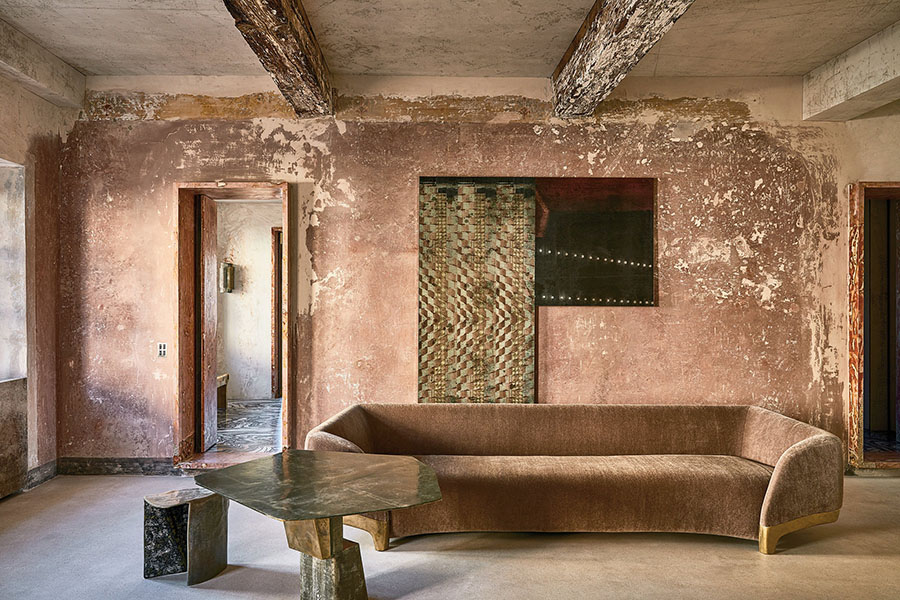 He has overhauled the 5,500-square-foot (510-square-metre) early 18th-century villa in Pietrasanta by the sea in Tuscany, in a grandiose but understated, elegantly distressed minimalist style that is often evident in his palazzo renovations.
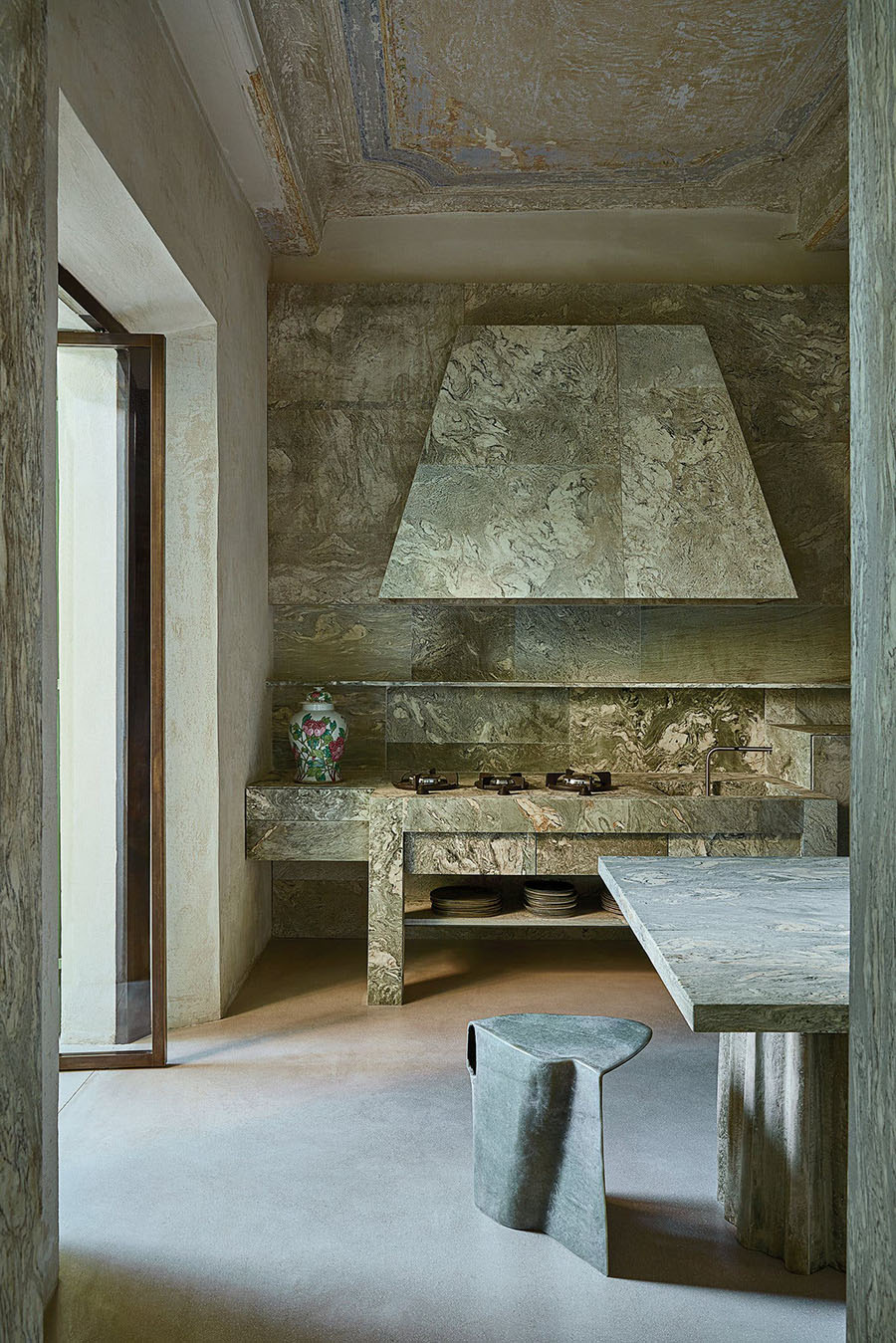 This particular palazzo was built by a local painter, Antonio Digerini, who died in 1889, but it has served many purposes over the centuries including being a cloister and a hotel.
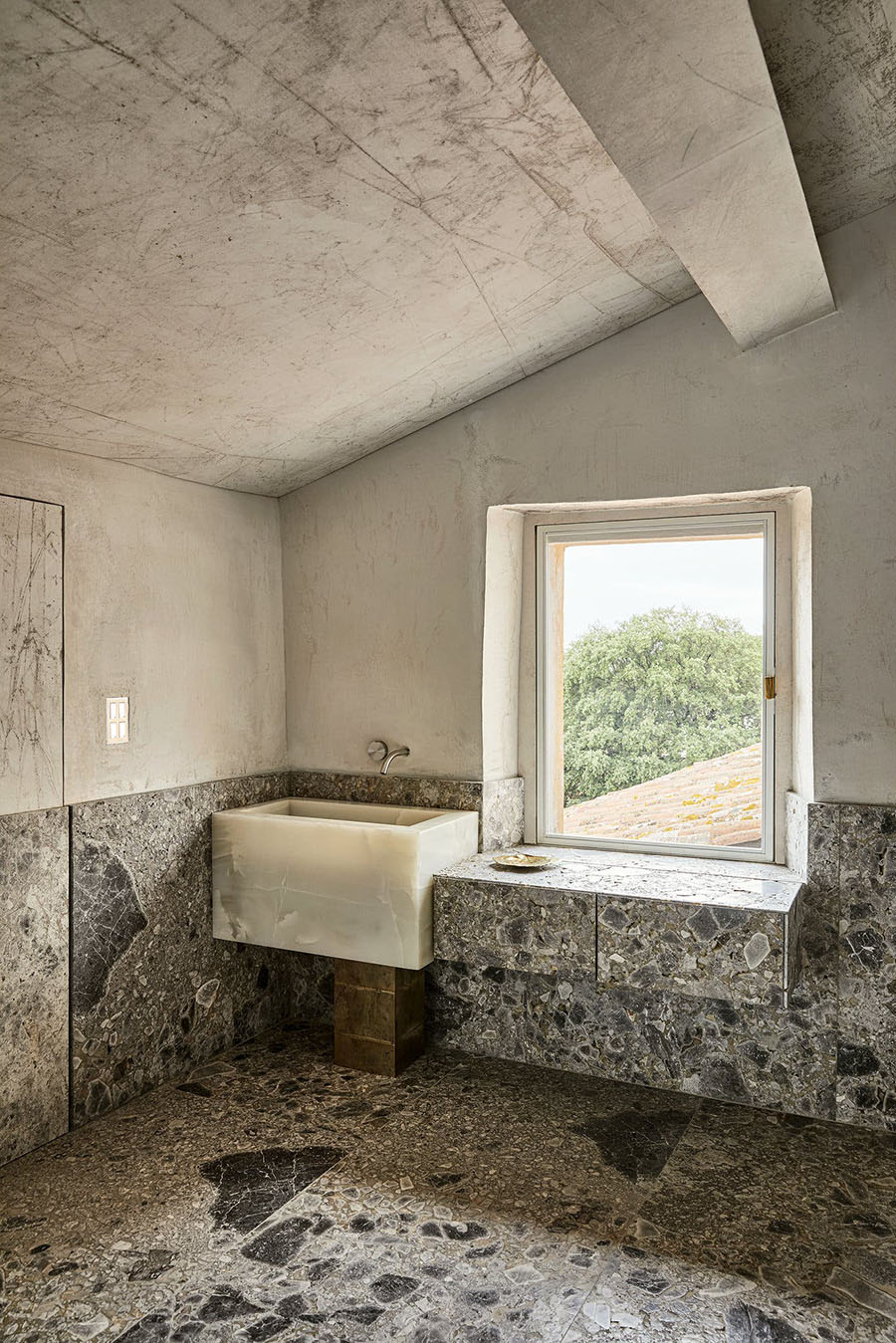 In several spaces, the texture and tone of the patina of the original walls and ceilings is replicated in dyed, gessoed and sanded Belgian linen used for parts of the walls and ceilings. Most of the marble is local as the area is famous for its marble quarries.
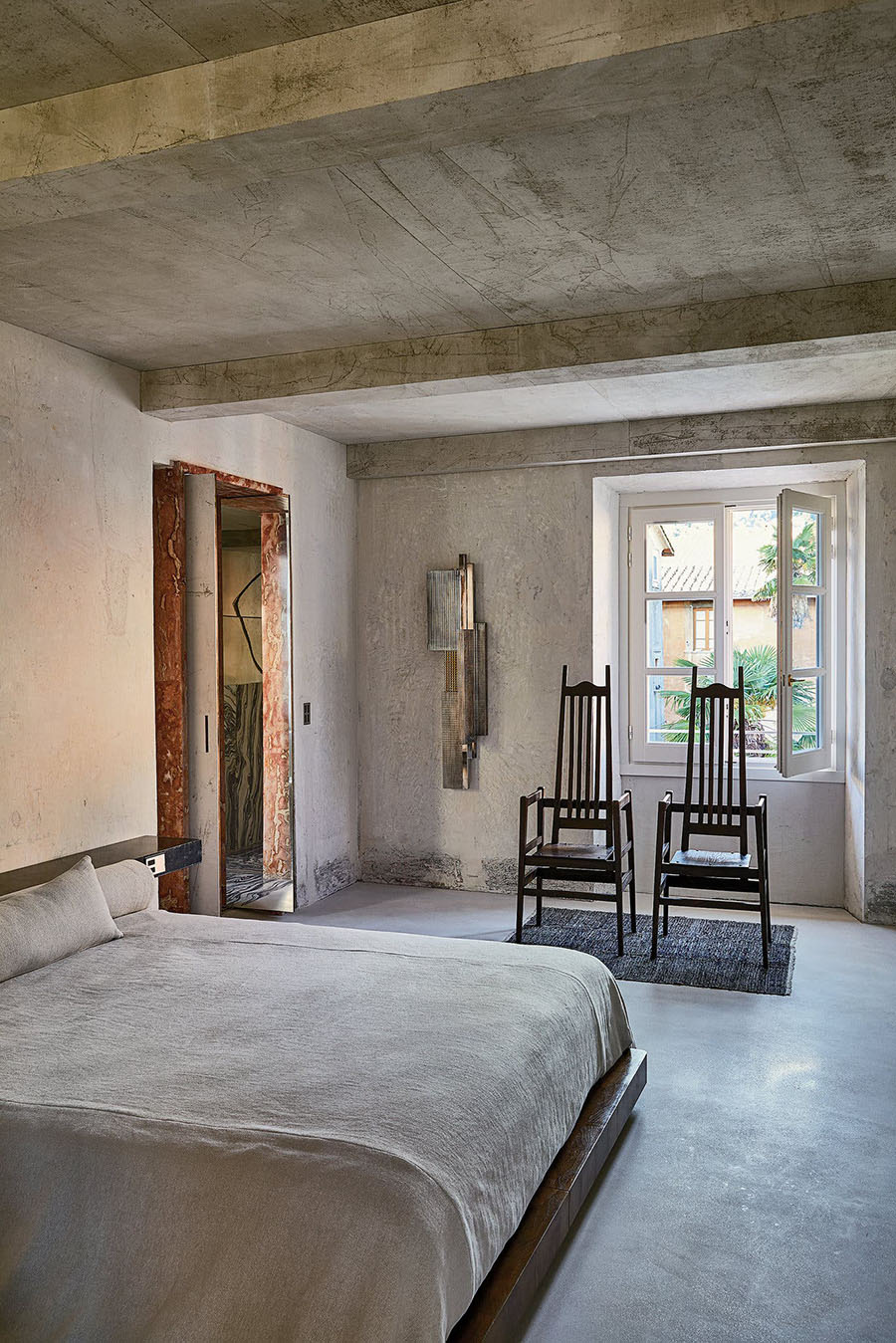 Many of the furnishings and art are of De Cotiis’s own creation and design and although their vibe is futuristic and even slightly brutalist, they fit seamlessly with the villa’s cold-cool ambiance. The balance exudes a sense of calm but in an eerily powerful way. It isn’t cozy or comfortable overall, yet it is inviting and interesting for those of us who love his style.
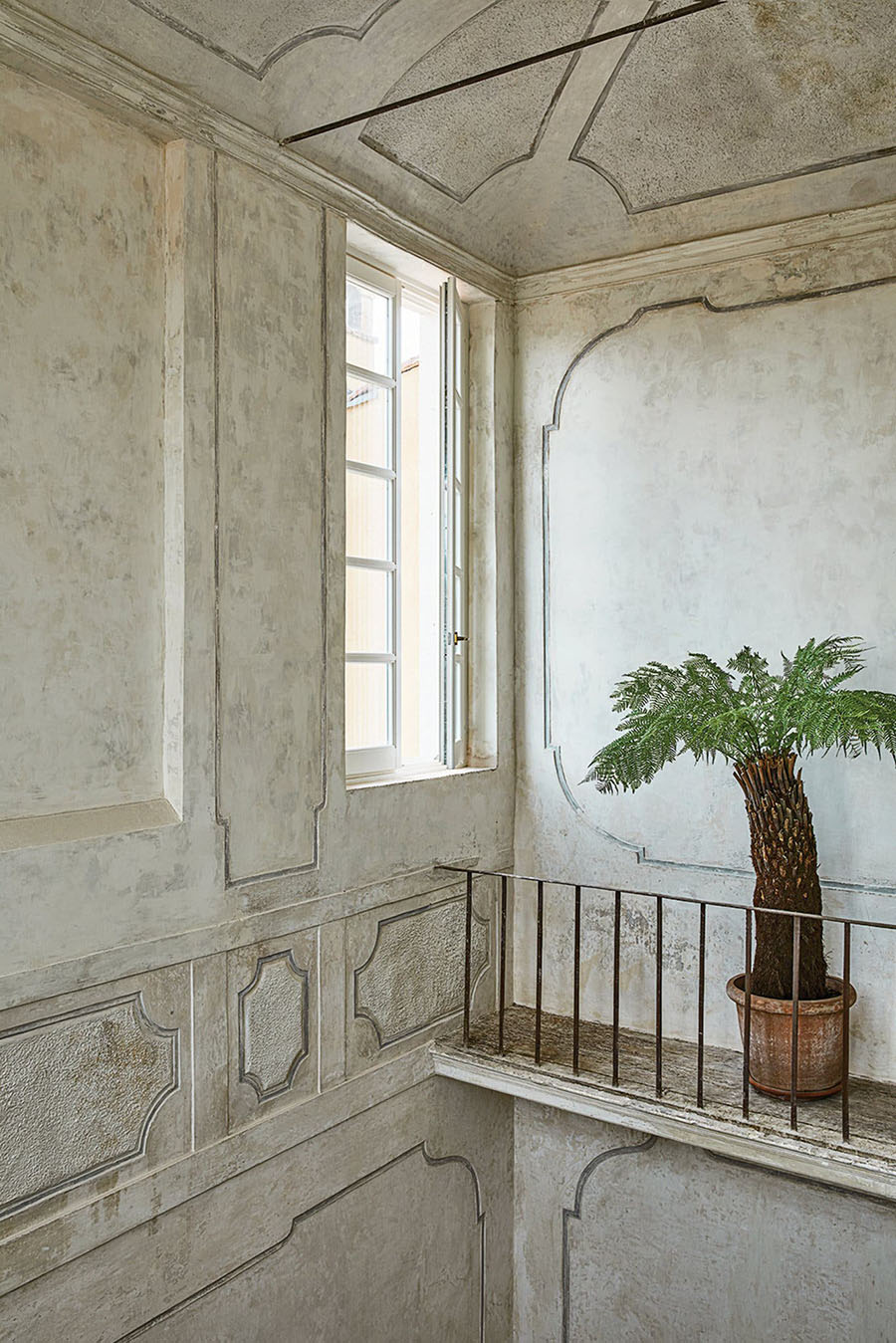 De Cotiis doesn’t promise to create an environment in a style any client might want. But you can’t help but respect his boldness.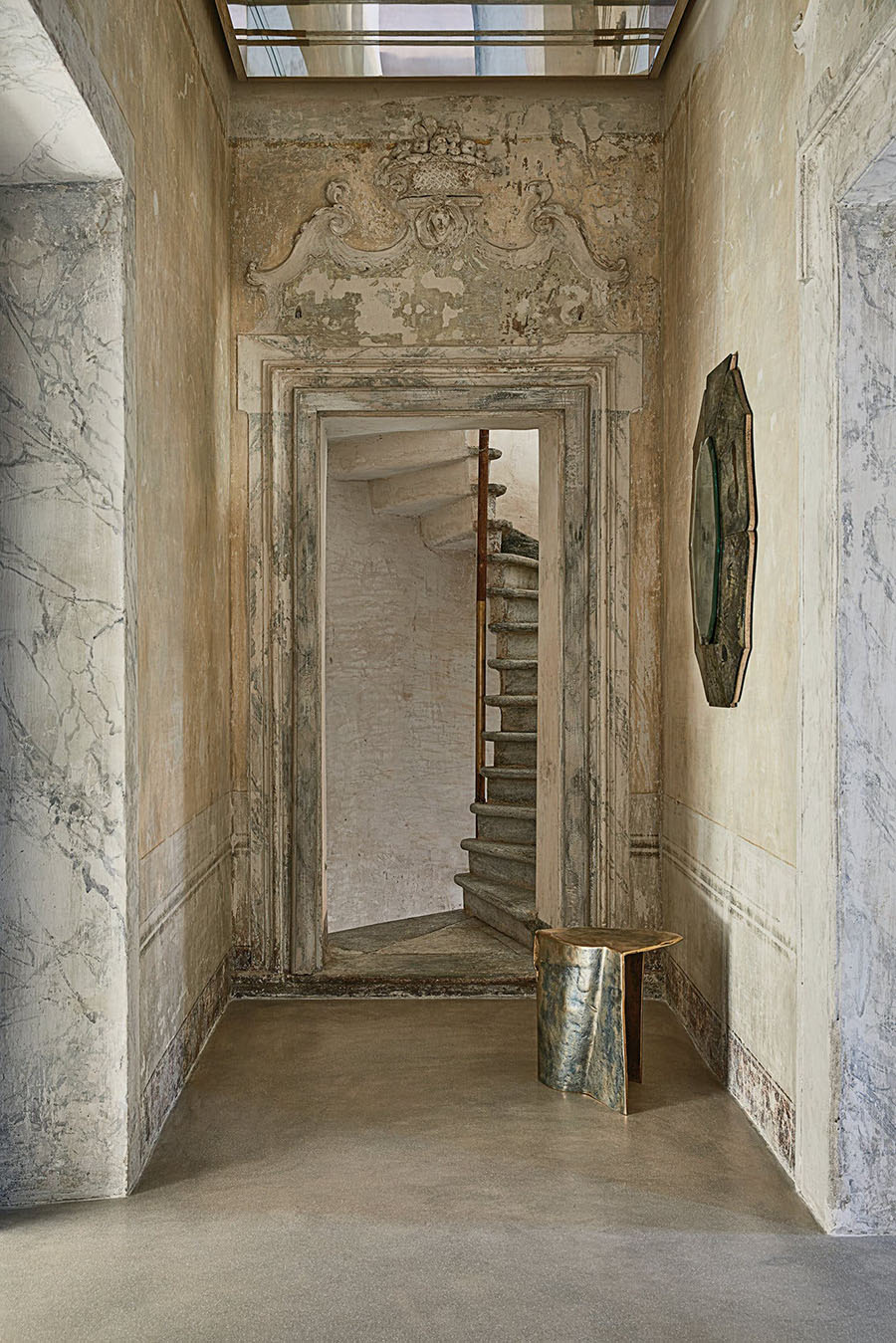
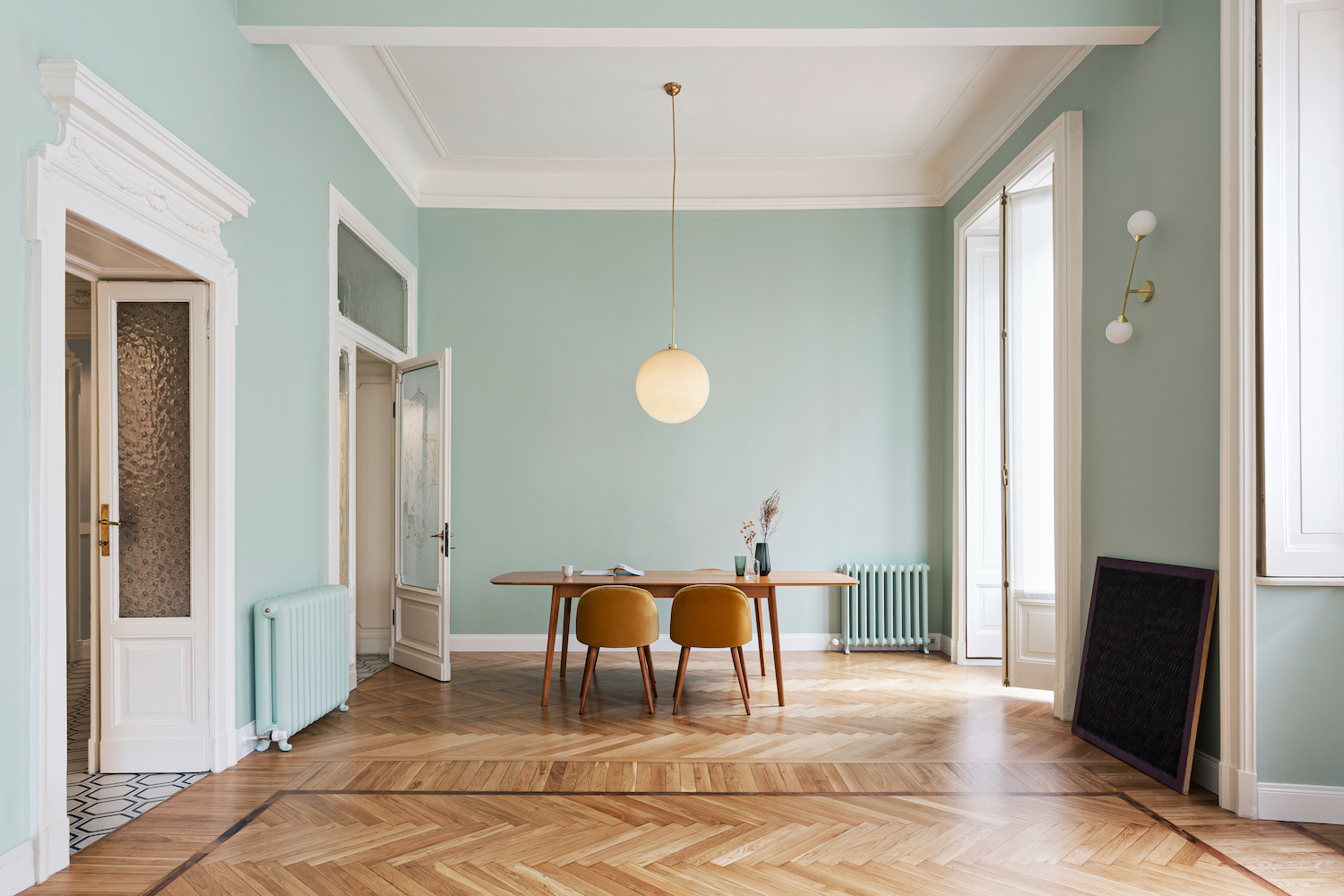
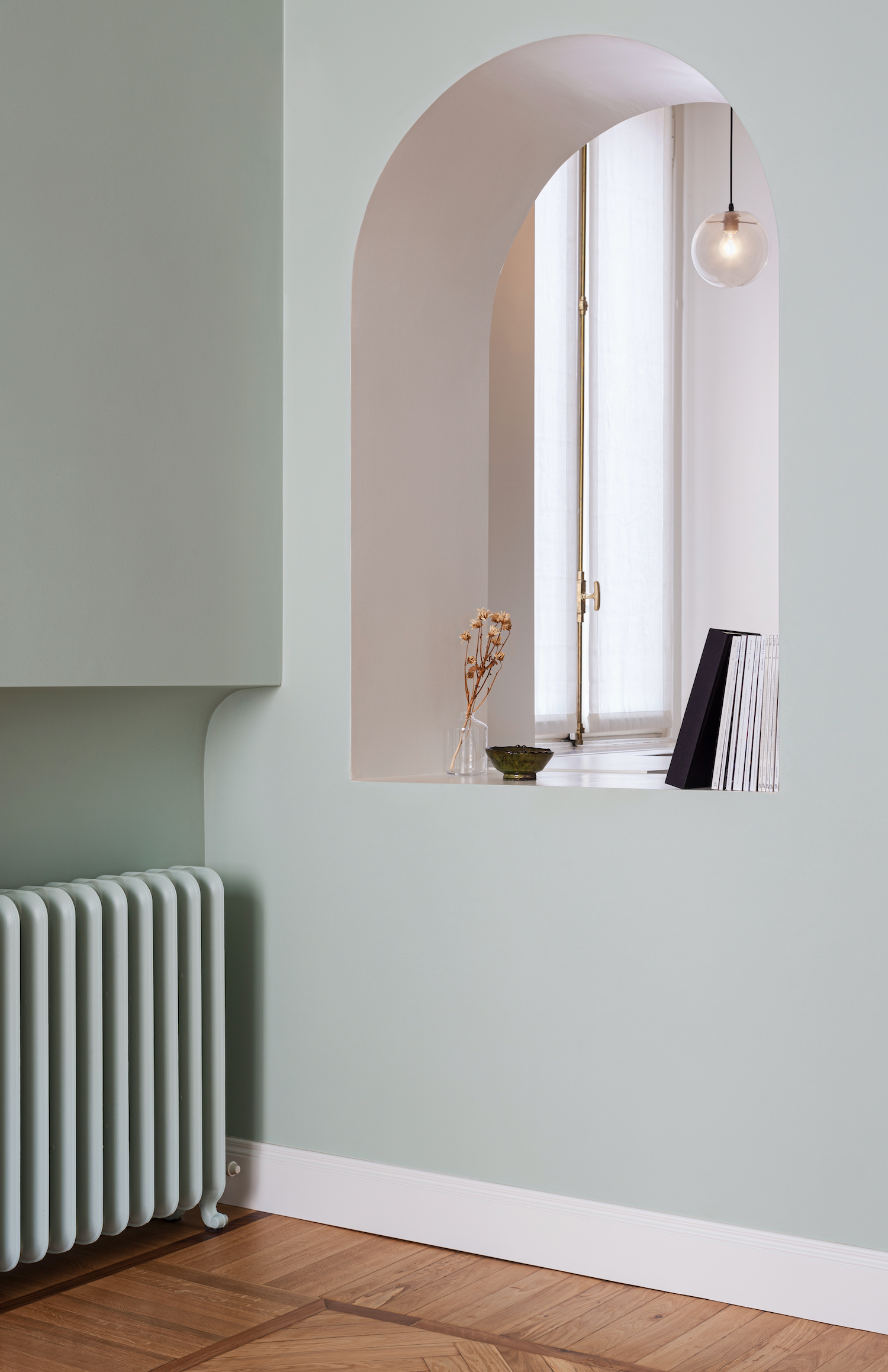
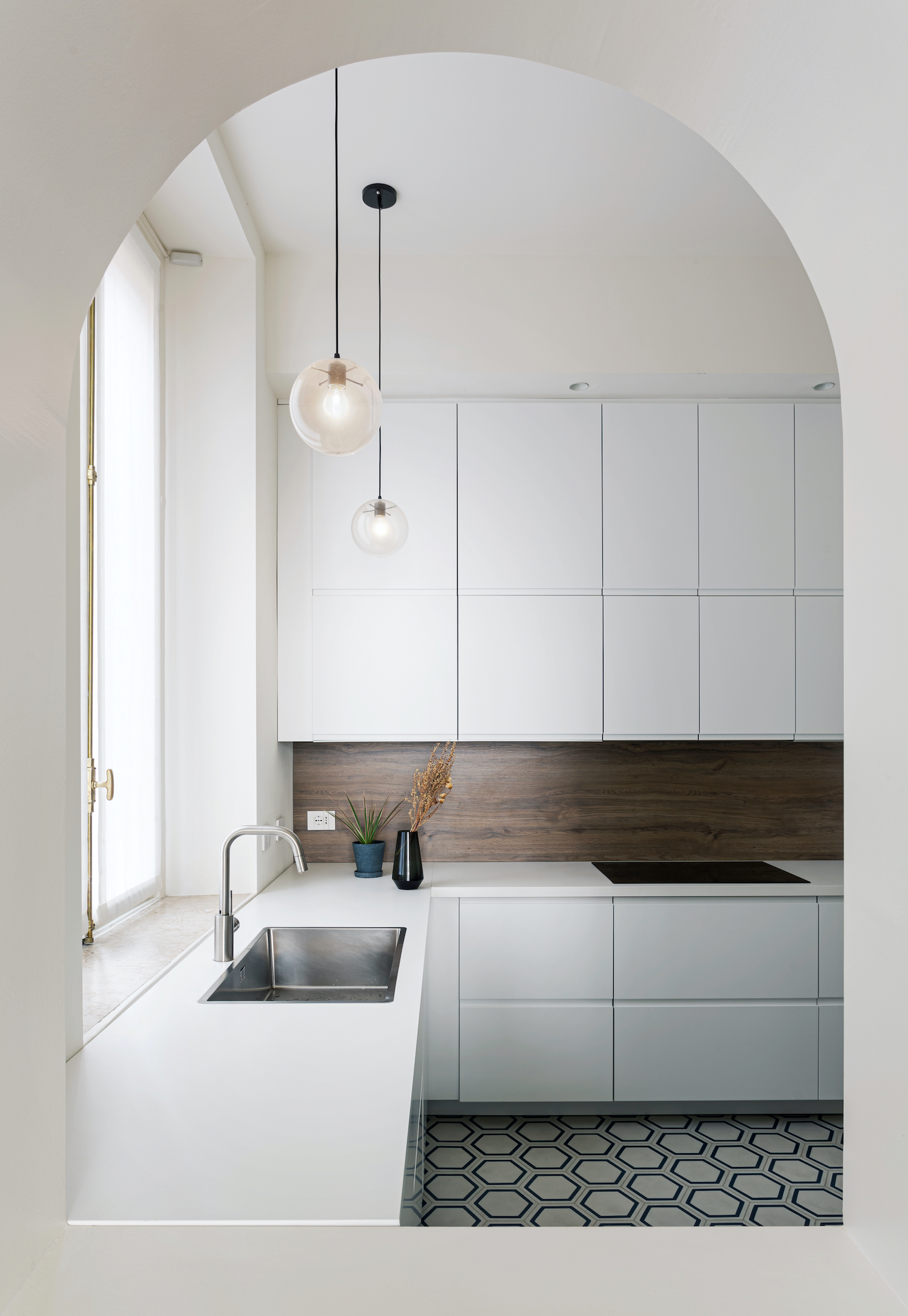
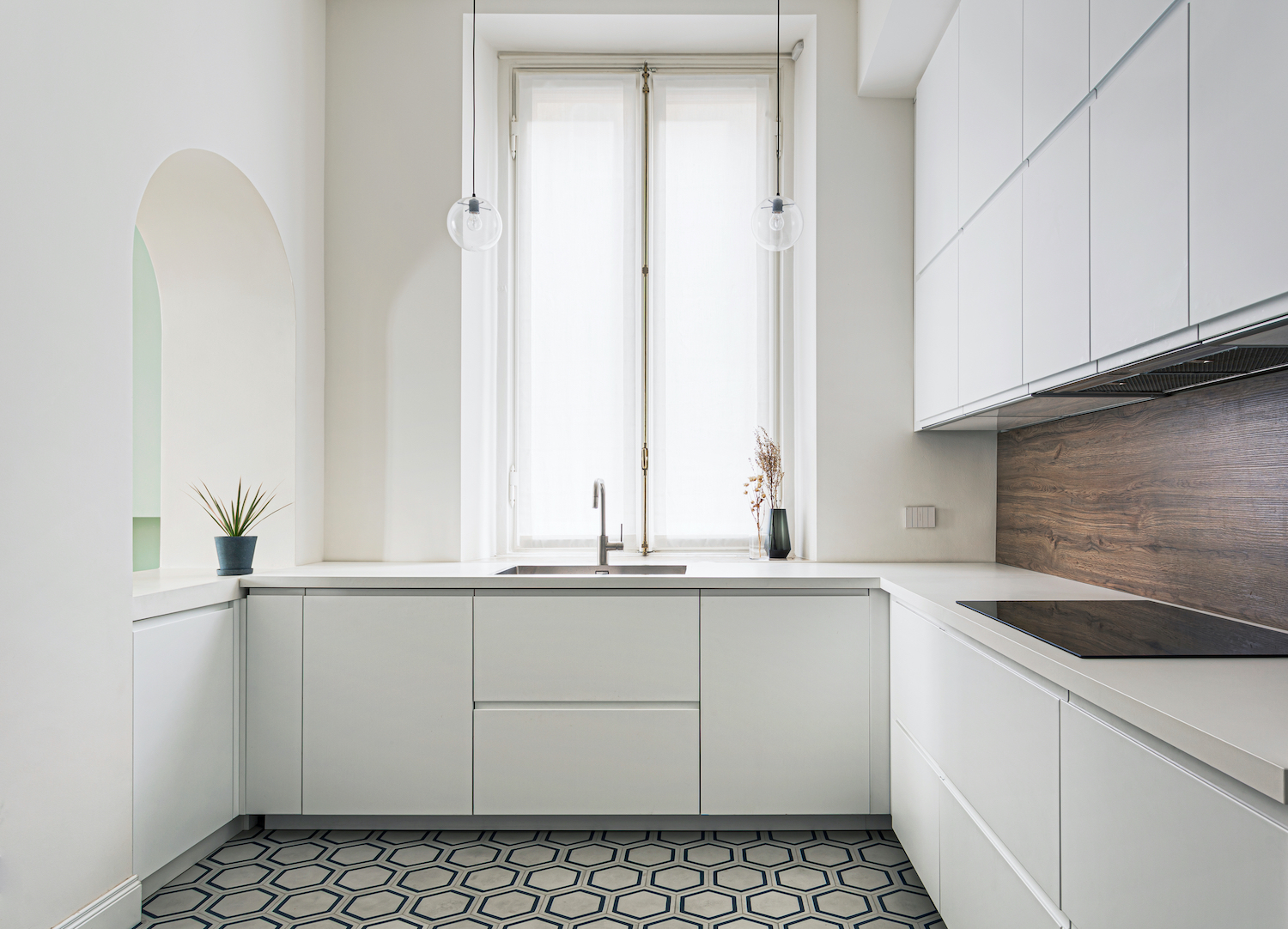
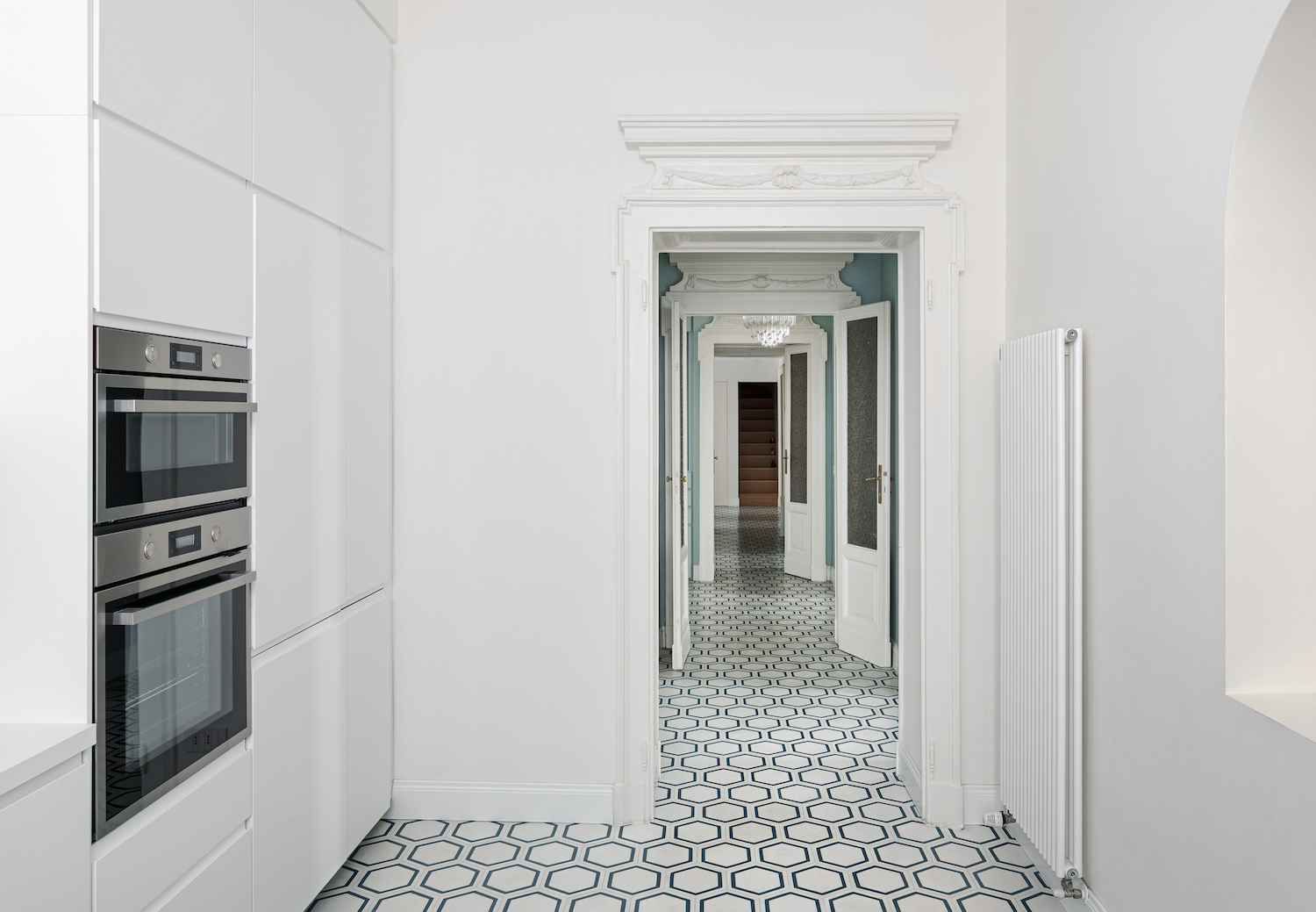
 Recently completed in February 2019,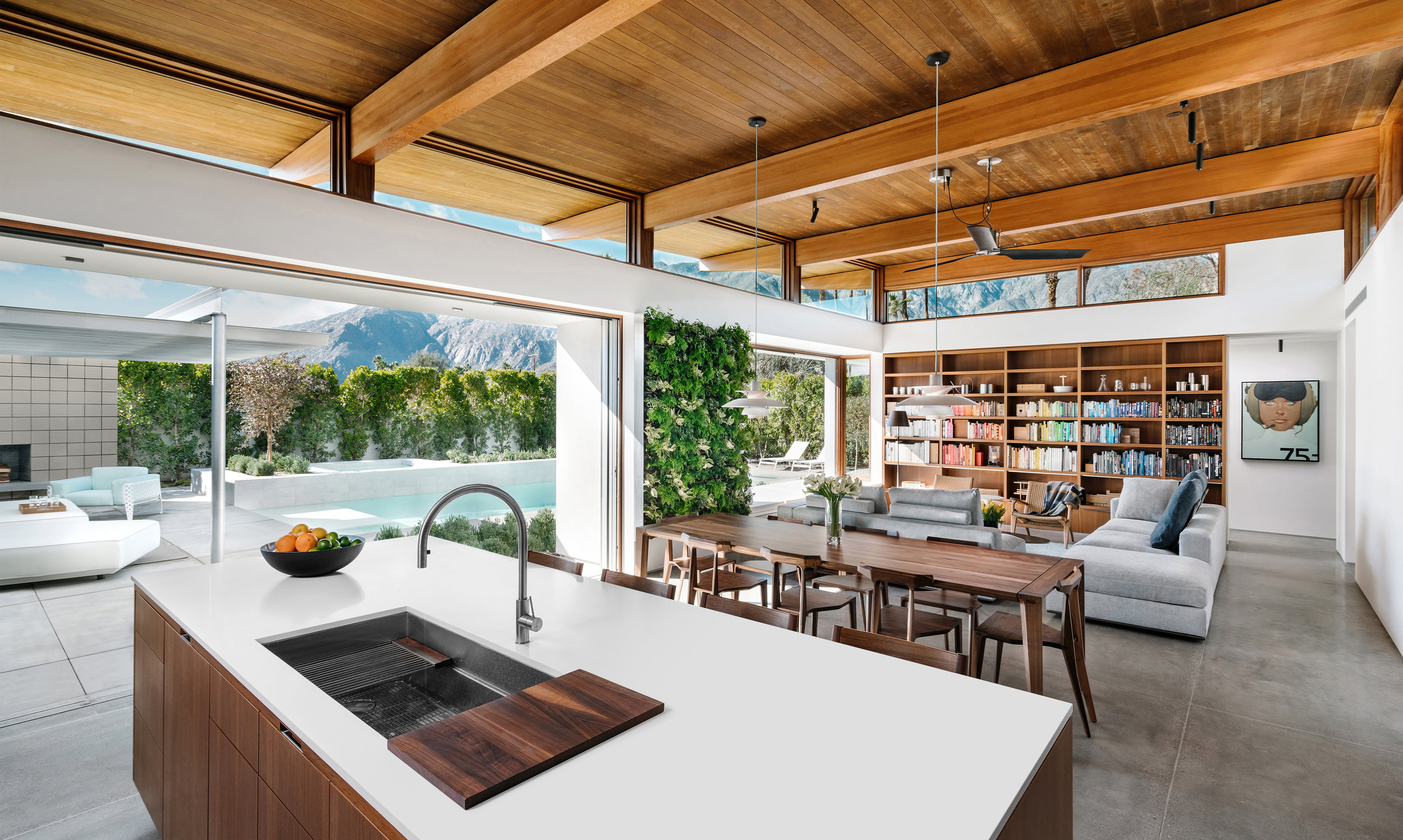
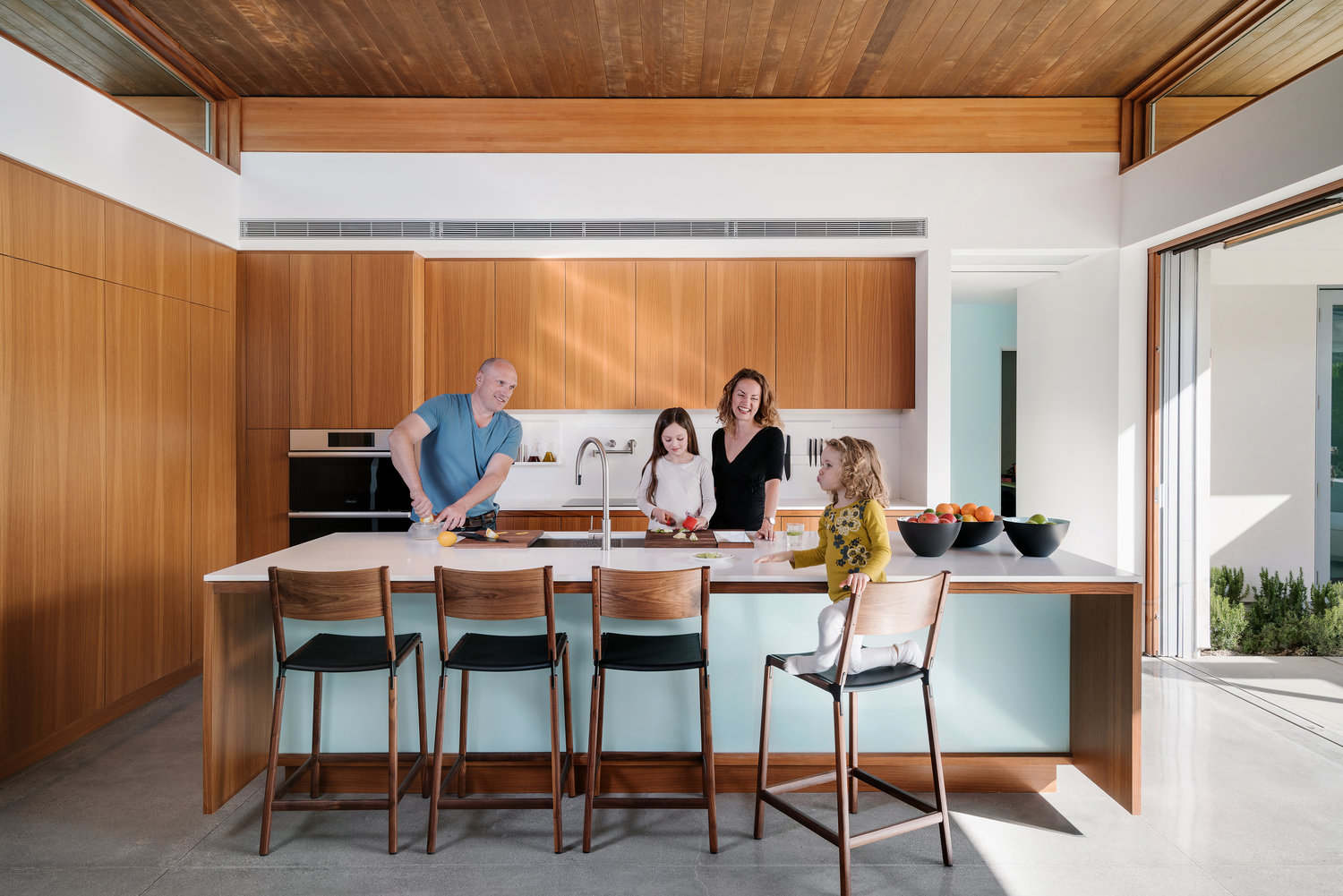
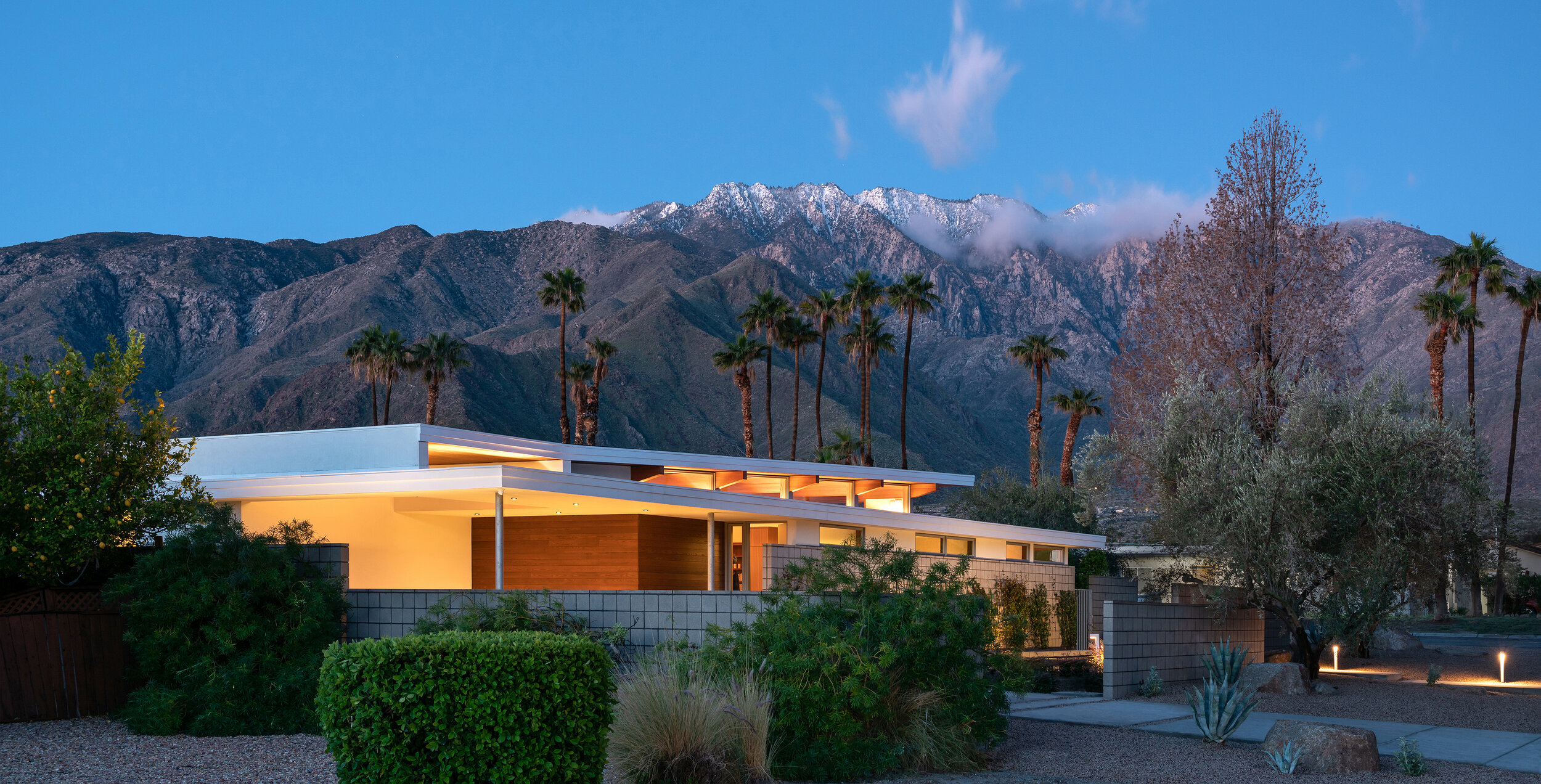
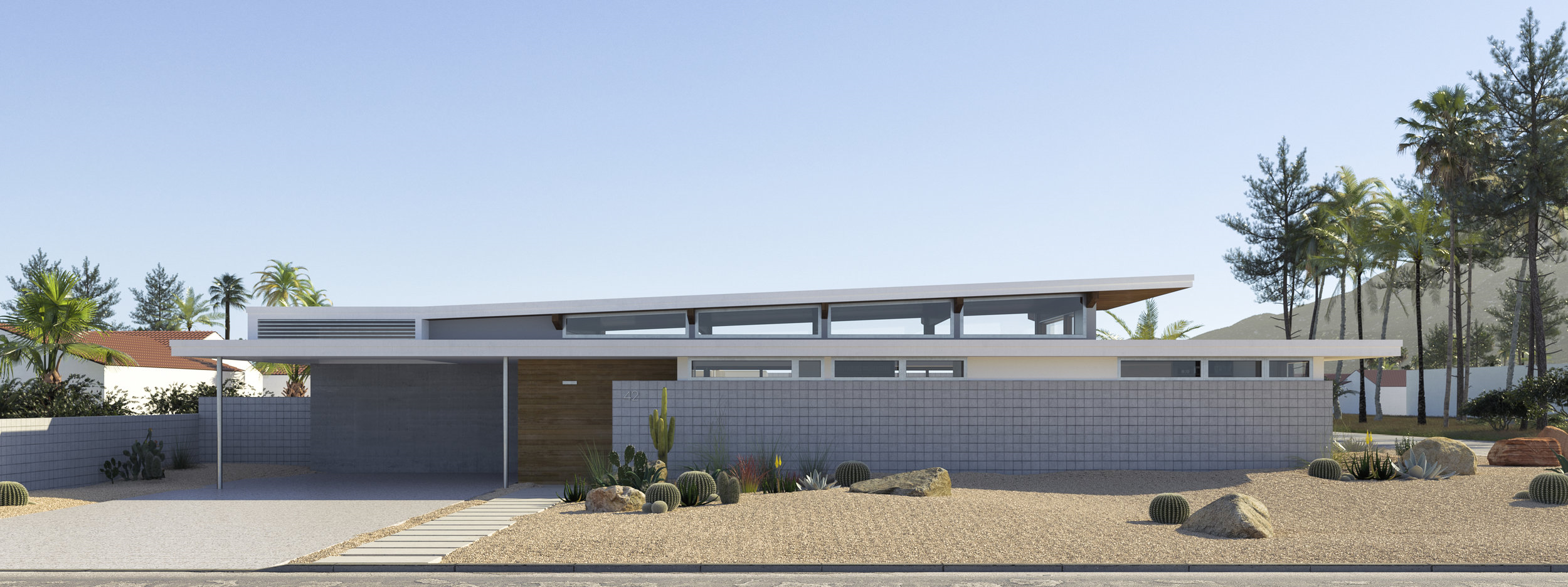
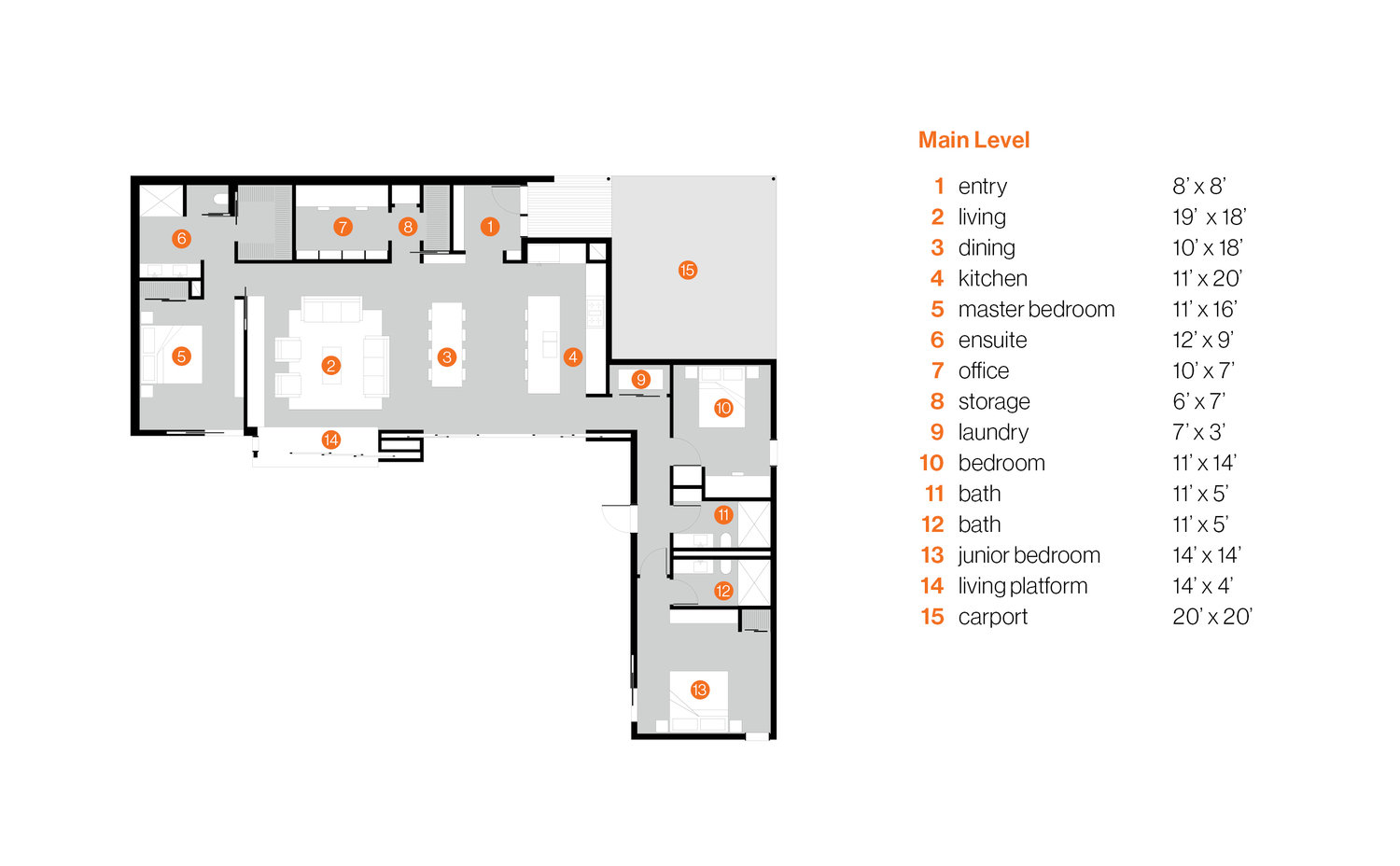
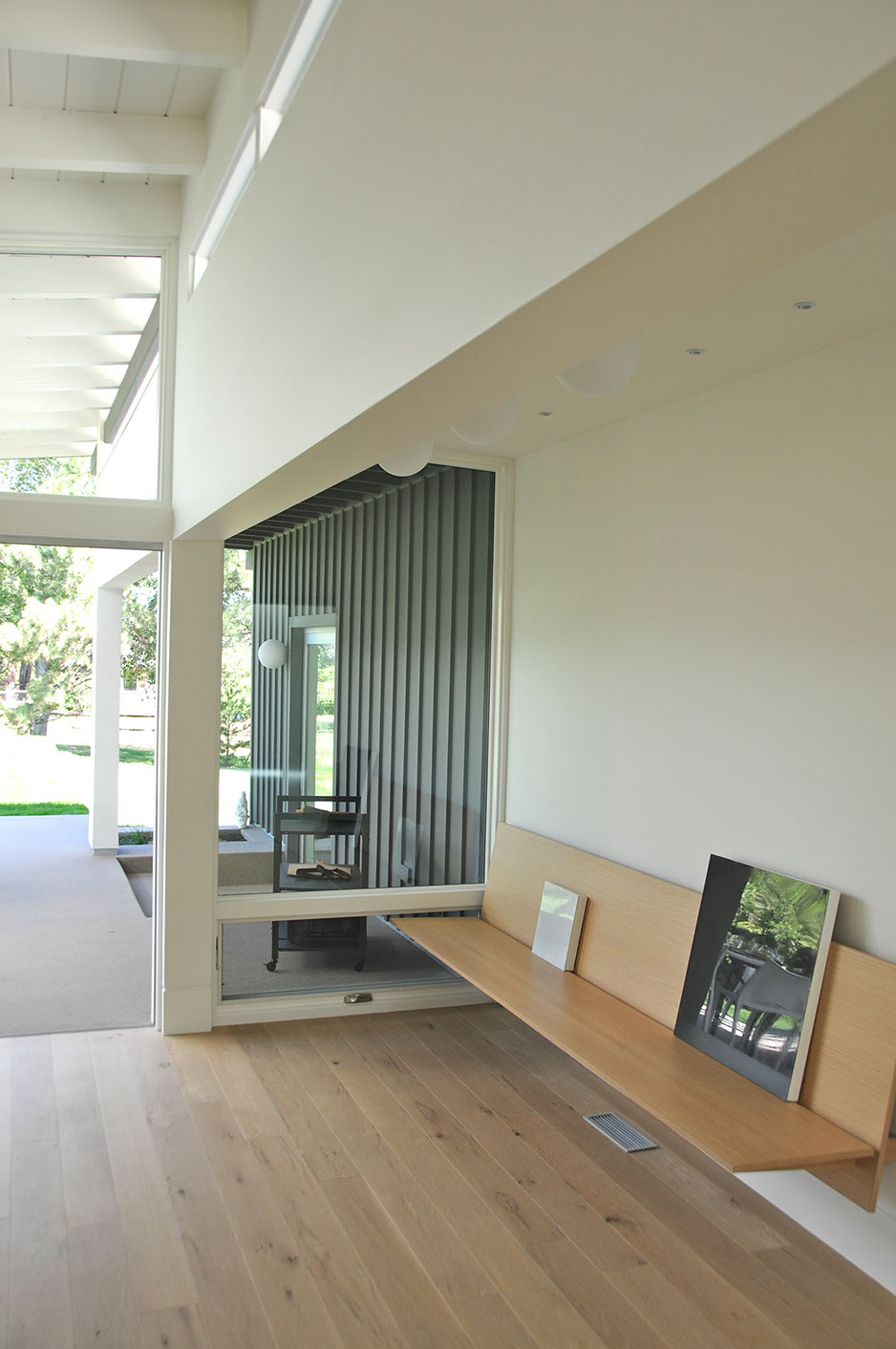
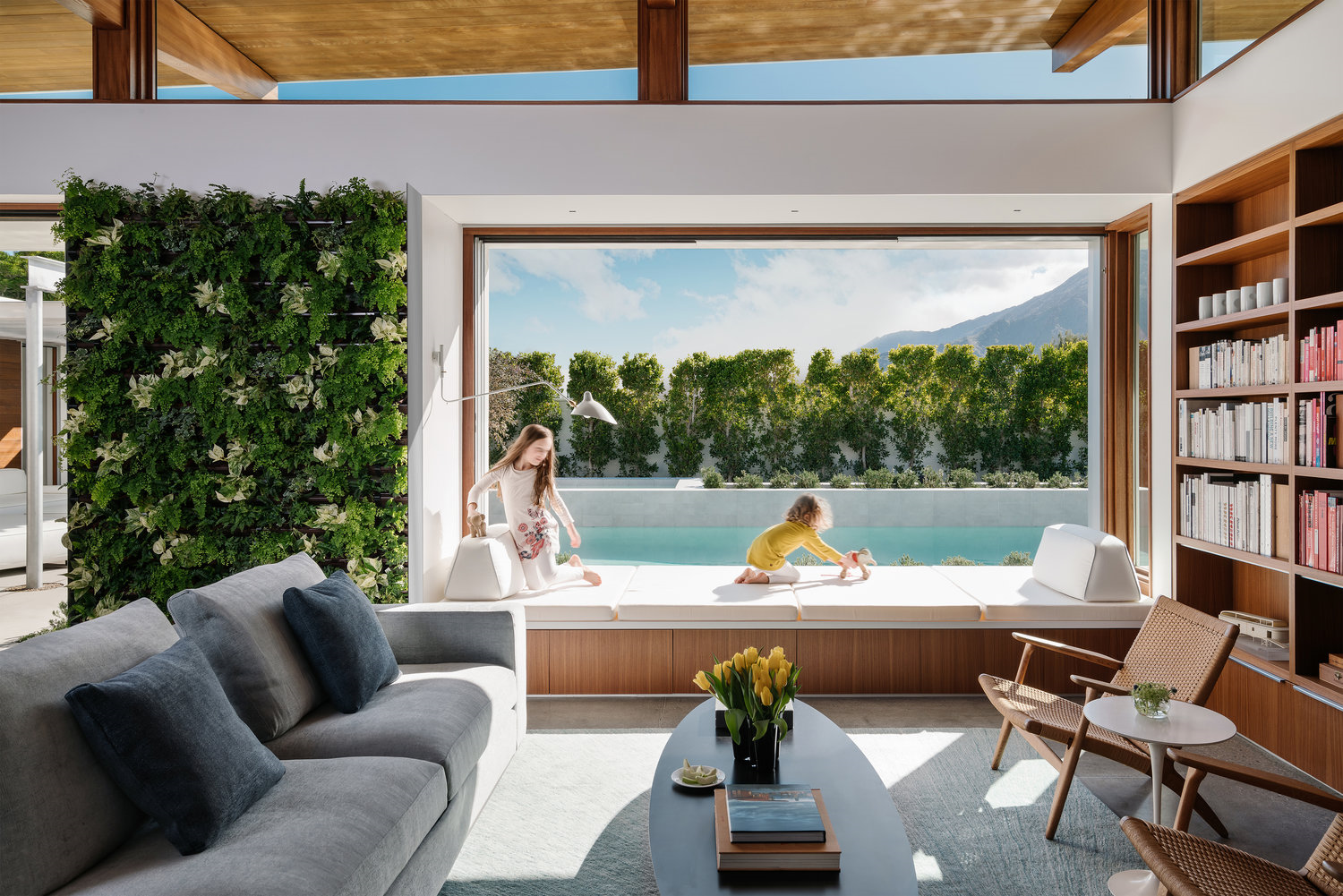 Many cultures feature houses with rooms grouped around a private courtyard: this is a take on that venerable tradition. Passing through a flat-roofed entry, the space expands as you encounter a high, beamed ceiling, sloping upward to 12 feet. This is the great room – 40 feet in length, it opens directly onto the walled courtyard through glass panels that slide away into hidden pockets. An especially admired feature of the room is a 4-by-12-foot window-seat extending into and overlooking the courtyard. This too has operable glass panels that tuck away into pockets: a charming place to lie down—even sleep—“half-in, half-out.”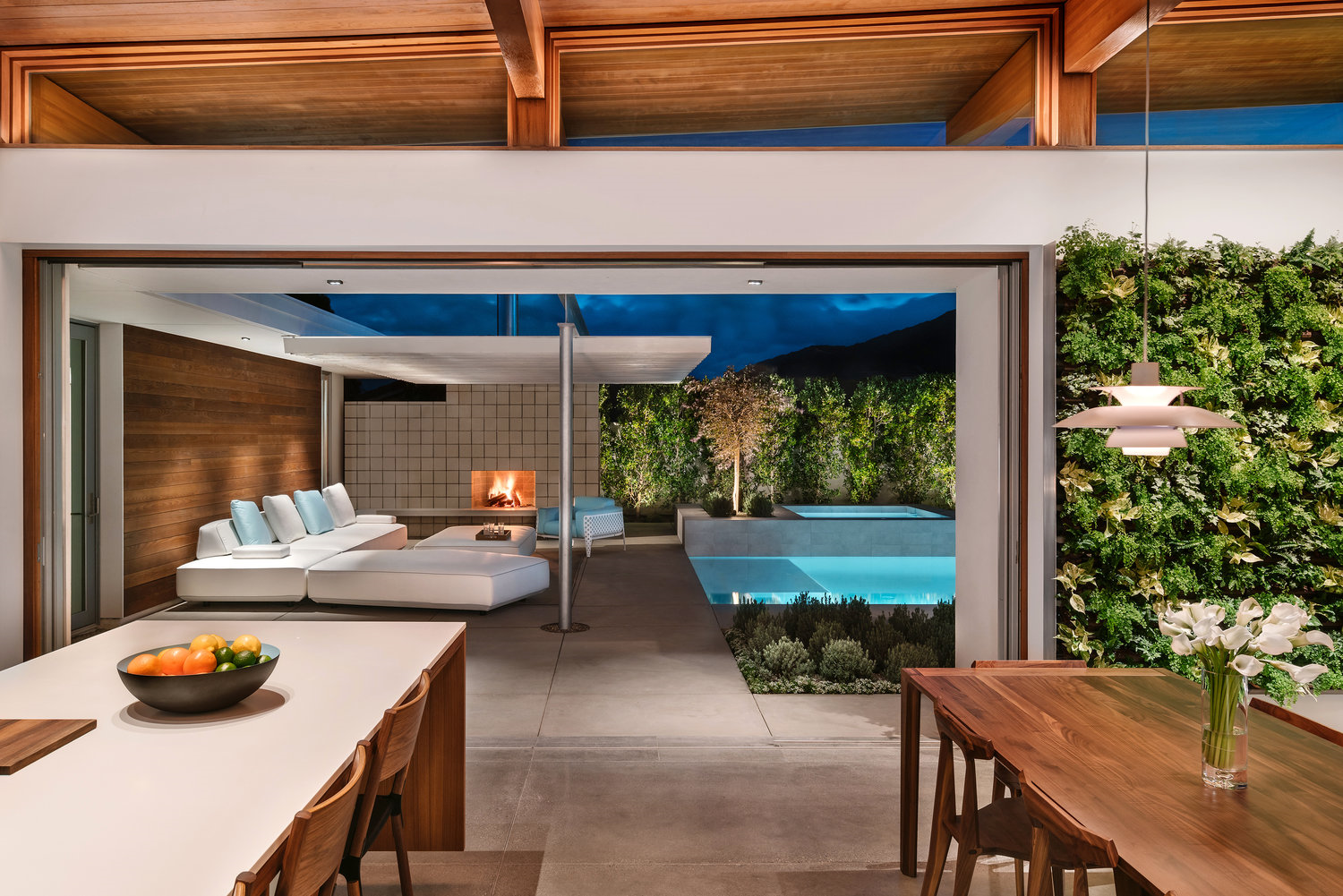
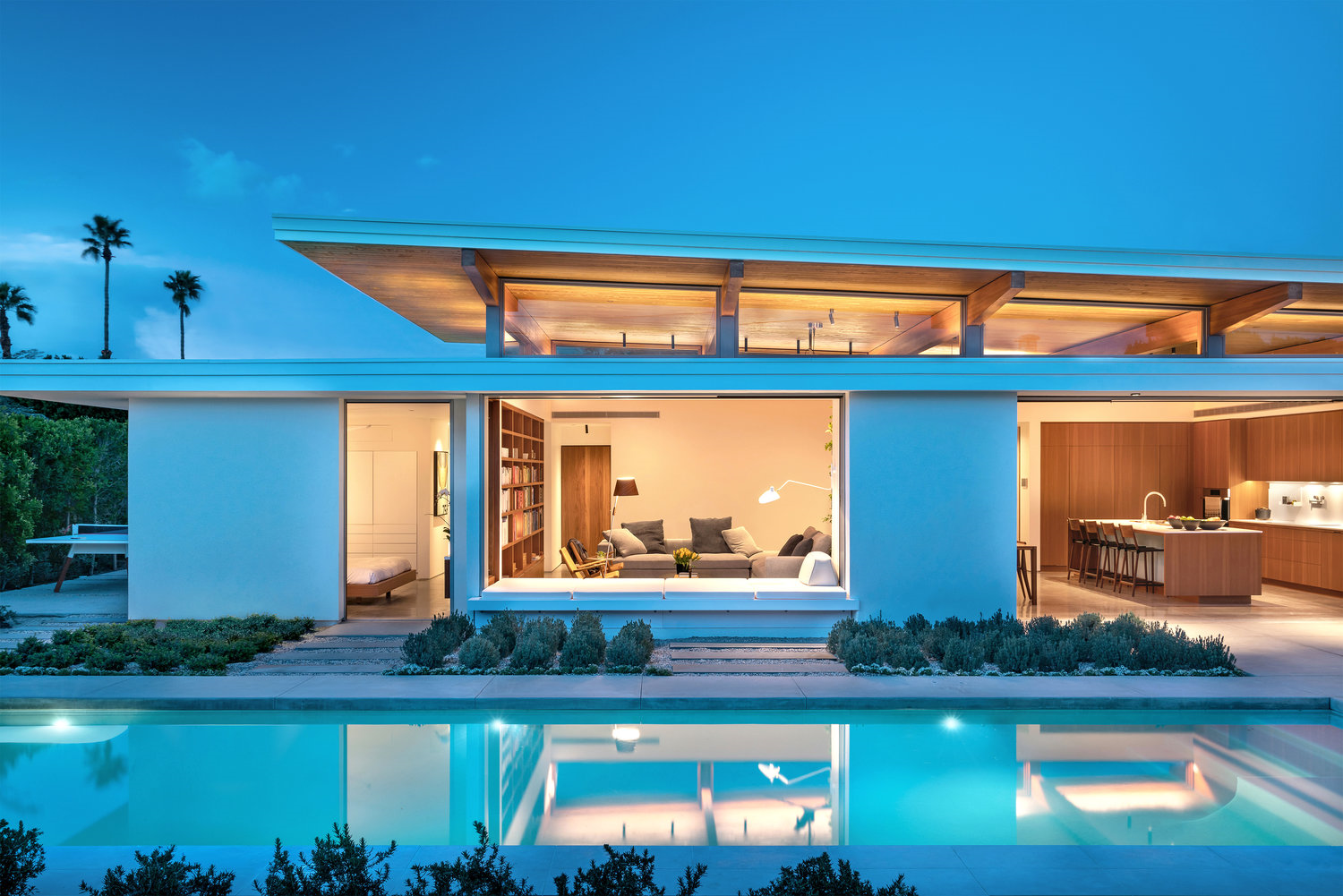
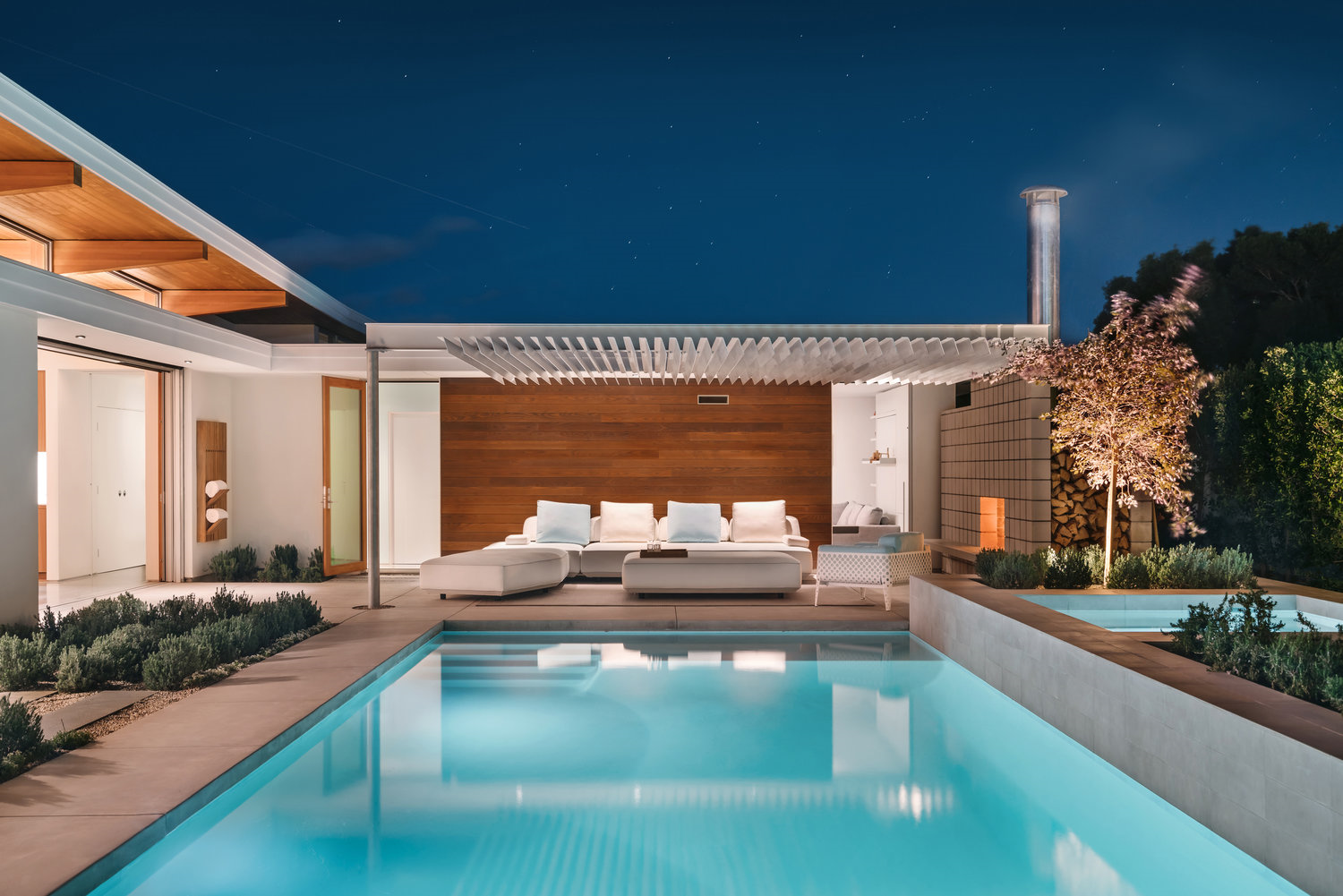
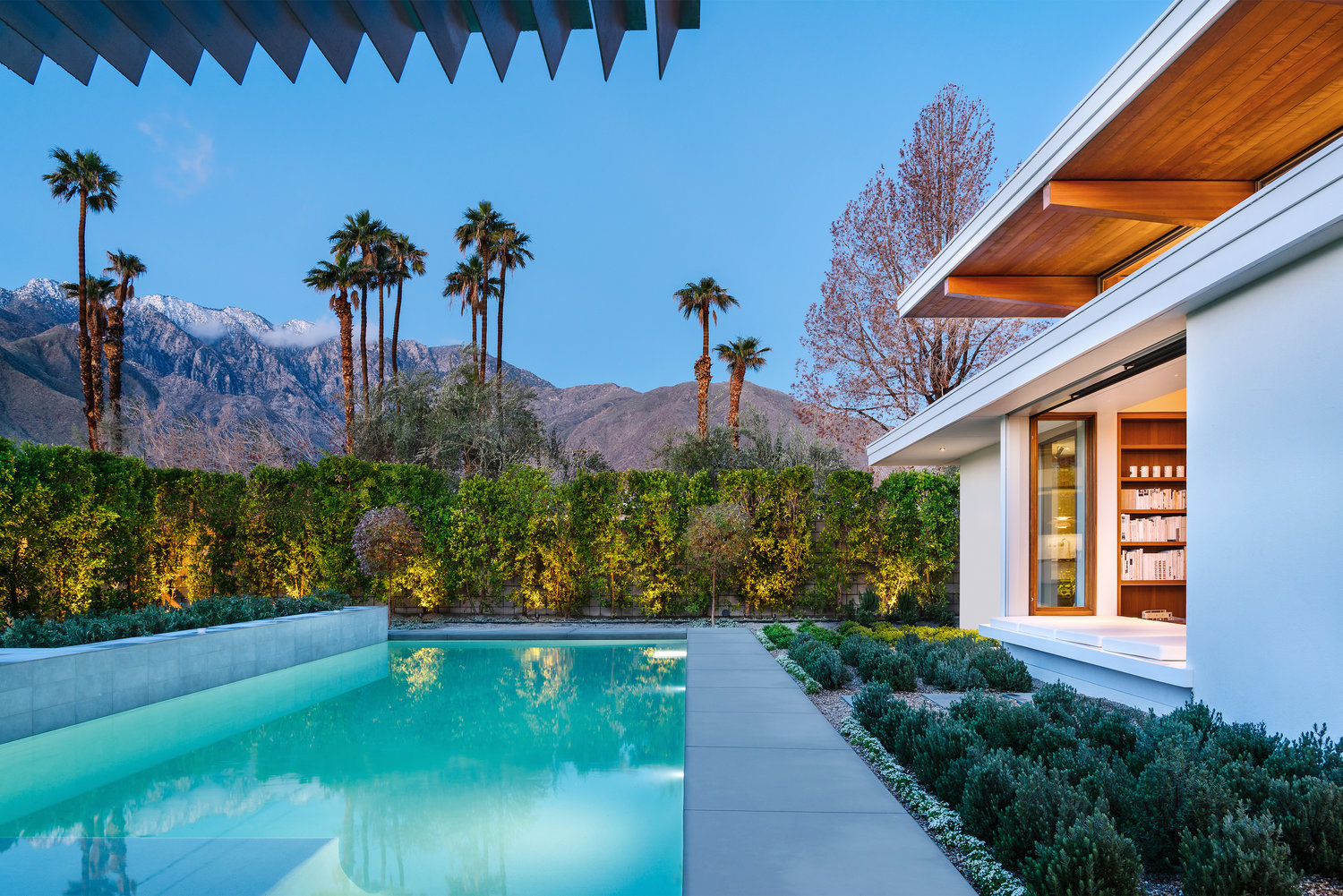 Master suites occupy both ends of this “L” shaped home, each with private access to the courtyard; an ideal arrangement for a shared vacation home, in town or out. While being careful to ensure privacy, the outward facing walls stop short of the overhanging roof, bringing in balancing light and capturing expansive outward views.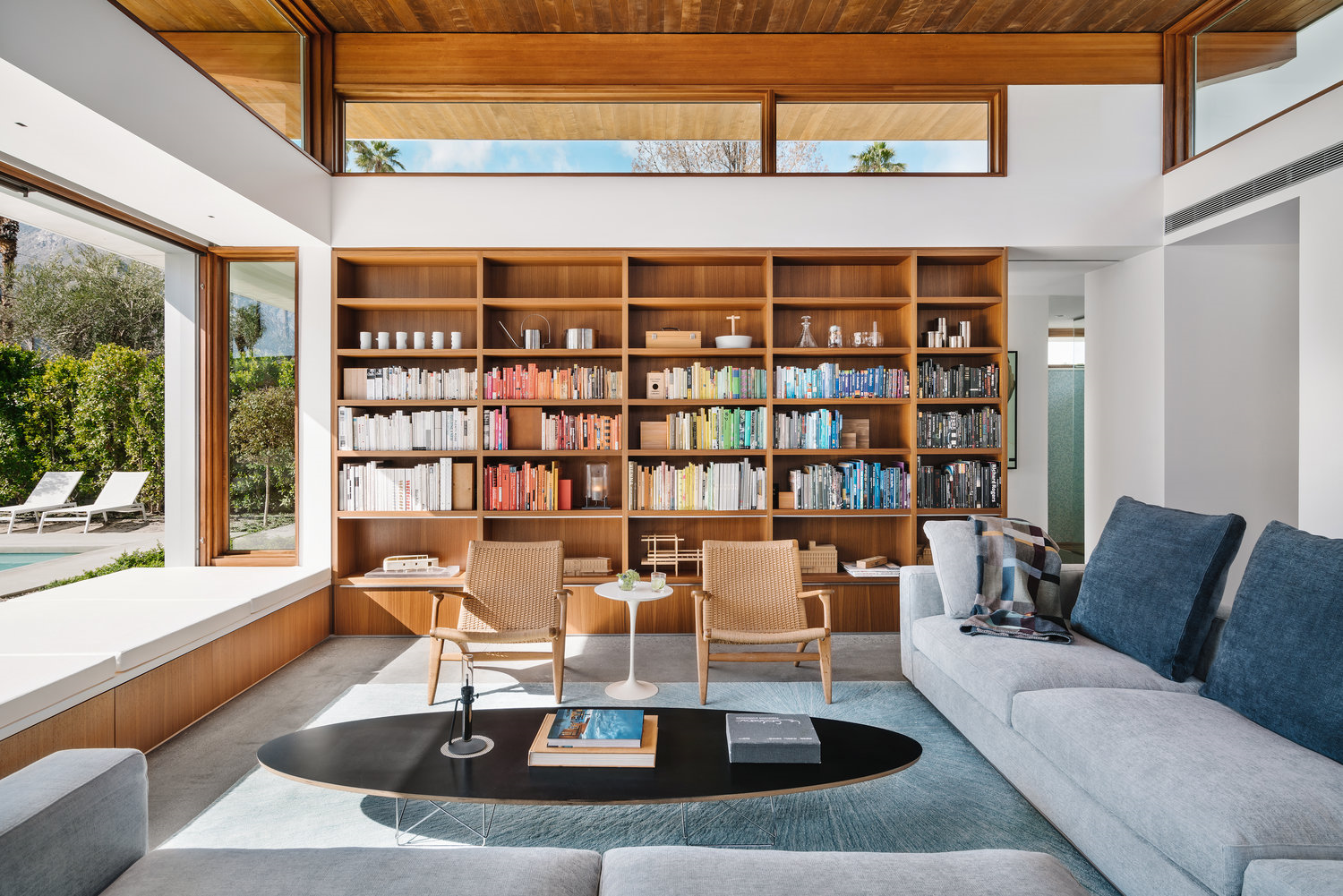
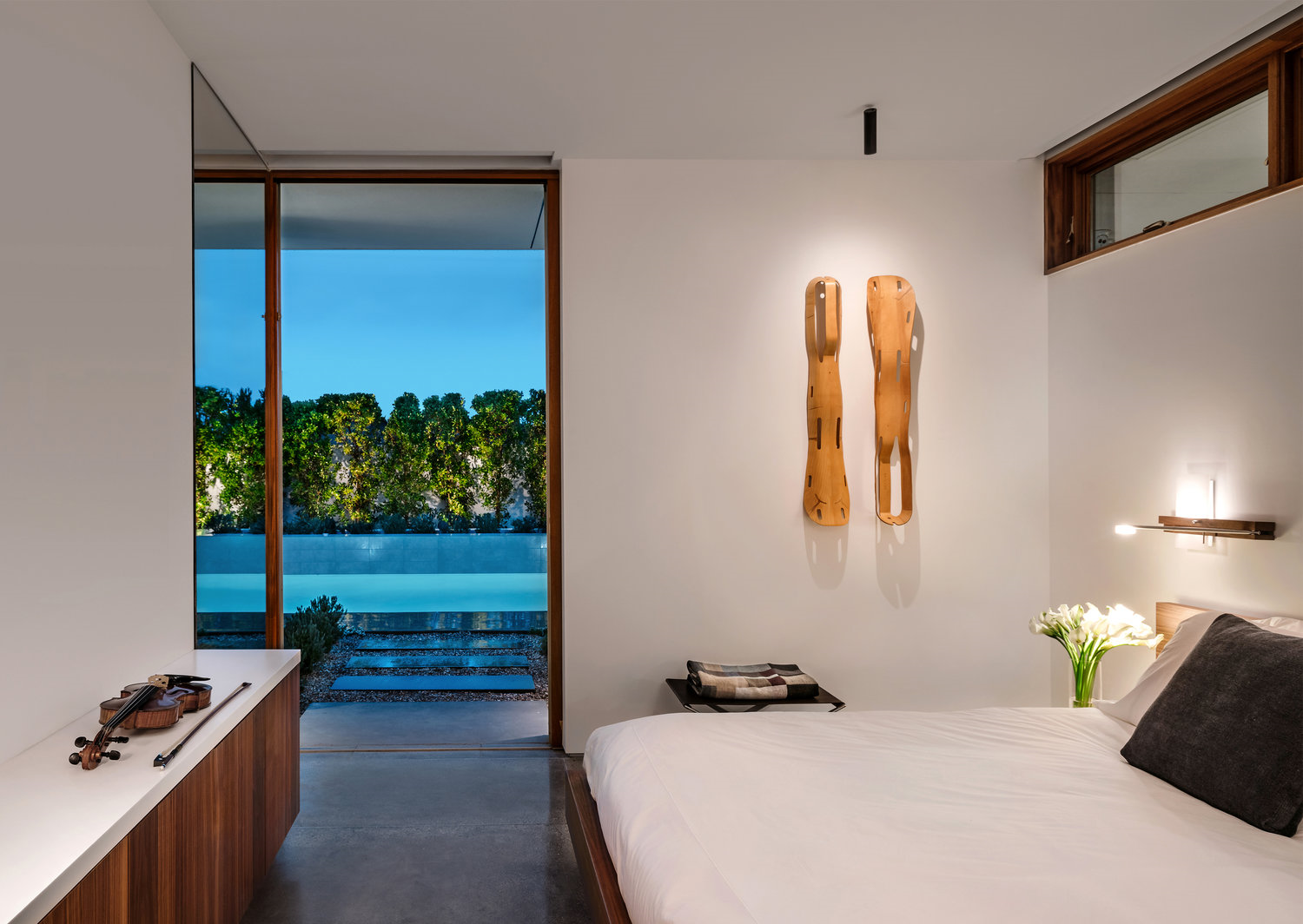
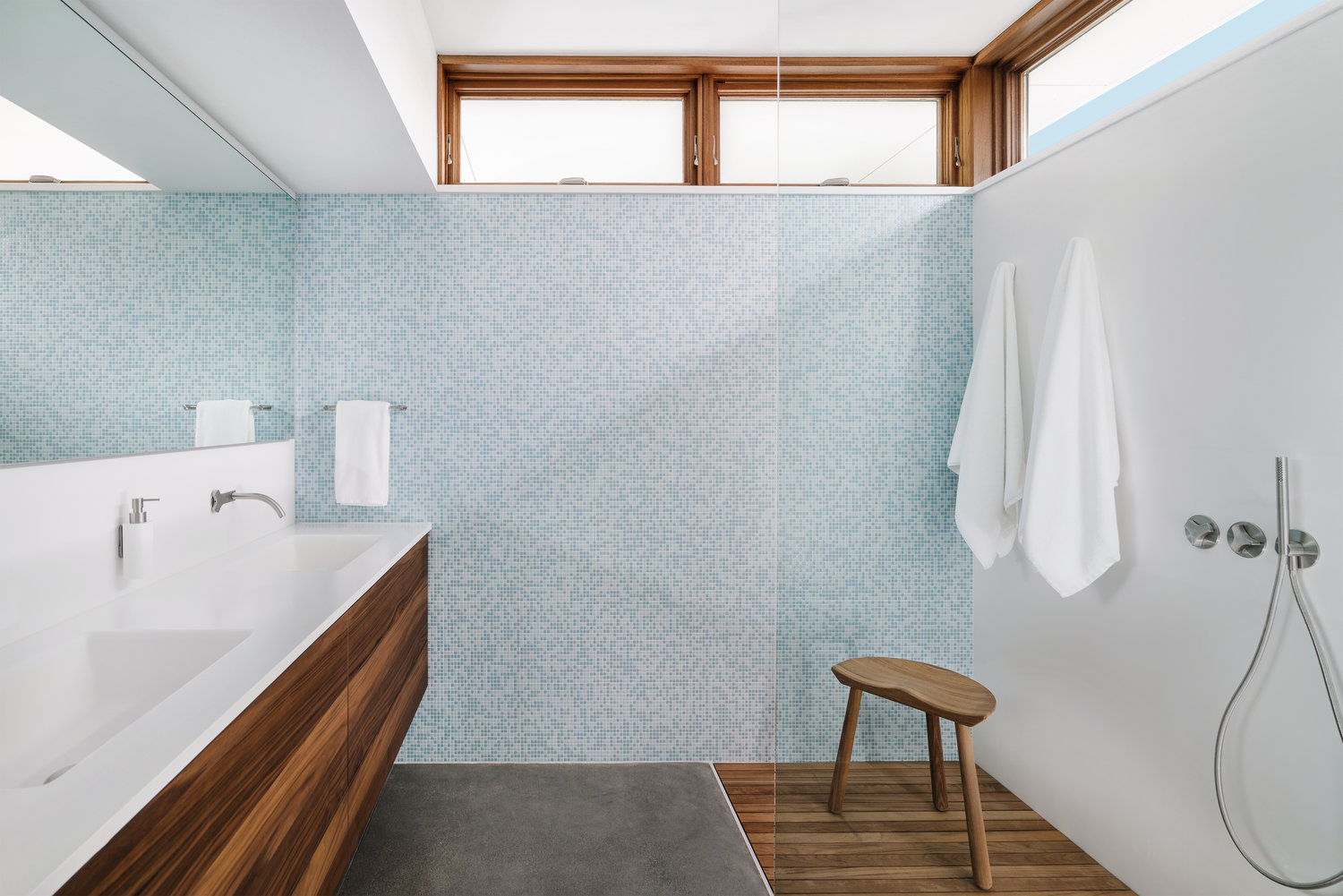
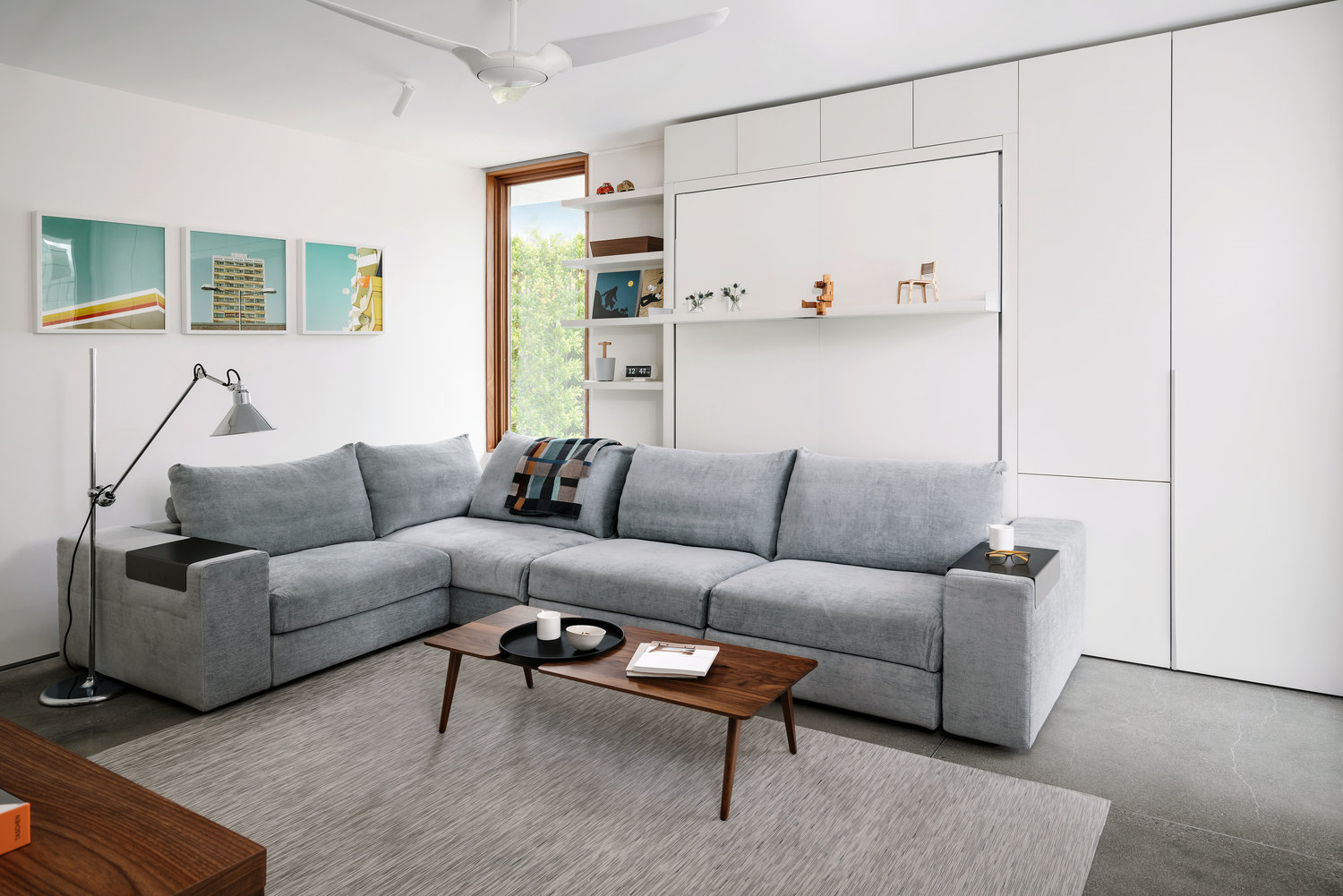
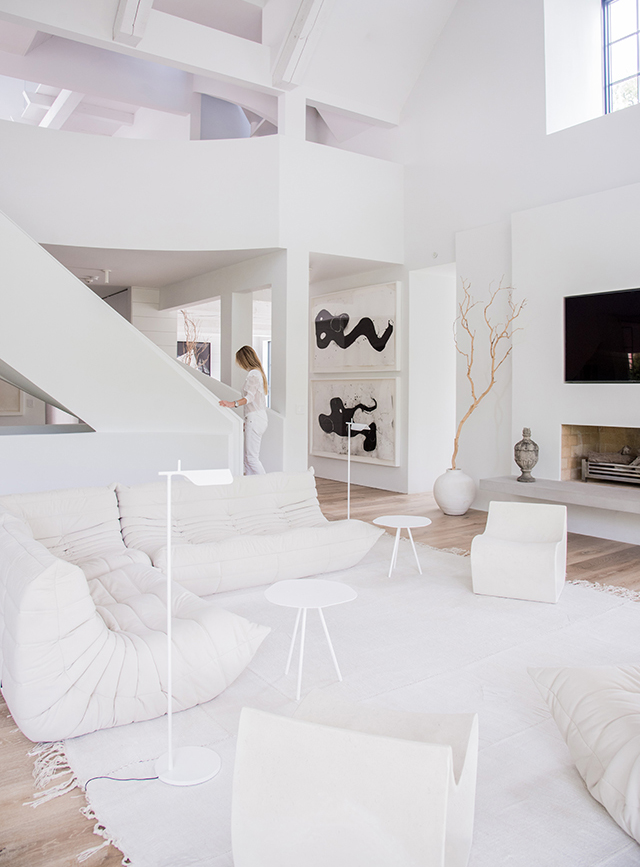
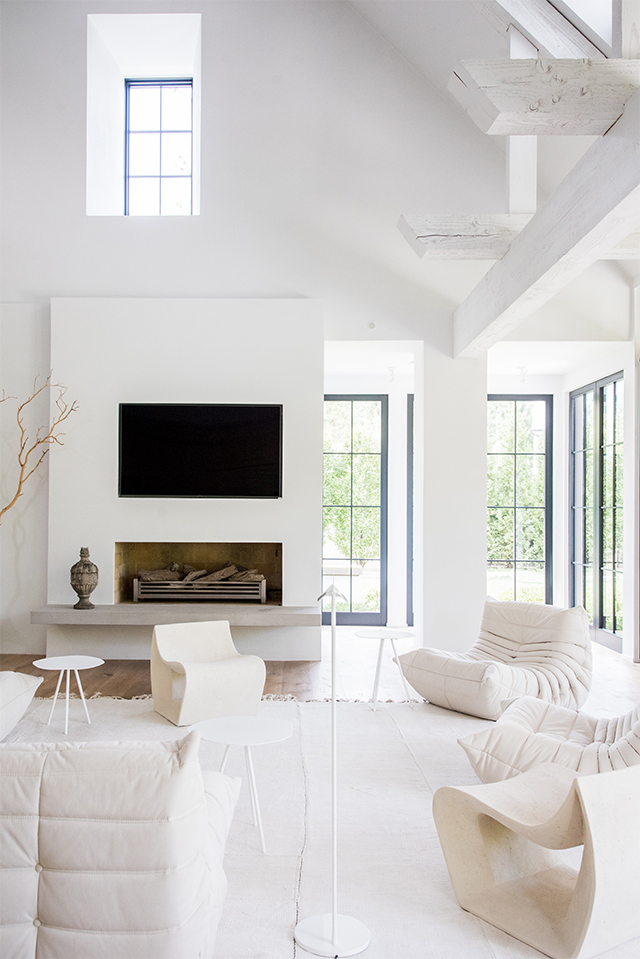
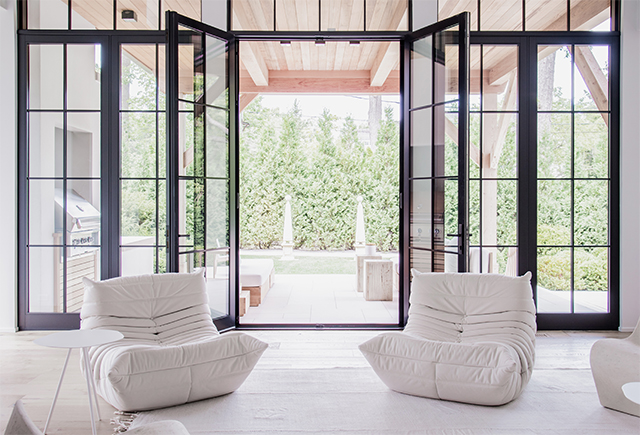
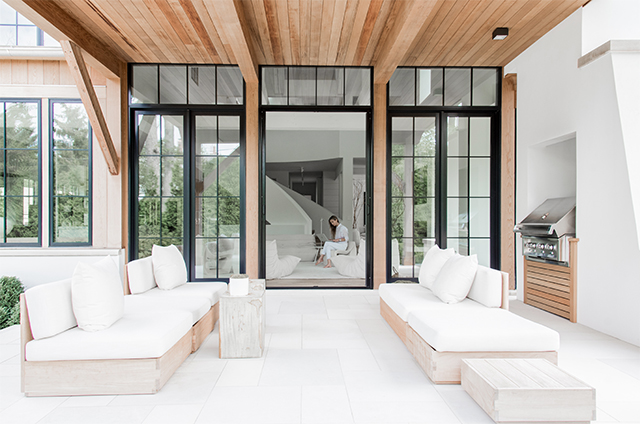
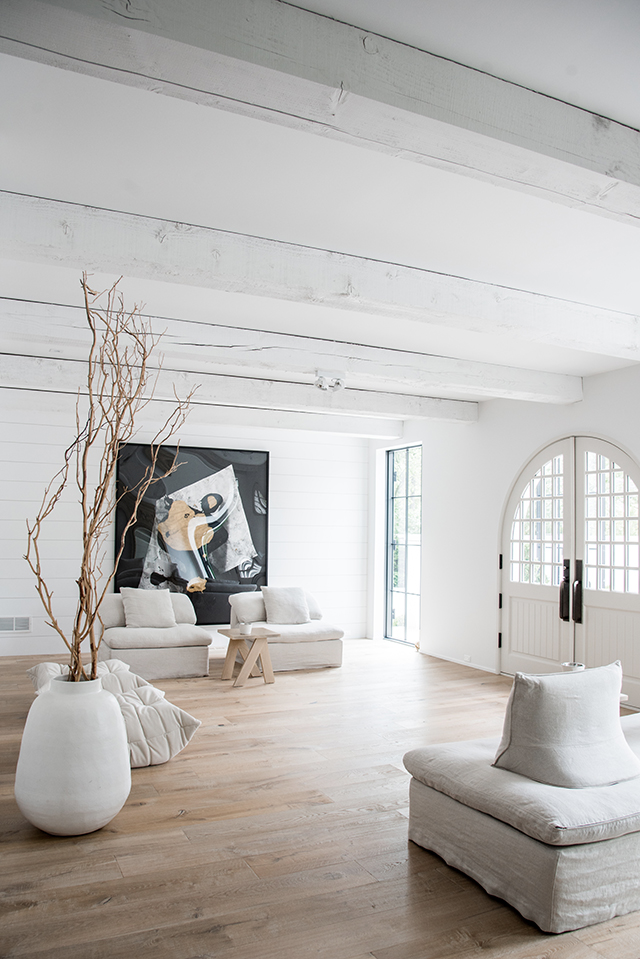
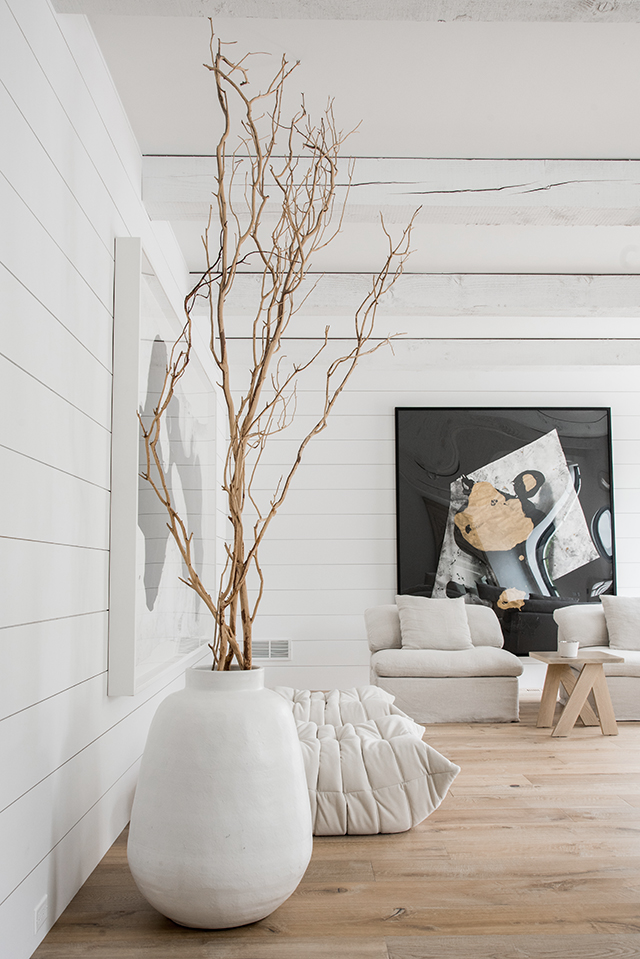
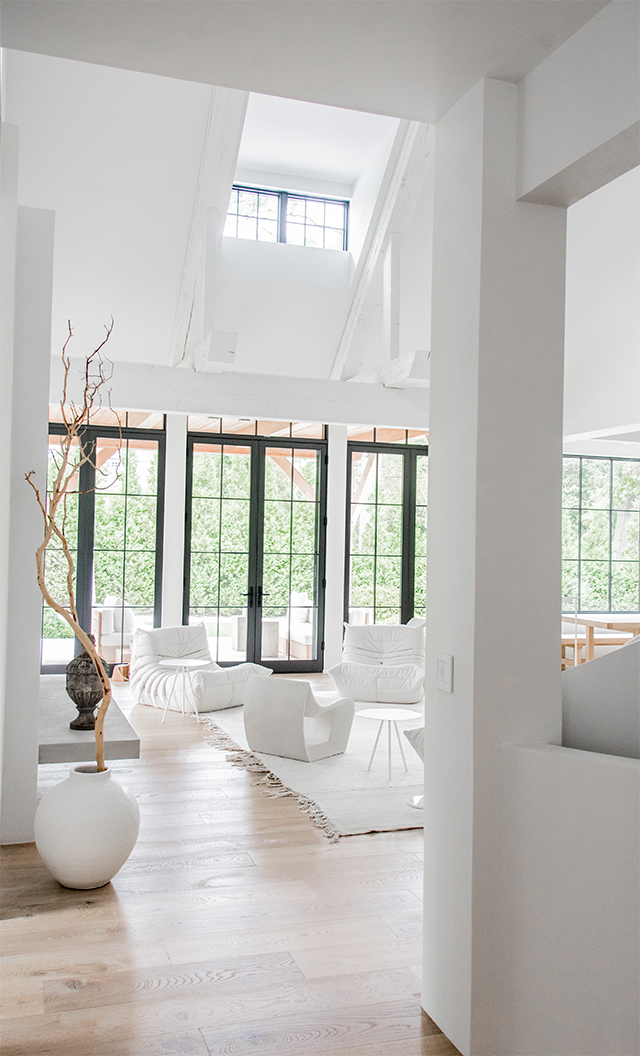
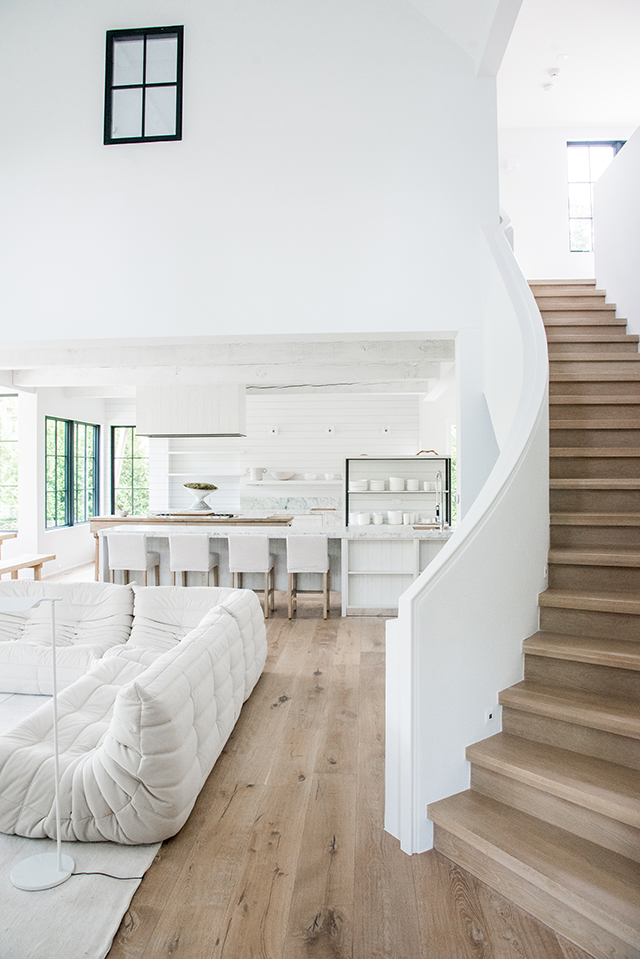
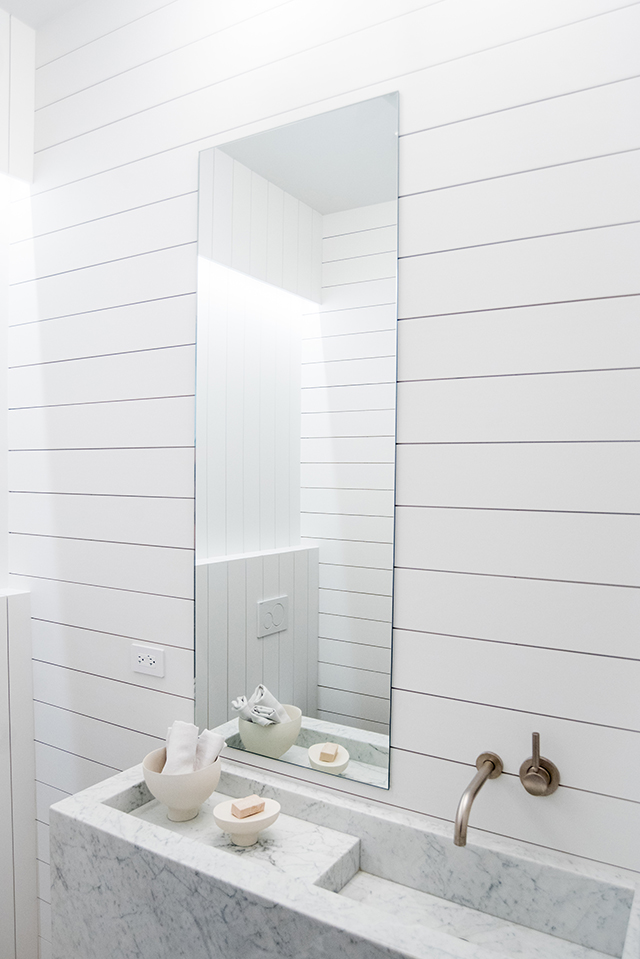
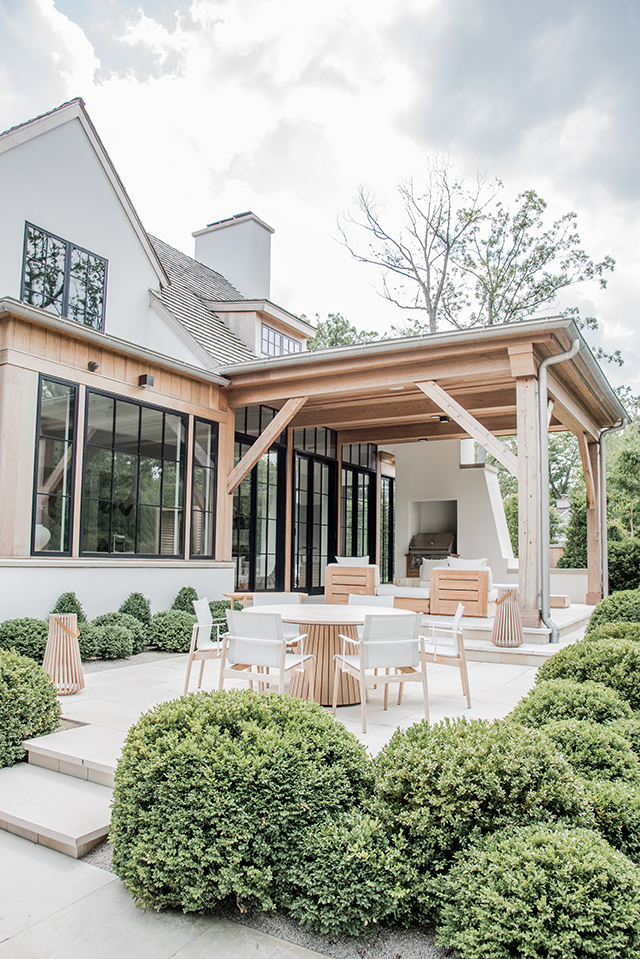
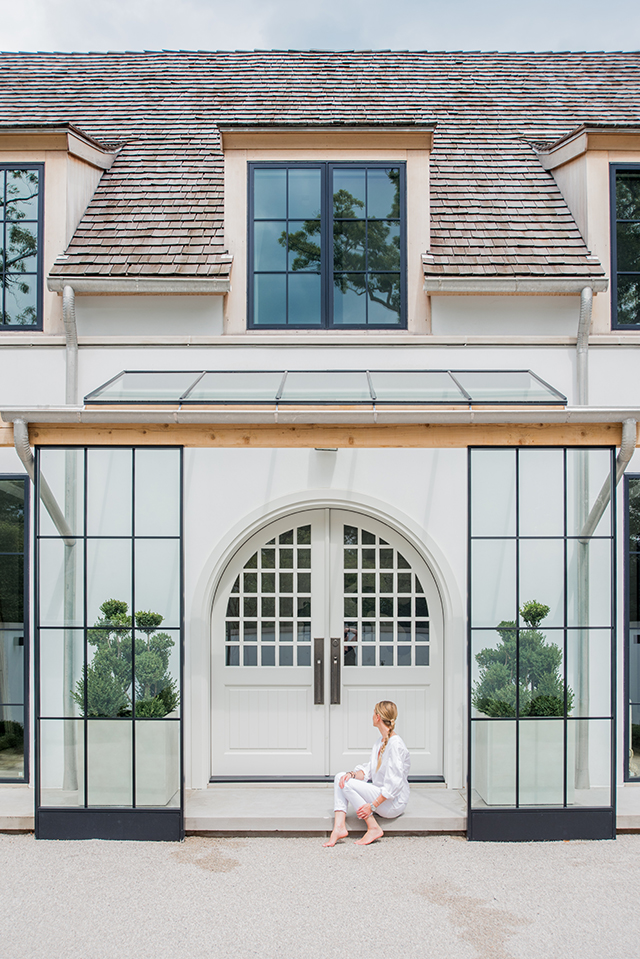
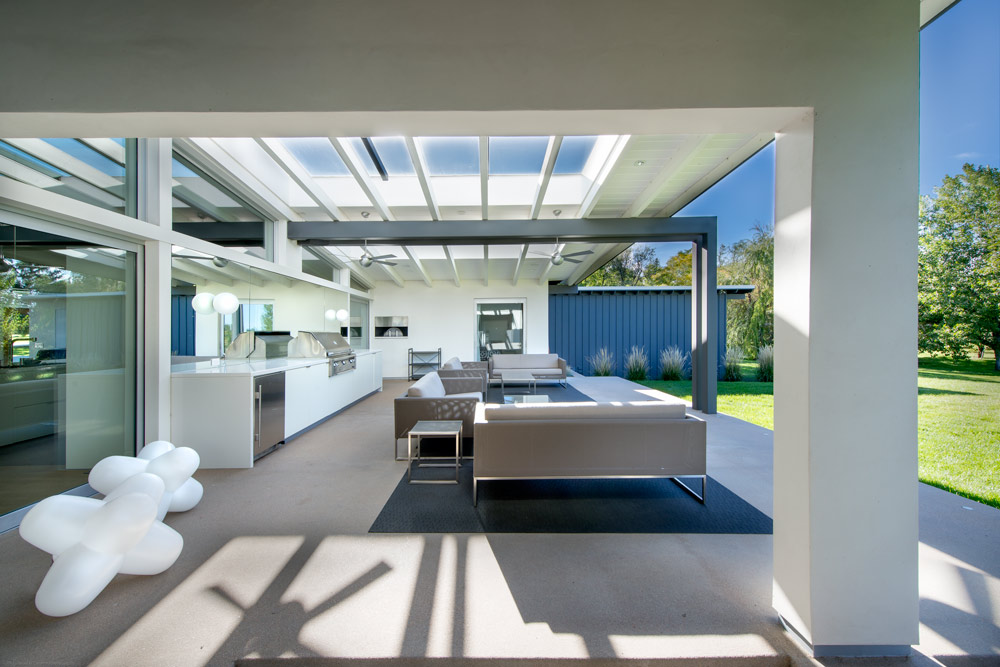
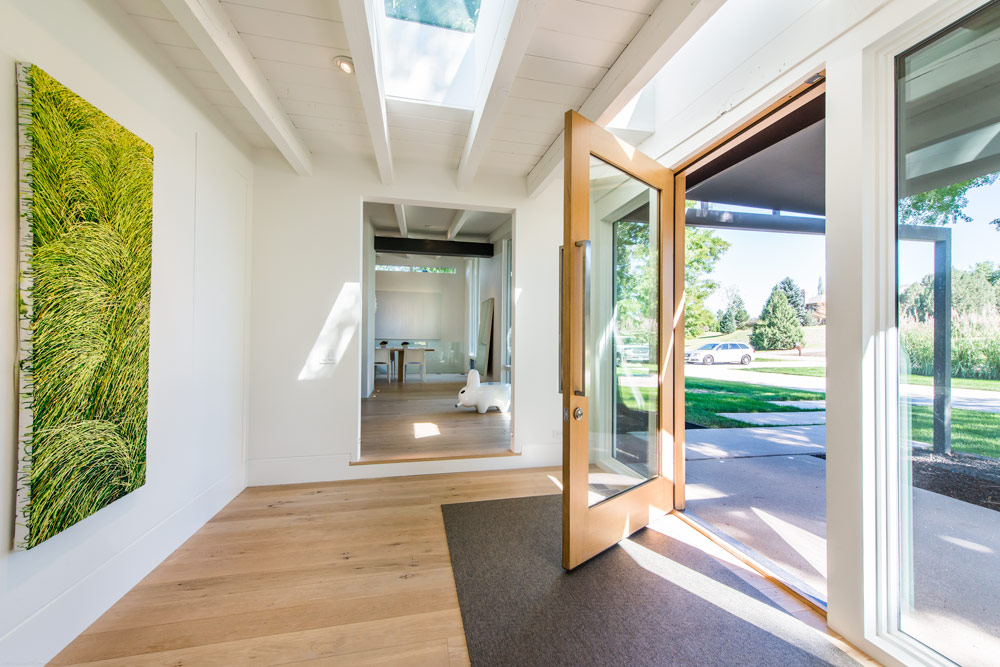
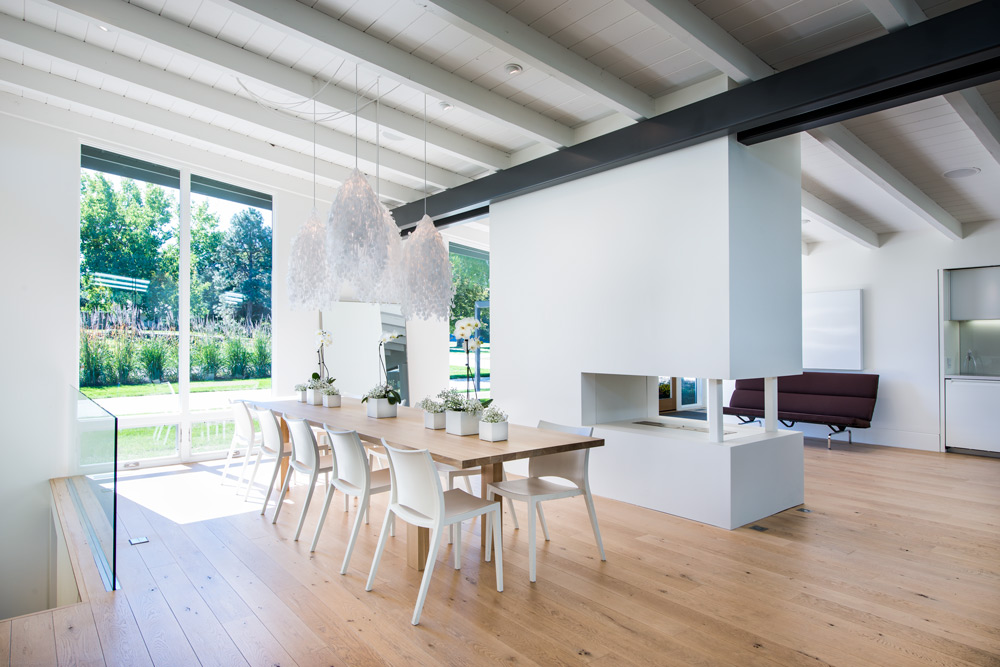
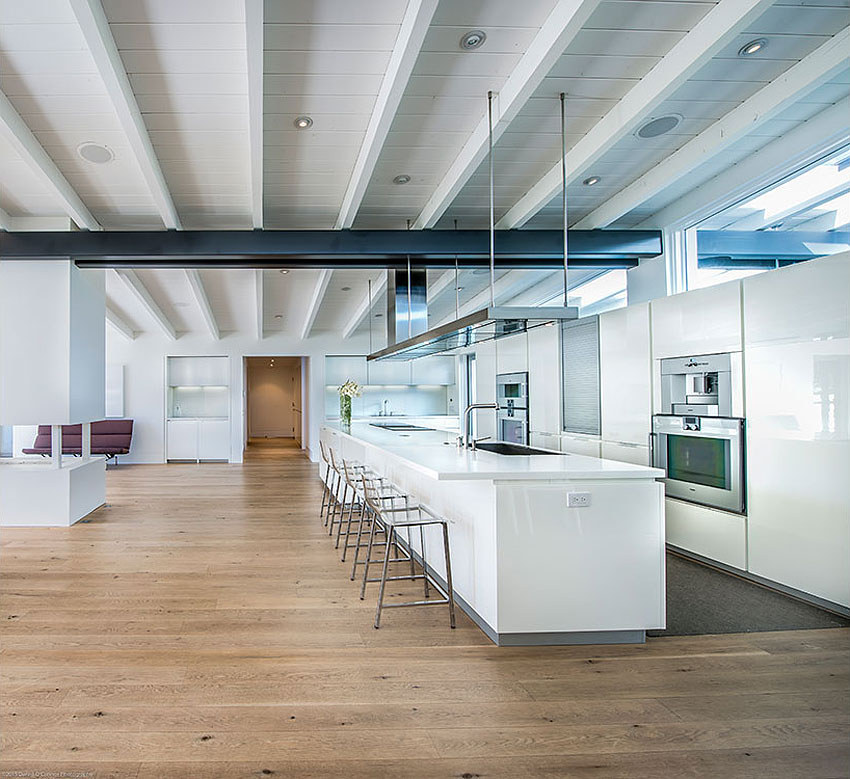


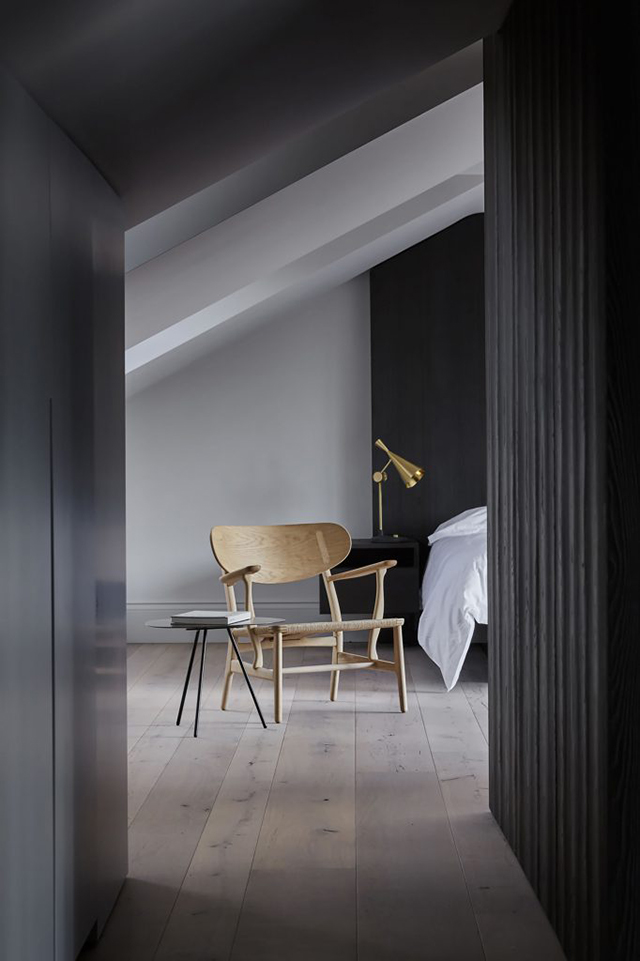
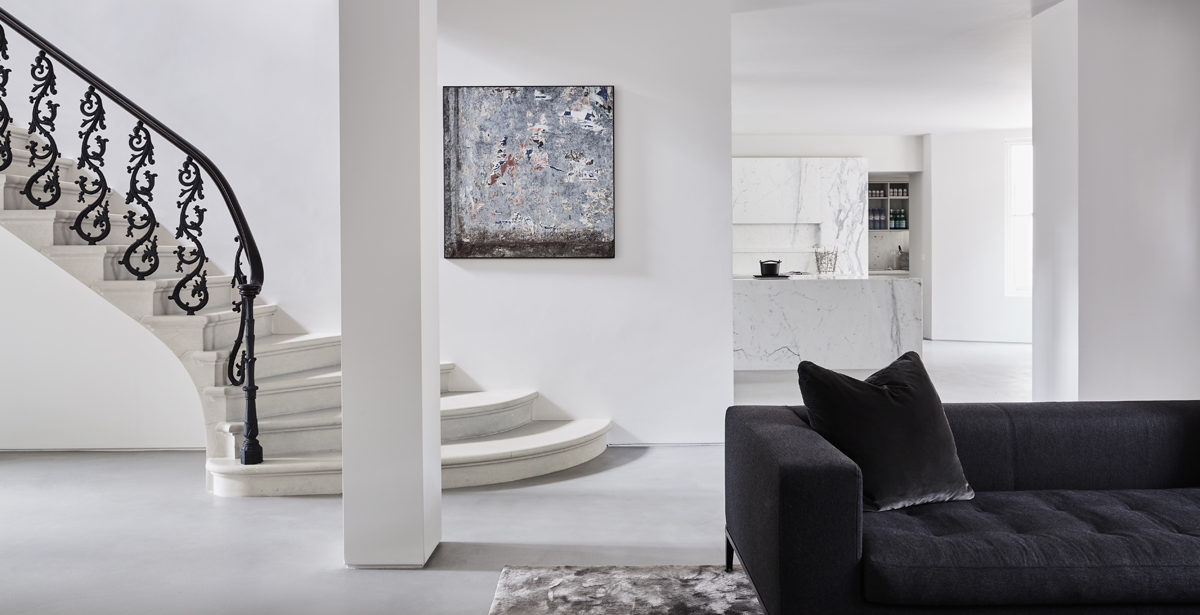
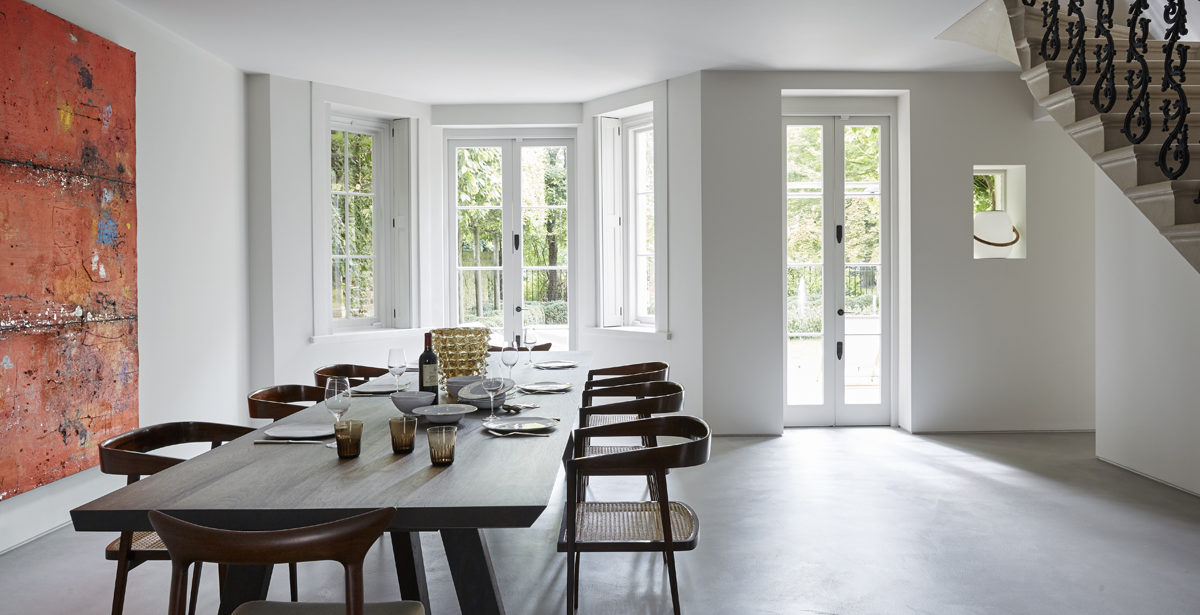

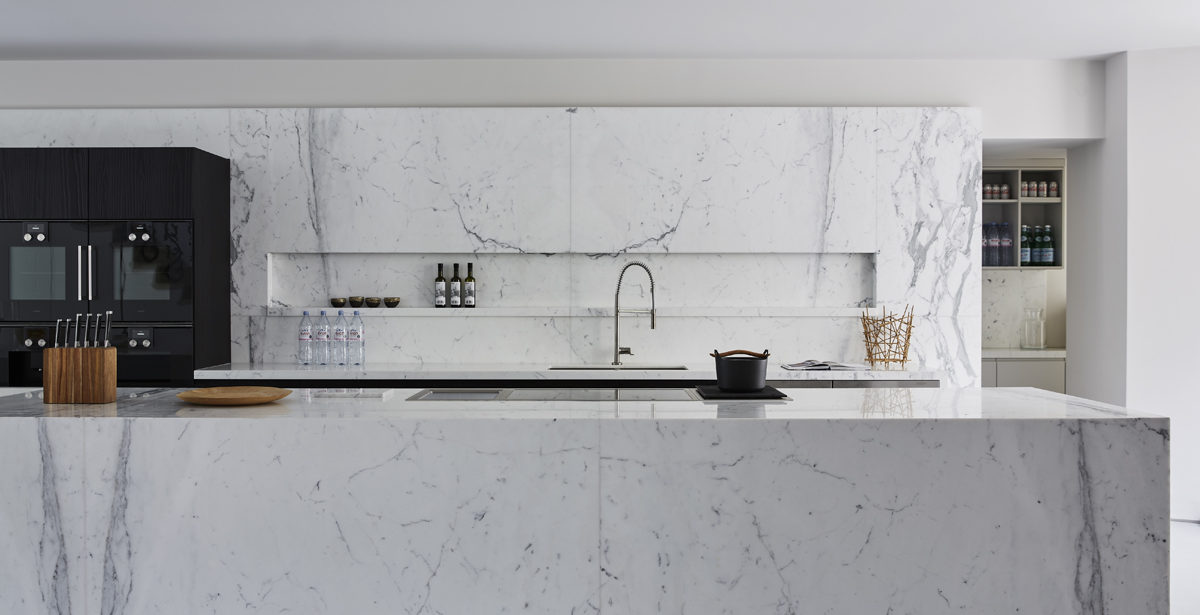


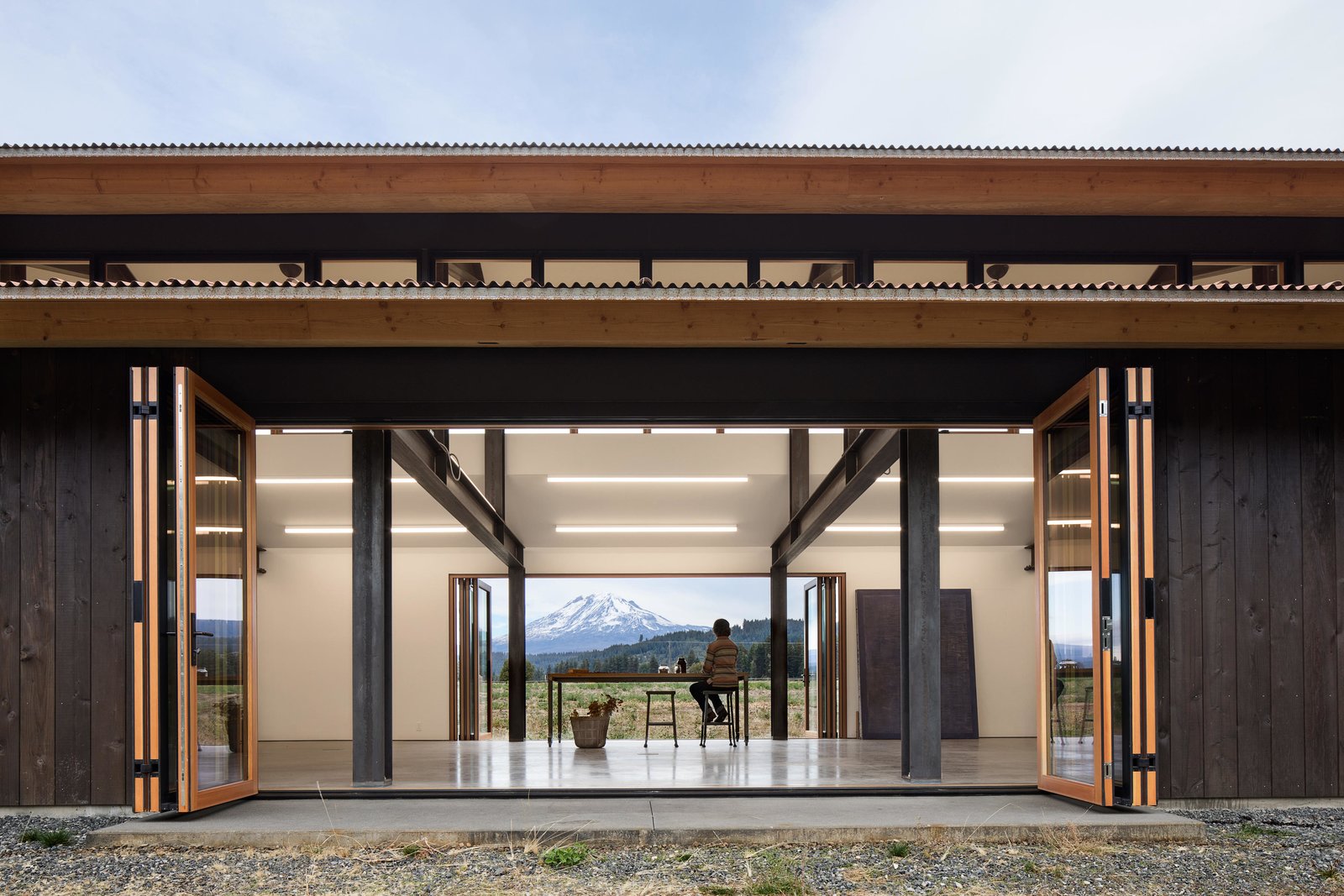
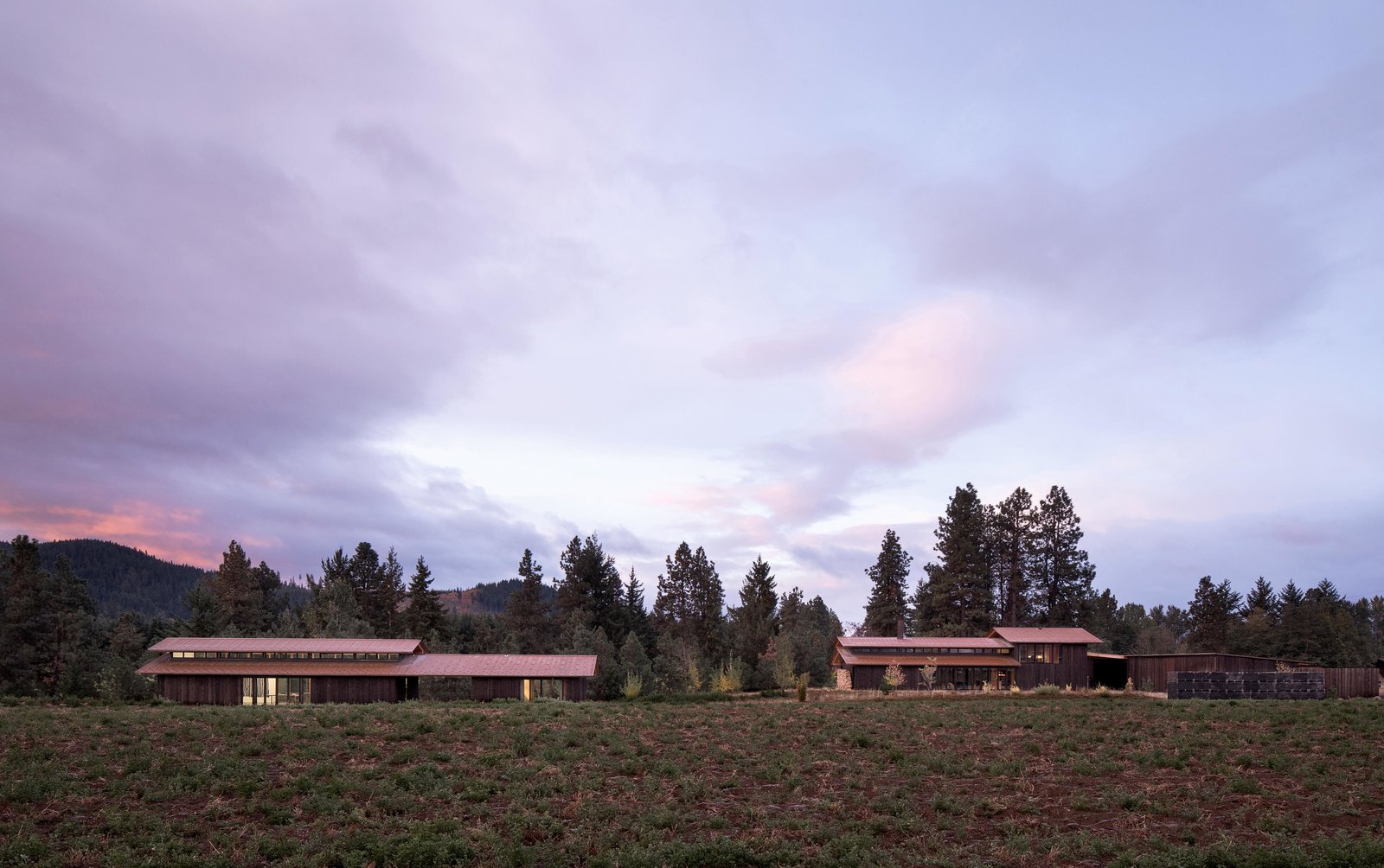
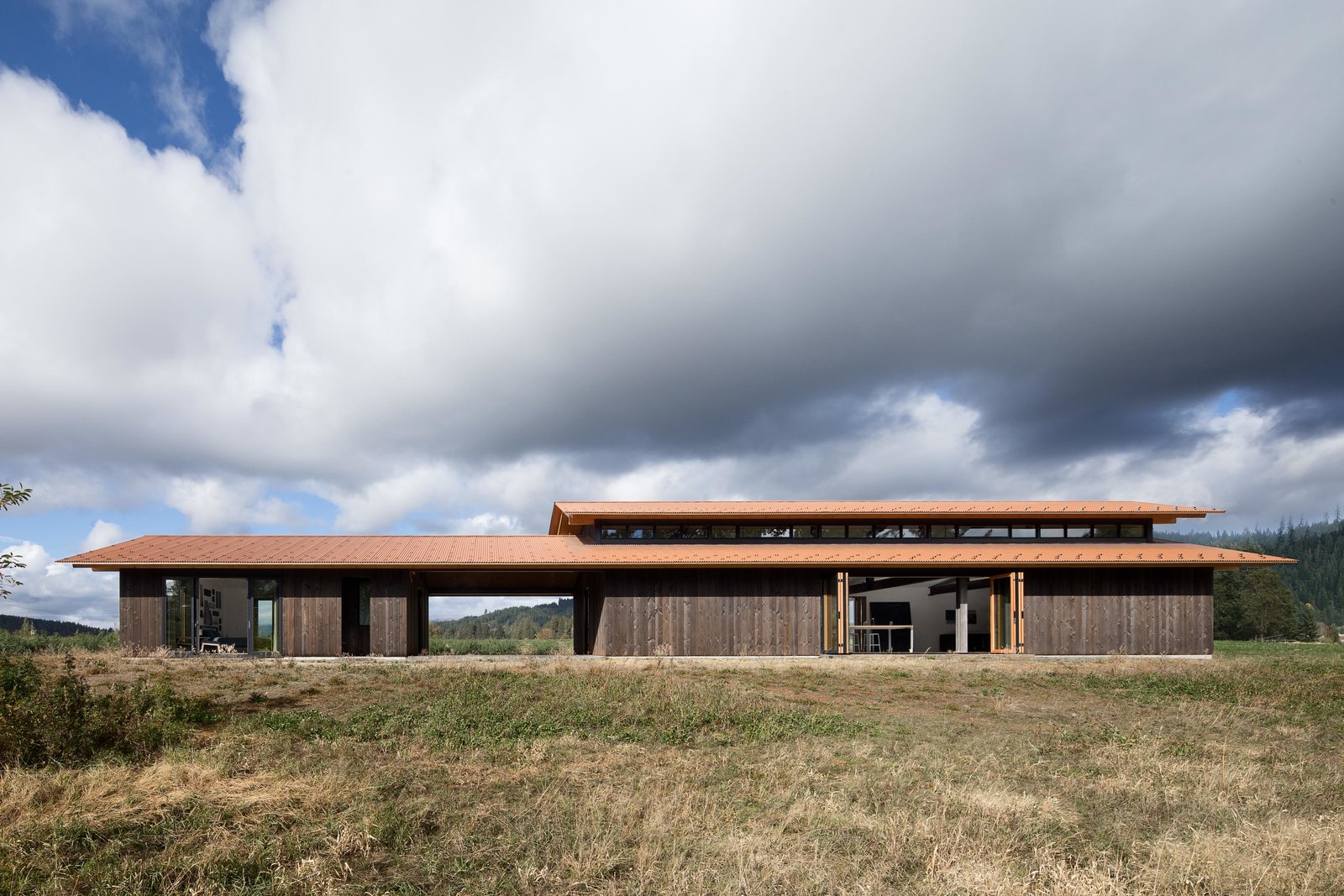
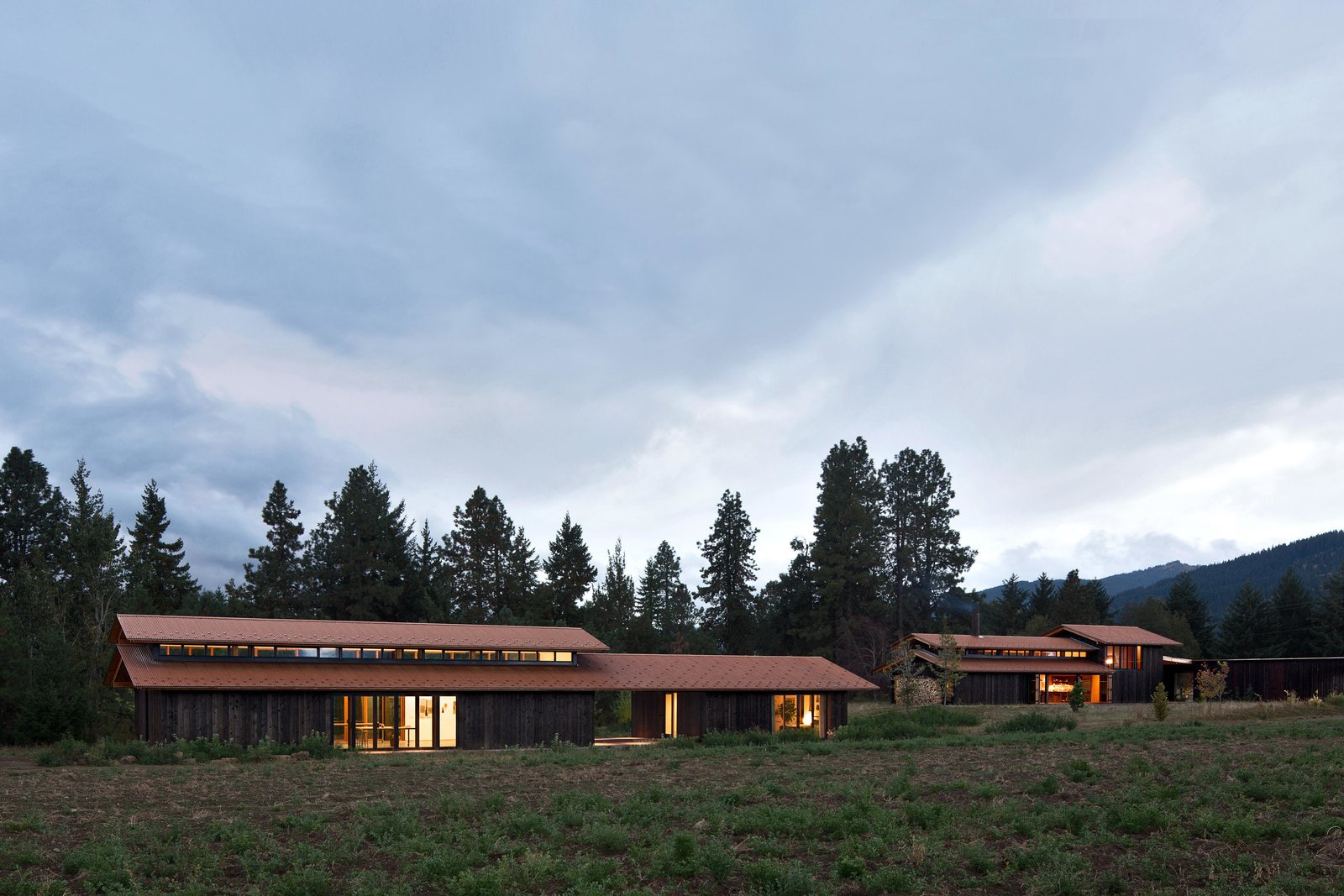
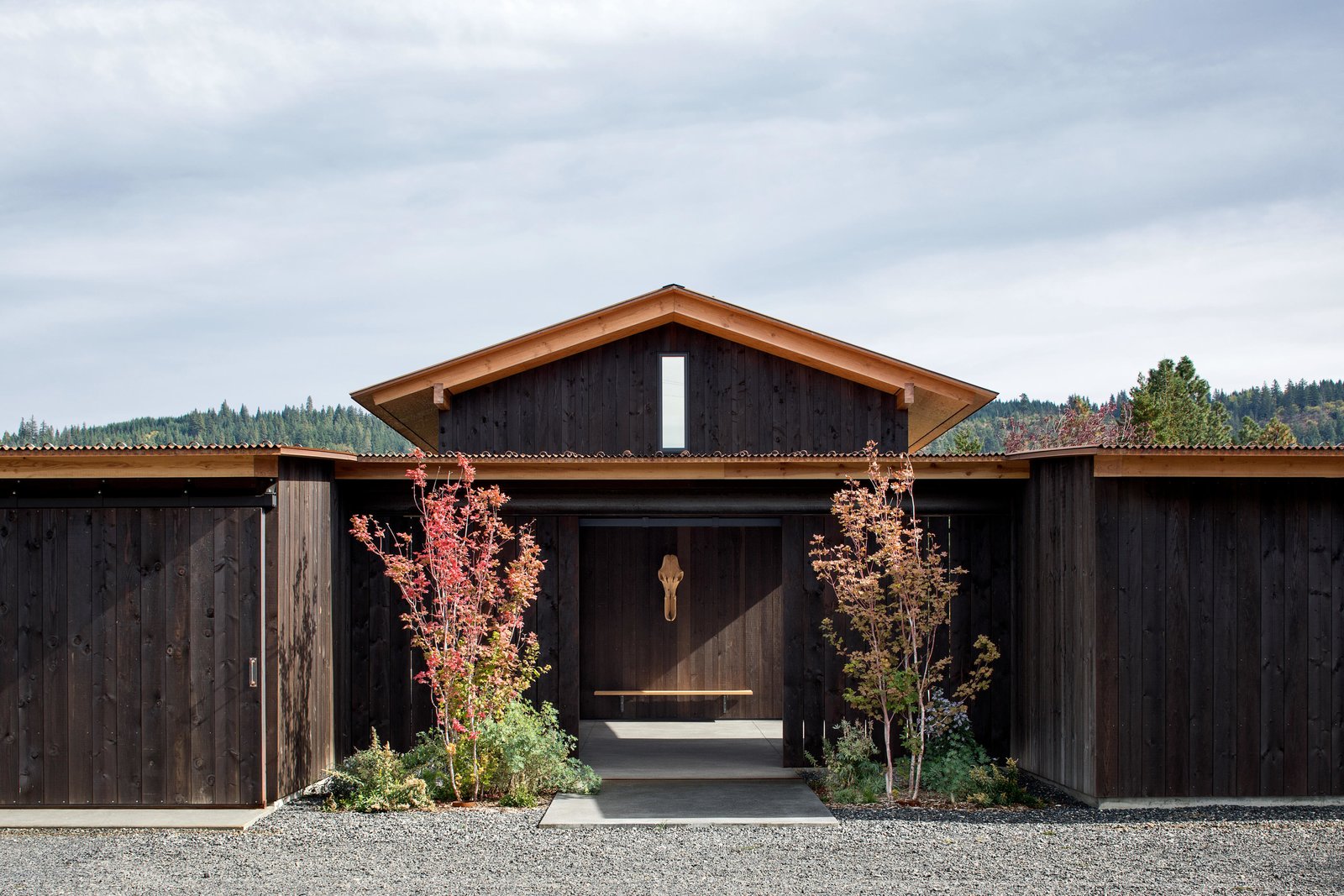
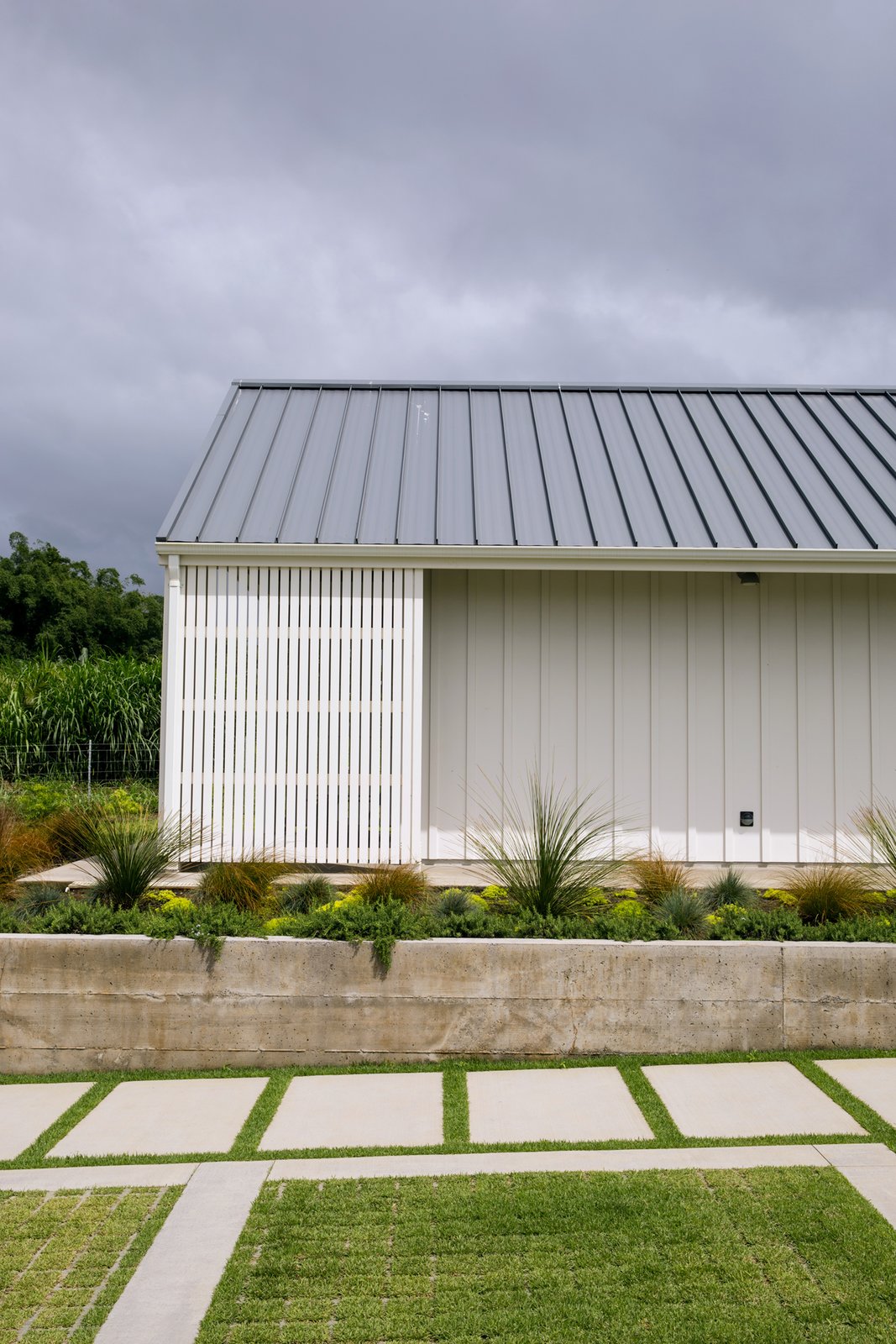
 The retreat contains four distinct buildings arranged in two groupings. The first grouping contains the main house, a woodworking shop, and a carport all contained under a single roof in a T-shape. A covered courtyard connects the three spaces in the middle of the “T”. A separate, free-standing artist studio is located just northeast of the main house, with a covered patio that connects to a guest room. Here, the owners work on their own projects, and occasionally host retreats and community-based arts workshops. In all four buildings, large bi-folding doors and sliding barn doors open up the spaces completely to the outdoors, allowing for the movement of large artworks and equipment, as well as an intimate connection with the environment.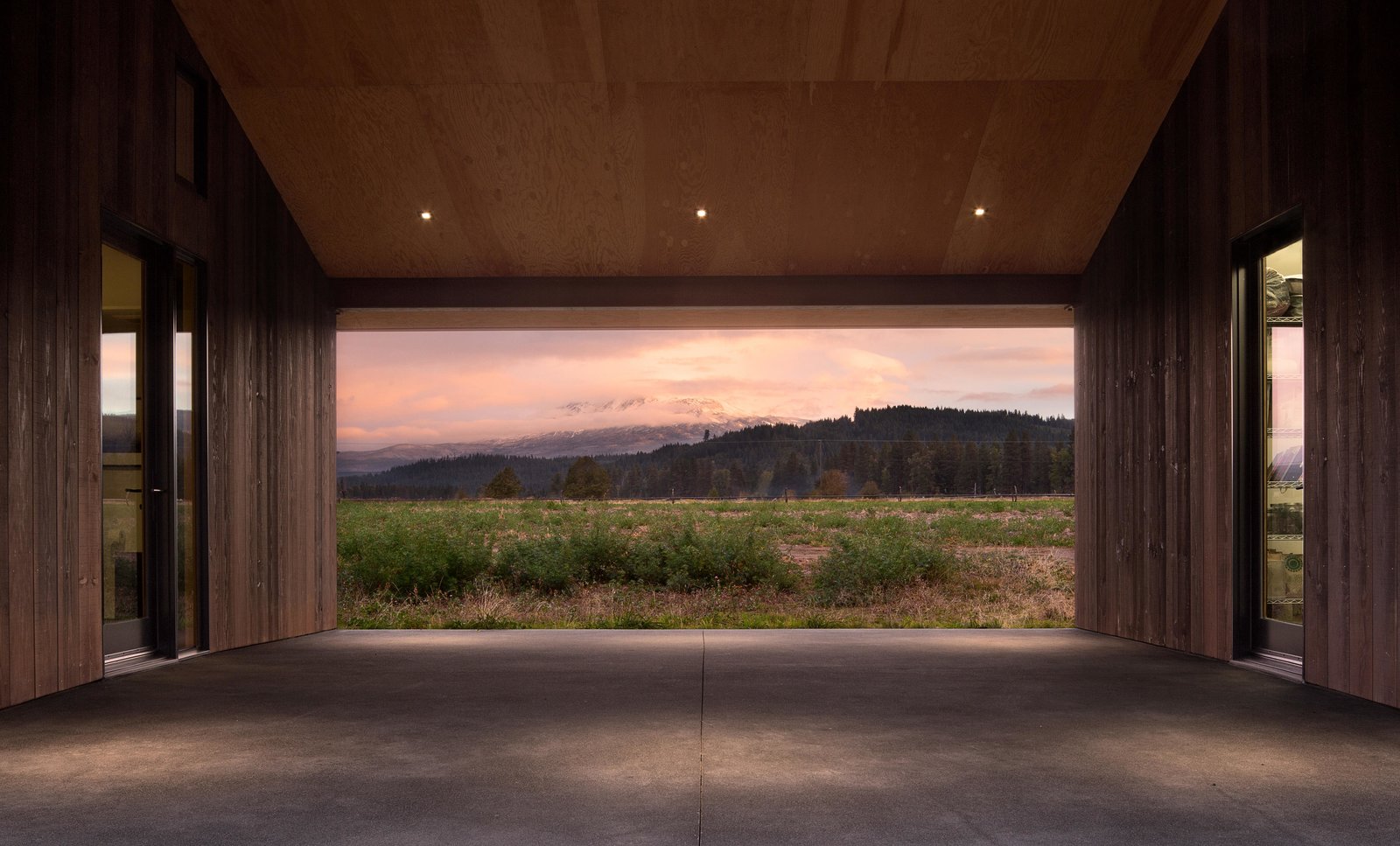
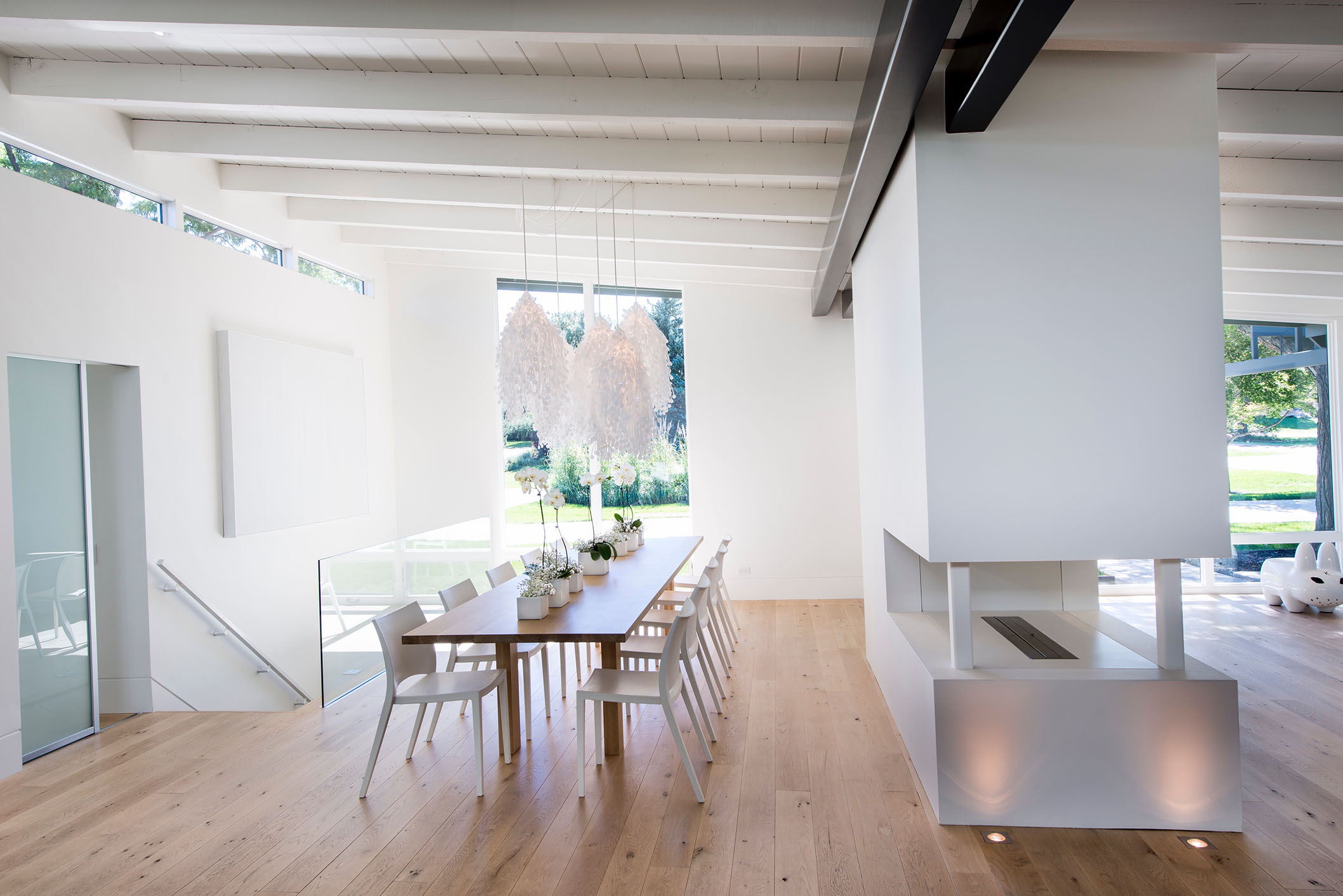
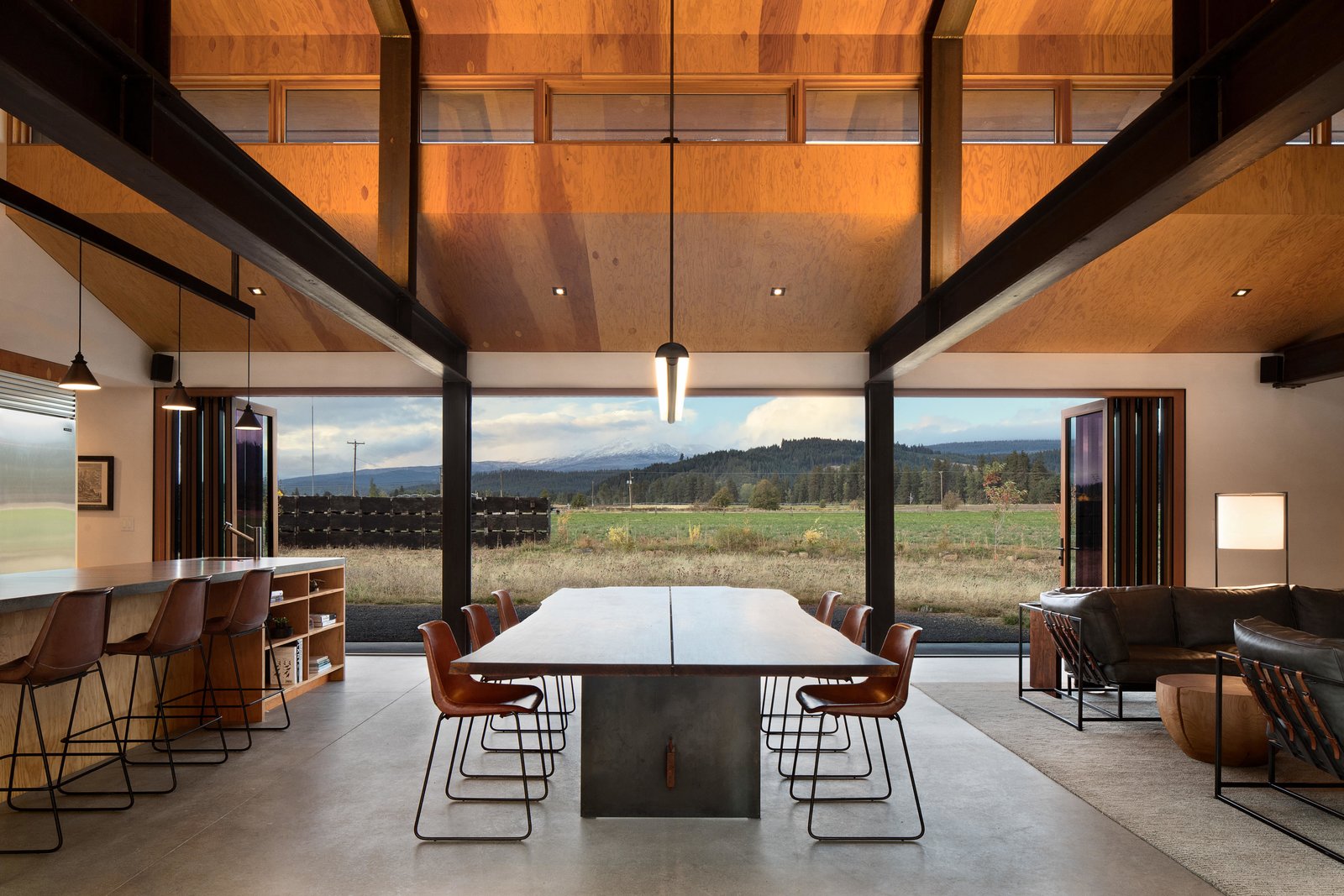
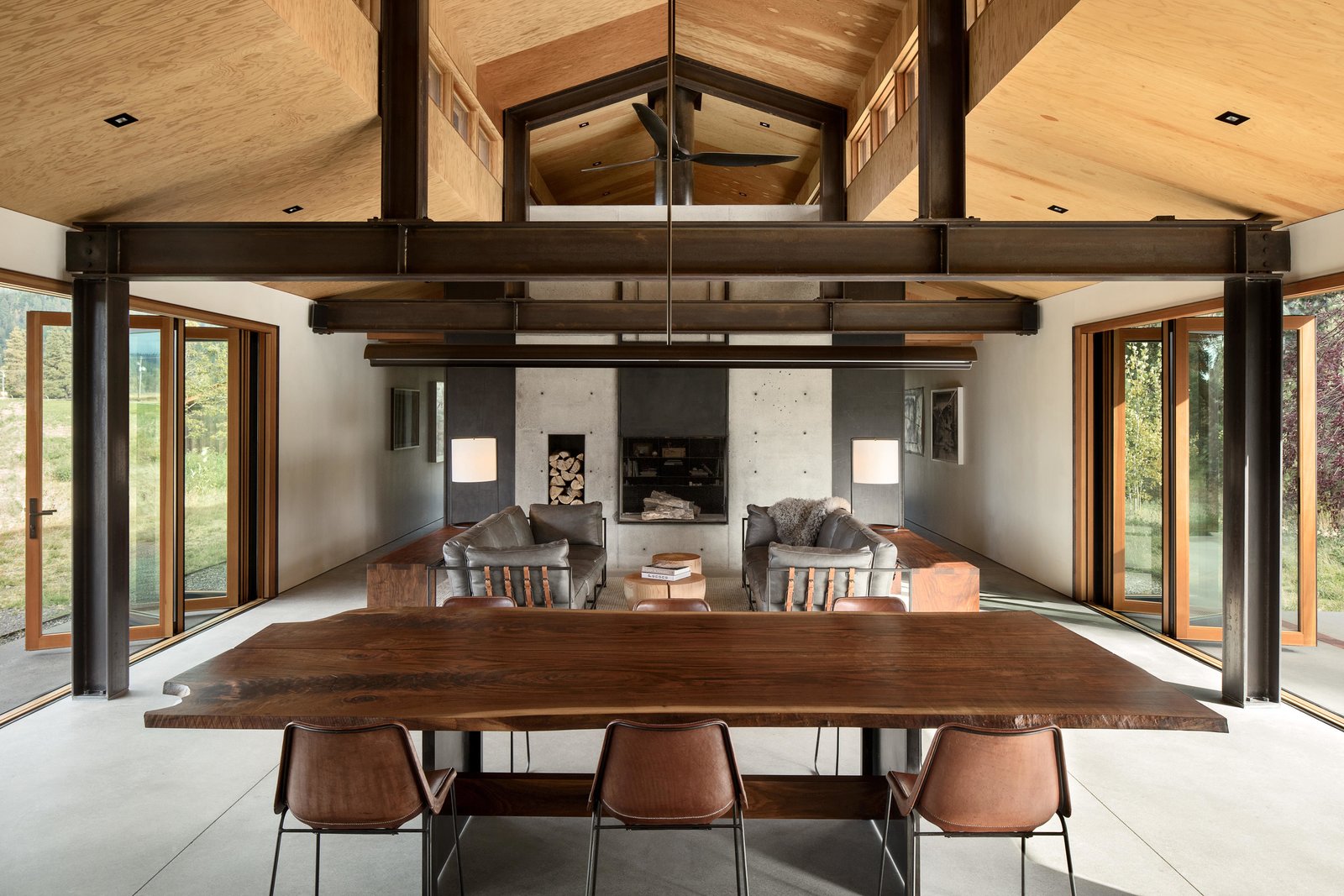
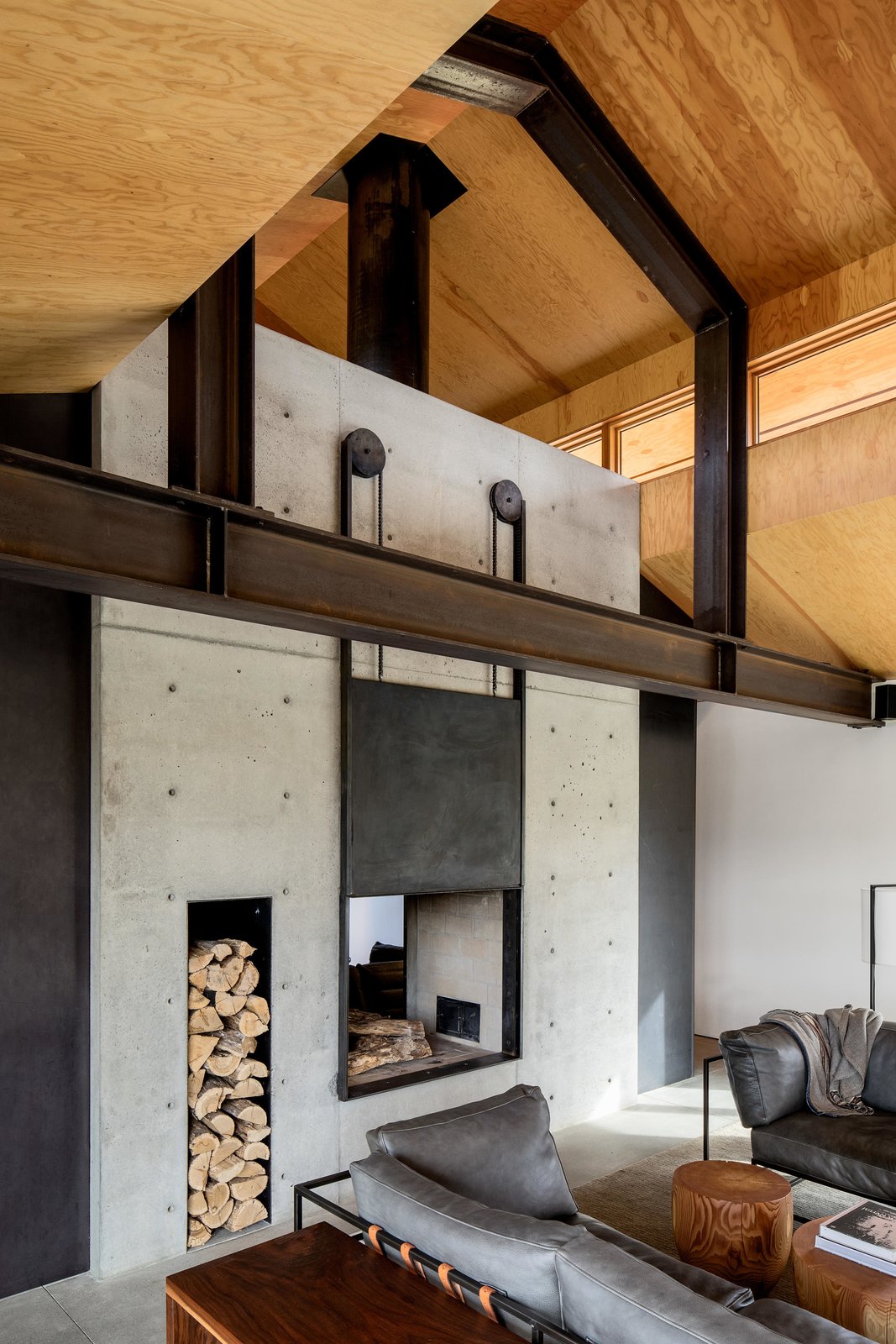
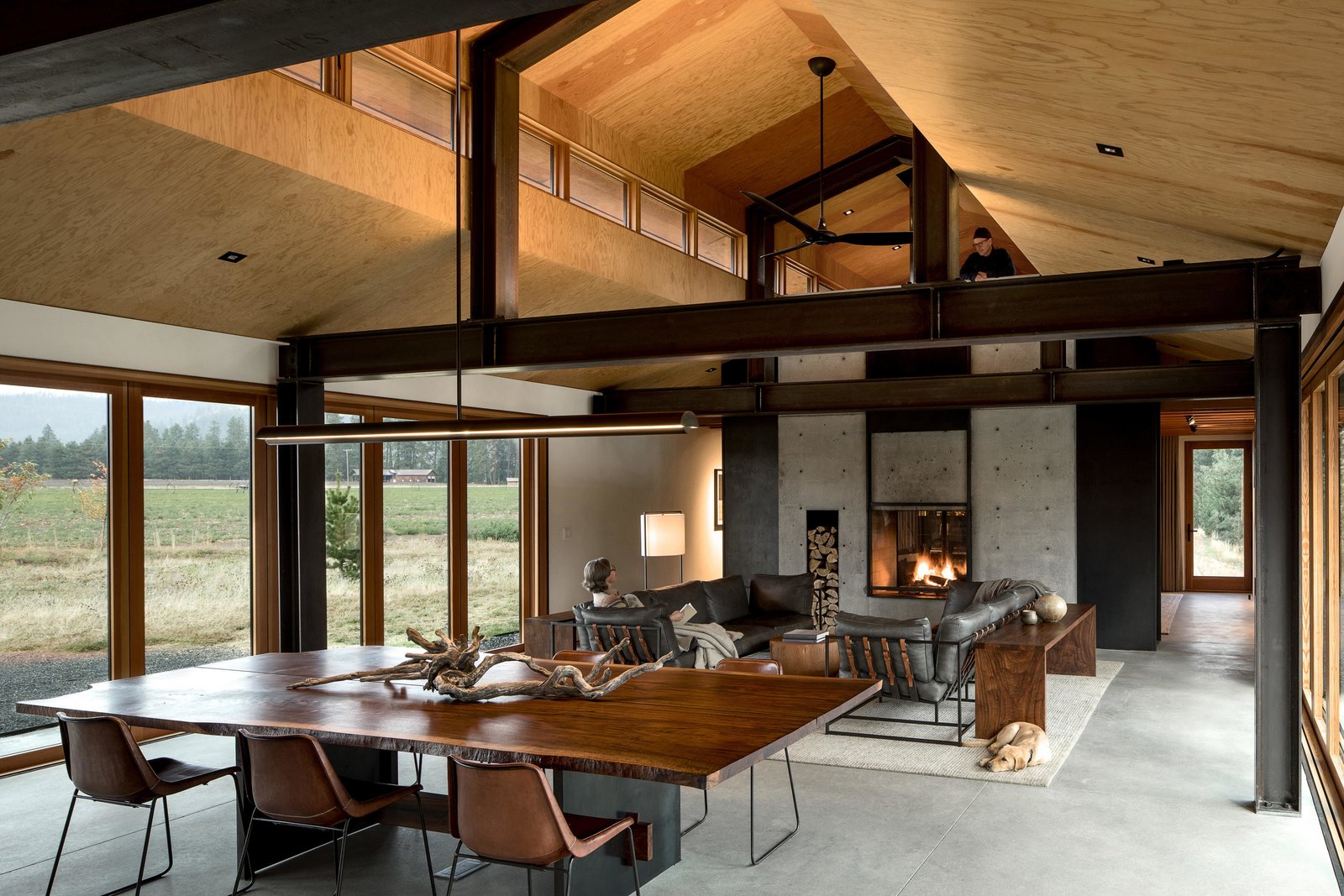
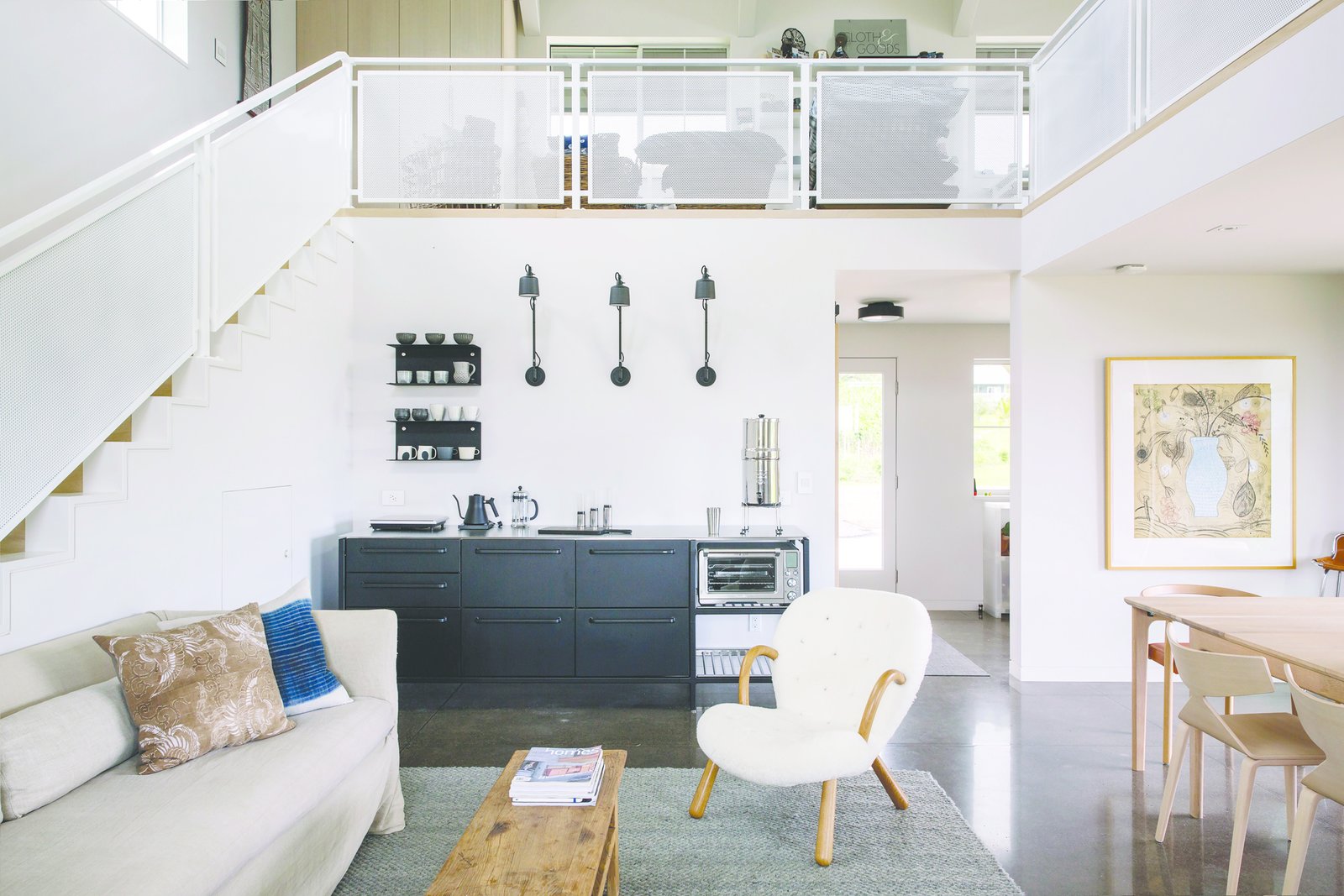
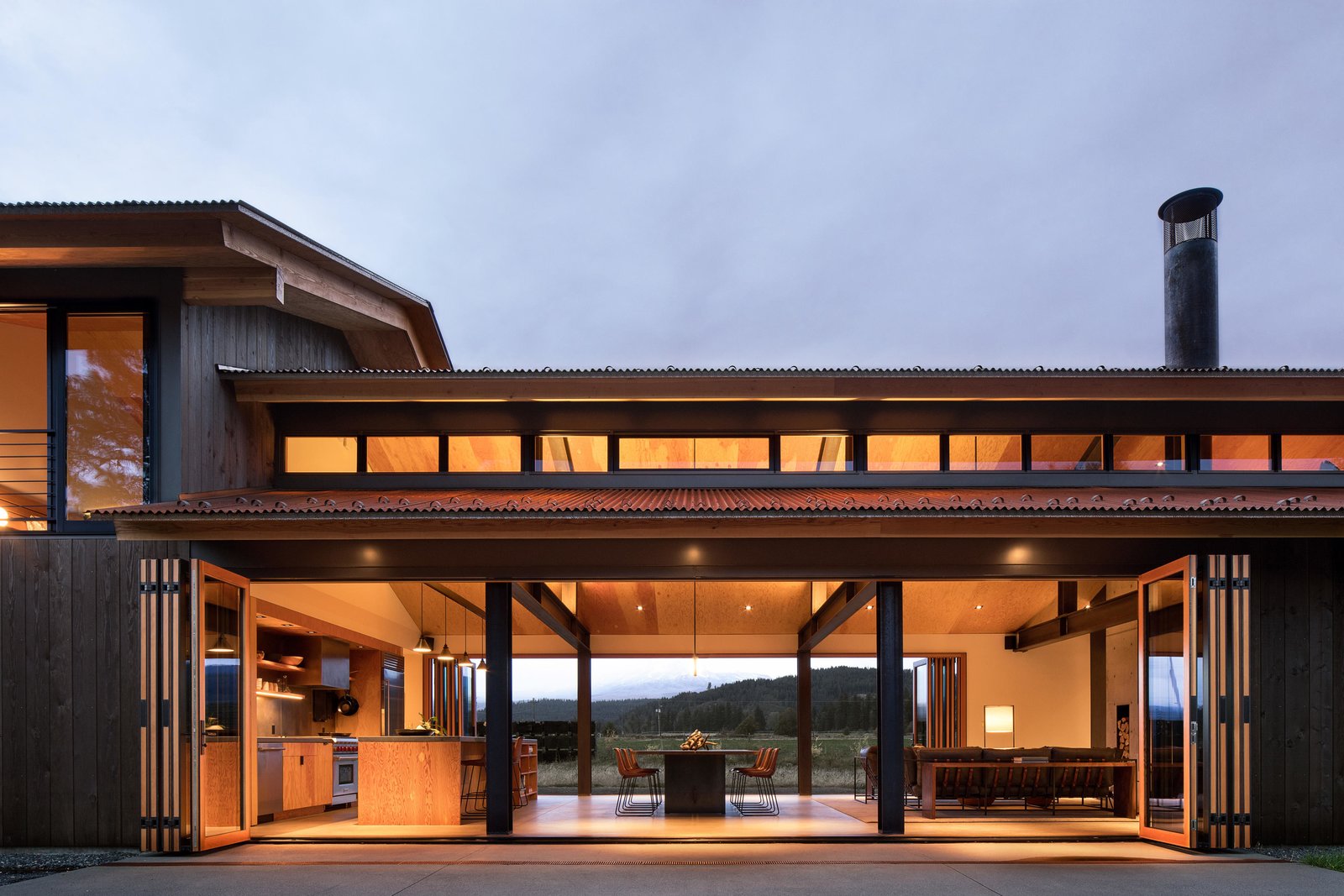 The main house is minimal in form, consisting of a single double height volume with an open plan living, dining and kitchen area separated from a library by a double-sided fireplace. A set of hidden steel stairs nestled into the concrete fireplace lead to a loft above the library. The home’s single bedroom is located above the bathroom and mudroom and is accessed via a set of open stairs in the entry foyer. Two sets of 30-foot-long bi-fold doors in the main living space allow the home to open completely on both sides, maximizing the home’s sweeping views of the nearby river and Mount Adams.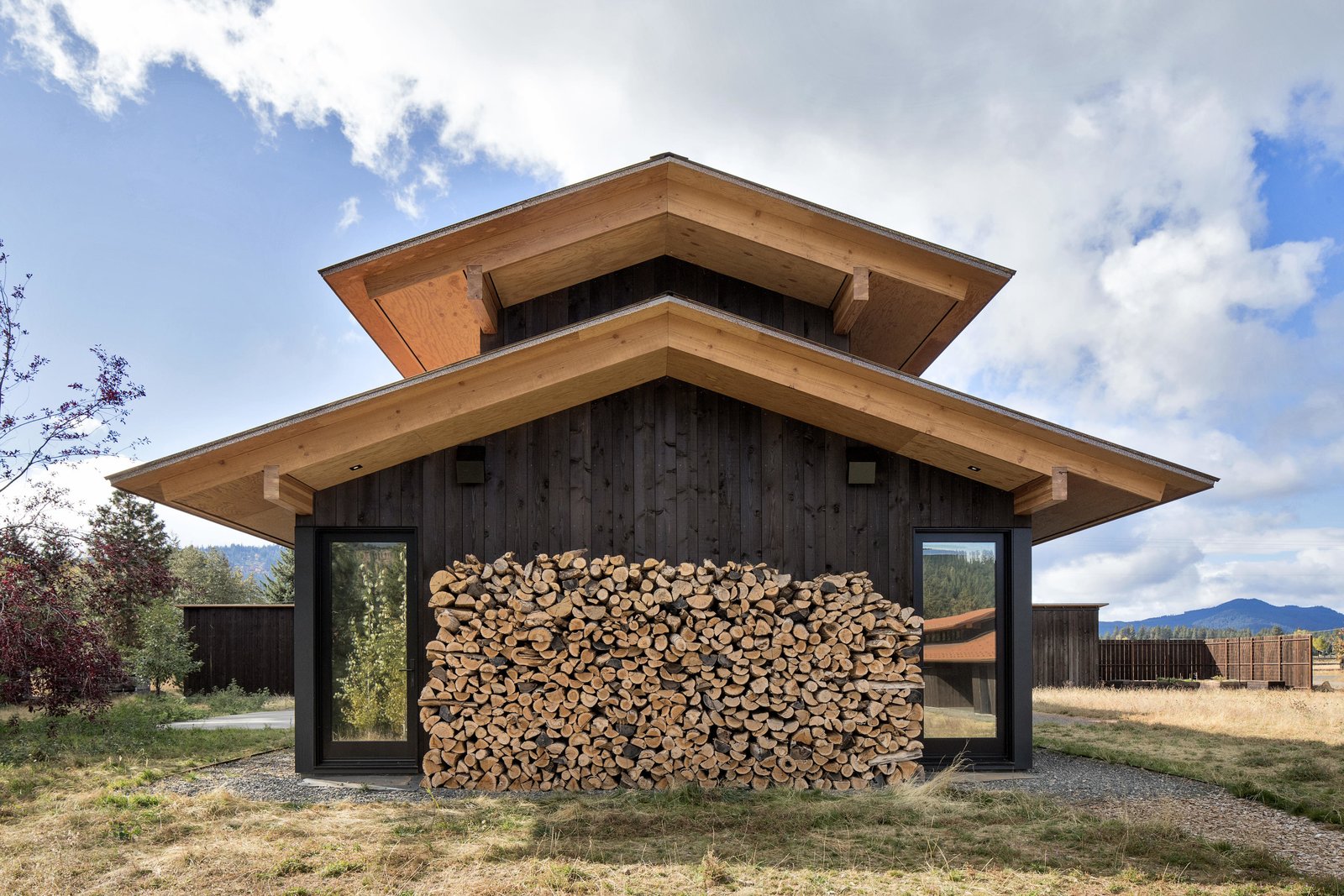

 Main Level
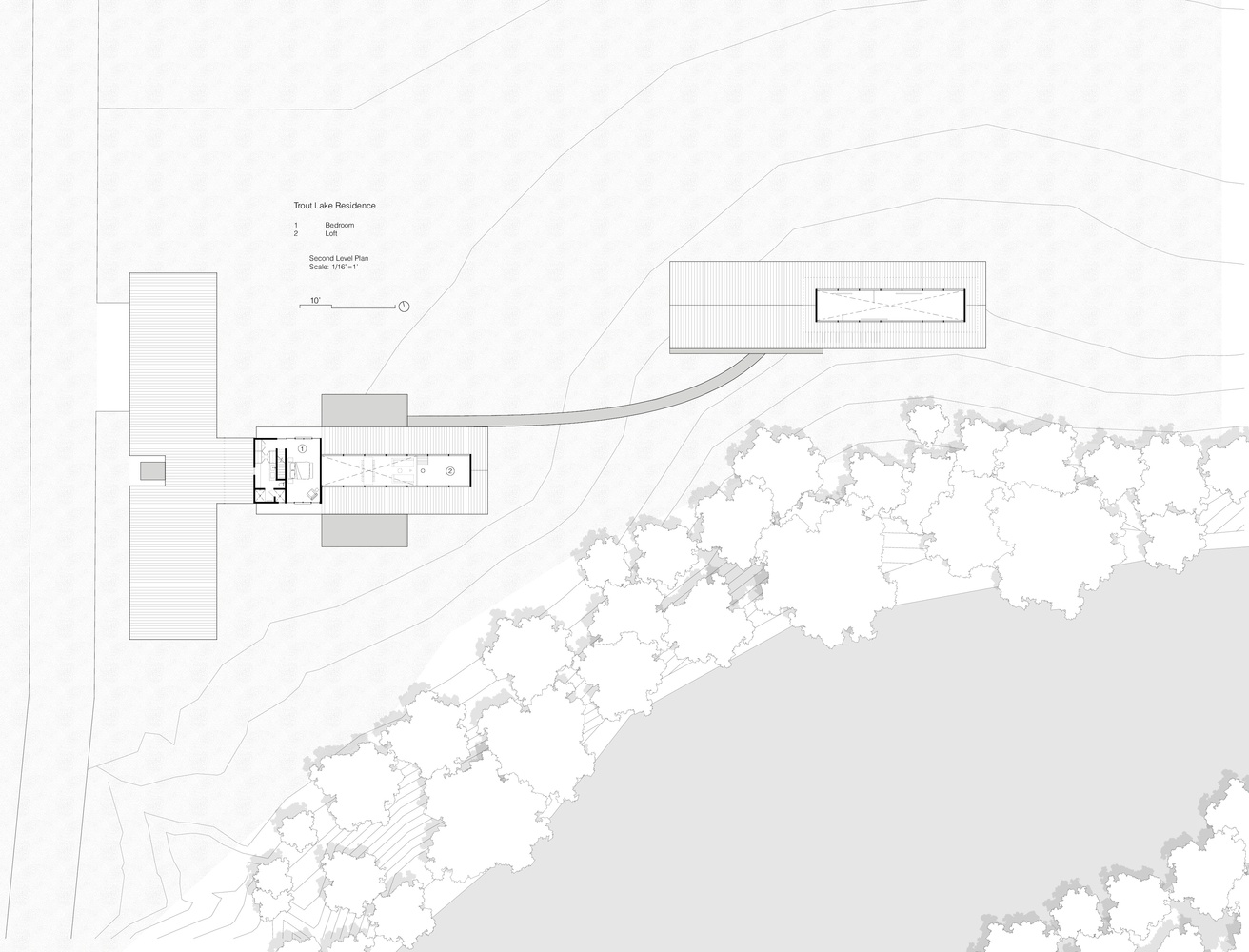 Second Level

 Photos by Ryan Siphers
 Beautiful Musings