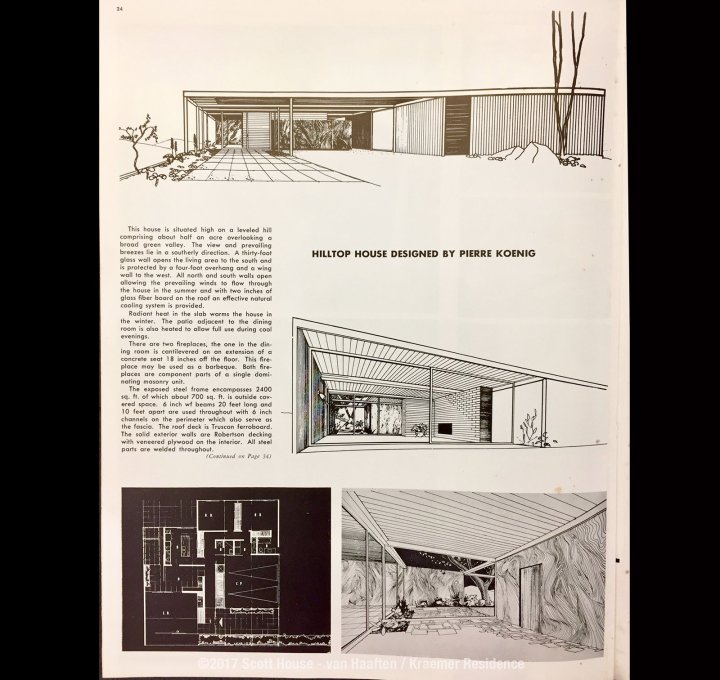
Designed by Pierre Koenig in 1954, this iconic L.A. house was carefully restored to pay homage to the Koenig’s distinctive style.
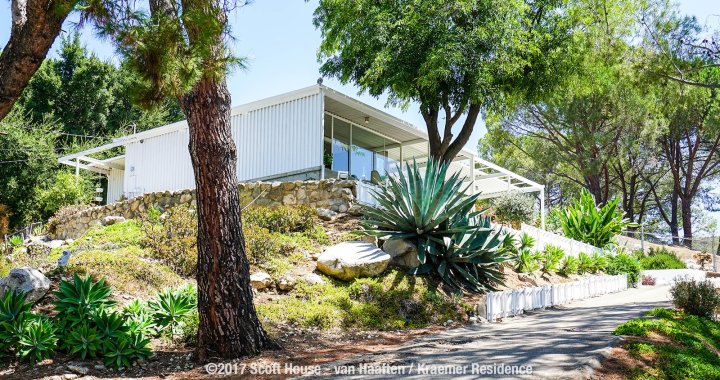
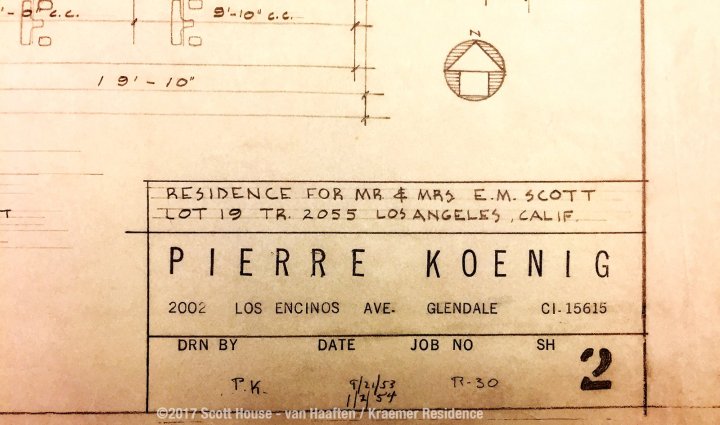
The Scott House in Los Angeles’ Tujunga neighborhood – the fourth house designed by American mid-century modern architect Pierre Koenig – was lovingly restored to stay true to its mid-century roots. The house was commissioned in 1953 by Edwin and Aurora Scott, a chemist and his wife who were looking for a home that would allow them to enjoy the indoor/outdoor lifestyle of Southern California. After purchasing a plot of land in Tujunga with 270-degree views of the city below, the Scotts set out to find an architect to design their home.
By chance, they drove past Koenig’s Case Study House #1 in Glendale, which Koenig was using as his own residence at the time. The Scotts were so impressed by the house, that they rang the doorbell, met Koenig, and asked him to design their new home.
In 2014, Nikolaus Kraemer and Heather van Haaften, a couple who are passionate about midcentury-modern architecture and furniture, purchased the Scott House from Aurora (who was 94 years old at the time) and sensitively restored it in a way that would reflect the property’s roots.
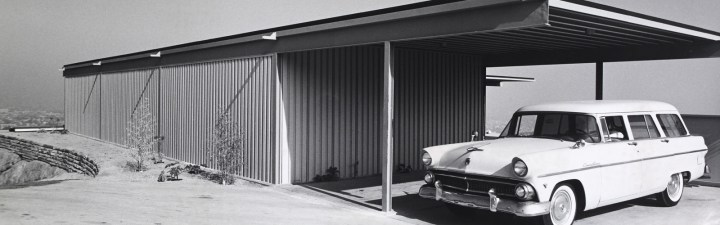
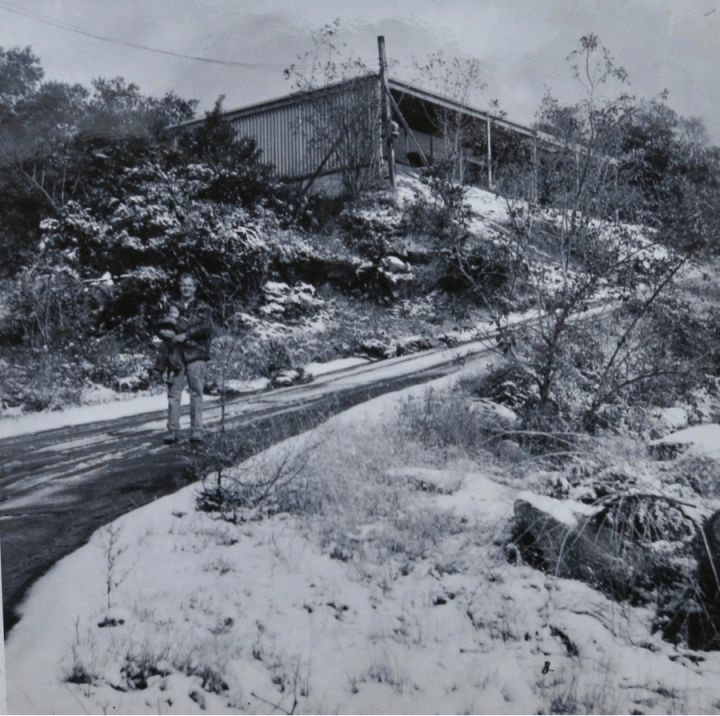 Edwin Scott and his son Mike in front of the Scott House in 1956.
“We knew of Koenig’s work when we first saw his iconic Stahl House. Heather and I were intrigued by his accurate rationale of steel being not just something you can ‘put up and take down,’ but a way of life,” says Nikolaus, who compares their serendipitous acquisition to “owning an original Warhol, Lichtenstein, or Ruscha.”
Though they were grateful to be able to purchase an iconic residence directly from its original owners—rather than one that had been altered by numerous people—the couple nonetheless had to invest a lot of time and effort in renovating and reviving the architectural gem.
“Midcentury-modern homes can suffer from too many ambitious owners trying to improve their homes. Mostly, these attempts do more harm than good, and can even distort the original design,” says Nikolaus.
The house’s flat-roof structure had substantial damage that needed to be addressed. A few years after the house was built, a leak developed in the roof, so Edwin Scott had poured a four-inch layer of light concrete on the metal roof panels.
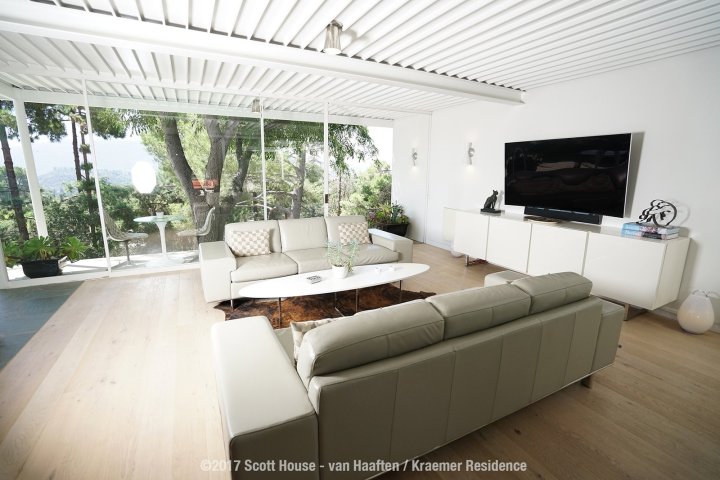
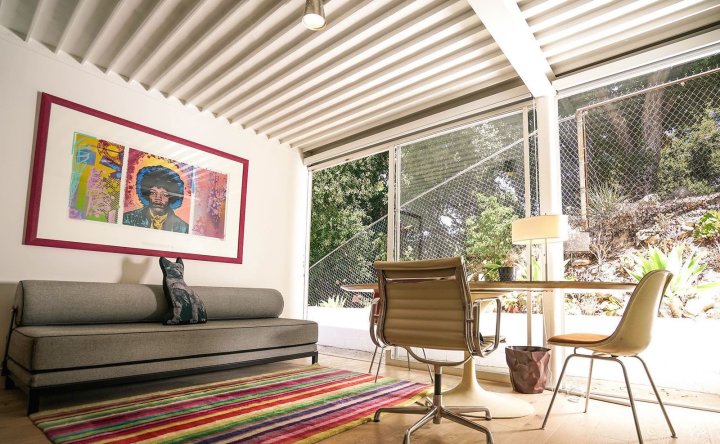
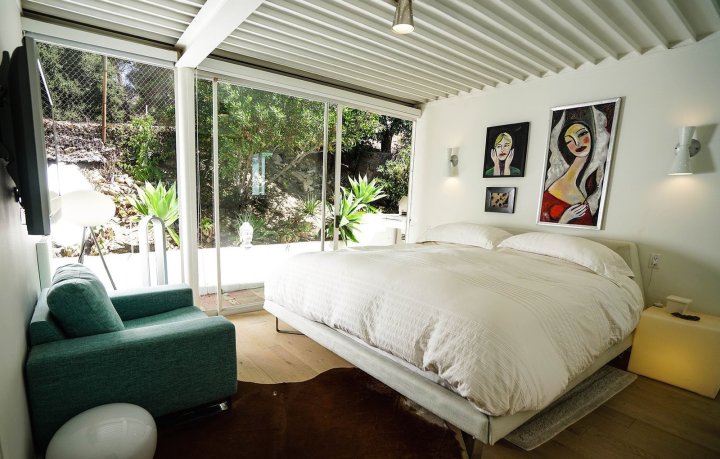
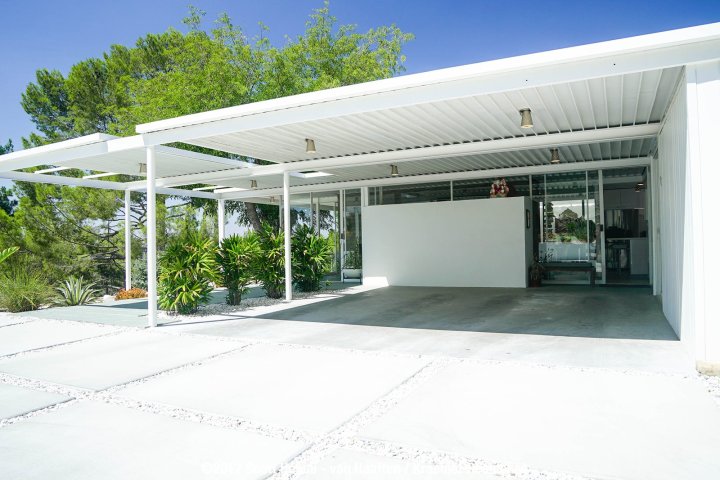
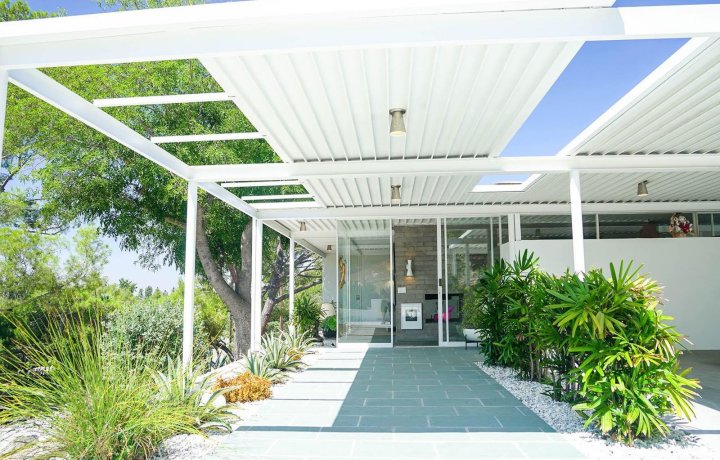
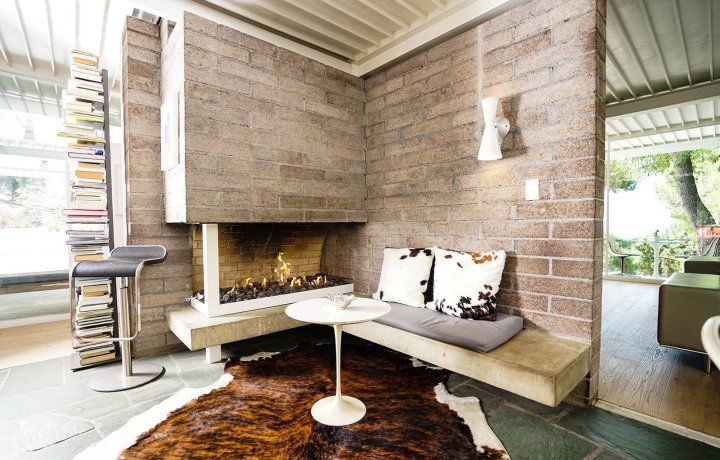
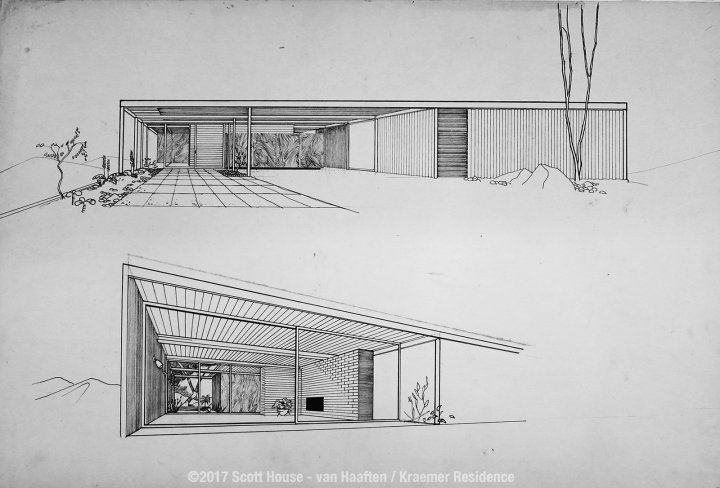
 Like many of Koenig’s Case Study Houses, the Scott House is an architecturally simple, L-shaped structure made up of straight, clean lines. Plenty of floor-to-ceiling glass walls link the interior spaces and visually connect the house with its surrounding environment. A bright and expansive central living area is anchored by a dividing wall and a two-sided fireplace. Sliding glass doors connect this central living space to other parts of the house. The kitchen connects to two dining zones: an indoor dining area with a small round table, and a larger “winter garden” dining space with a rectangular table. Full glazing on their exterior walls of the two bedrooms bring in tons of light and allow guests to feel a sense of being immersed in the outdoors.
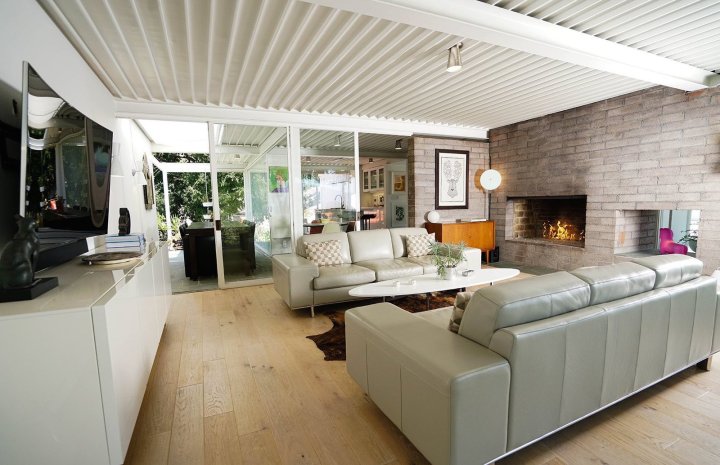
Nikolaus and Heather hired Urban Innovations, Inc. and MIM Construction Inc. to work on the renovation. When the project began, they discovered that the electrical and plumbing systems were also in bad condition.
“The roof was in such bad shape that our contractor Meir Manor from MIM Construction suggested it might be cheaper to replace Koenig’s signature metal ceiling rather than try to fix it. That, of course, was out of the question. Eventually, Manor and his team found an effective and affordable way to save the original roof by gluing zinc patches on top of the hundreds of holes, filling them up with Bondo, a putty that’s normally used as an anti-rust treatment for cars. He then sanded the entire bottom part of the ceiling to smooth it,” says Heather.
The construction team then rust-proofed the roof by painting it with two layers of heavy-duty primer and a coat of white paint. They replaced all the electric and plumbing systems, as well as the glass panels. They also upgraded the kitchen, bathrooms, floors, driveway, and lighting.
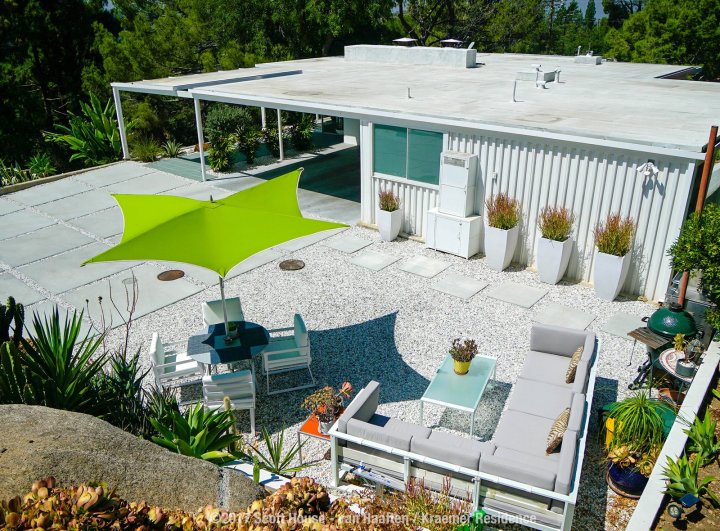
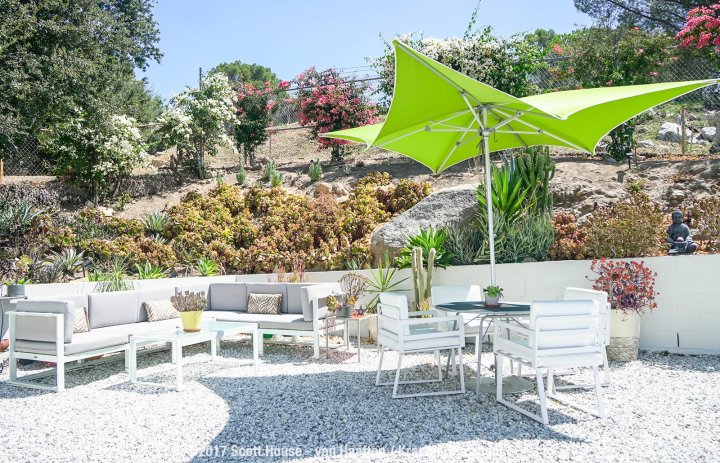
With many of its structural details still intact, the Scott House is an authentic example of Koenig’s architectural legacy.
“With the help of Urban Innovations, Inc. and MIM Construction, the home was brought back to its original state. It now represents the best of Pierre Koenig’s original plans and design, enriched with the amenities of a contemporary 2017 living standard.
 The image is instantly familiar; the house, all dramatic angles, concrete, steel and glass, perched indelibly above Los Angeles, with Hollywood’s lights resembling a circuit board below it. Inside, two women sit, stylish and relaxed, talking casually behind the monumental floor to ceiling glass walls. One of the world’s most iconic photographs,
 Buck was a former professional footballer who worked as a graphic designer and sign painter. He spent his first few years as a landowner hauling broken blocks of concrete to the site in attempt to improve its precarious foundation. He and Carlotta ferried their finds, load by load, back to Woods Drive in the back of Buck’s Cadillac, hopeful the reinforcements would prevent the land from sliding. Buck’s dreams for the house began to take shape over the following two years, and eventually, he made a model of the future Stahl House. His grand designs, however, were promptly rejected by several notable architects.
 Carlotta recalled Buck continually telling prospective architects “I don’t care how you do it, there’s not going to be any walls in this wing.” Until they hired Pierre Koenig in 1957, an ambitious young architect determined to build on a site nobody would touch, it seemed unlikely the house would ever exist. Pierre described the process of building Stahl House as “trying to solve a problem – the client had champagne tastes and a beer budget.” He was interested in working with steel, and despite being warned away from it by his architecture instructors, possessed great aptitude for it. He’d experimented with a number of exposed glass and steel homes before he created Case Study 21, or The Bailey House in 1958 and 1959, and his skill for designing functional spaces with simplicity of form, abundant natural light, and elegant lines would eventually make him a master of modernism. Stahl House, completed in 13 months and costing 37,500 USD, further demonstrated Pierre’s flair for working with industrial materials, particularly steel, glass, and concrete. The project put him on the map as an architect with an incredible eye for balance, symmetry, and restraint. The 2,040 m² house was, as Buck insisted, built without walls in the main wing to allow for sweeping 270º views. Three sides of the building were made of plate glass, unheard of in the late 1950s, and deemed dangerous by engineers and architects. This design feature required Pierre to source the largest pieces of glass available for residential use at the time. With two bedrooms, two bathrooms, polished concrete floors, and a very famous swimming pool (a fixture in countless films and fashion editorials) Stahl House was an immediate mid century icon.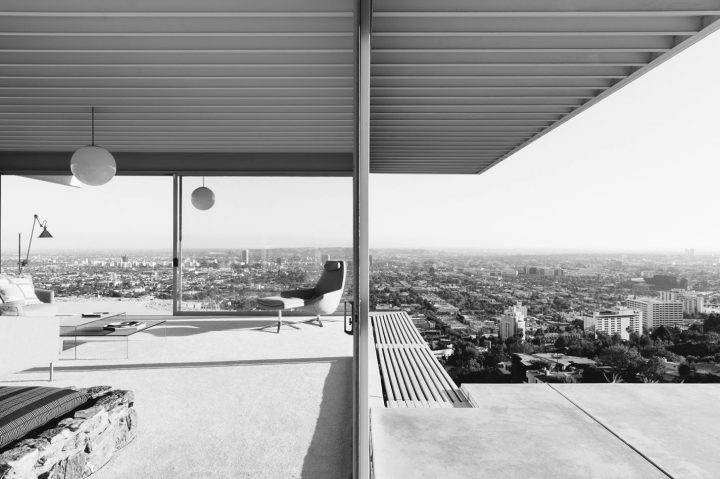


 Beautiful Musings