The Little Turtle
a non other than a….Terapin. A true reminder that
Beautiful conversations, people, places, design+photography
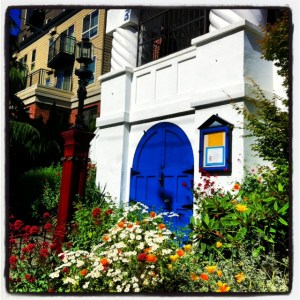
The beautiful St. Spiridon Russian Orthodox Cathedral
remains in the Cascade Neighborhood.
I adore this store Totokaelo and especially this black bag.
I love this simplicity and quality materials.
Check out their blog, well worth a few moments
out of the day to admire.

Black tote by Totokaelo, Capitol Hill
Seattle, WA
This week I will be meandering through the disappearing Cascade Neighborhood in Seattle documenting what’s left of it before it’s swallowed up by Amazon and development by Vulcan Real Estate. Cascade is slowly losing its identity as a neighborhood distinct from the rest of South Lake Union as Amazon expands and Paul Allen’s vision of the area comes to fruition. Only a few of the older residential and light industrial structures of historic Cascade retain their original uses today; the historic Immanuel Lutheran Church and St. Spiridon Russian Orthodox Cathedral remain. Elsewhere around South Lake Union the picture is similar. Although there are few new gems on the block (I will highlight them), and quite a few older buildings survive, few retain their historic uses.
Amazon has recently announced it will spend over $1 billion to purchase its South Lake Union corporate headquarters. Next month, the Seattle City Council will undoubtedly pass new zoning rules for South Lake Union that will allow companies like Vulcan Real Estate to build taller buildings. In the center of all this is The Cascade Playground (now also known as Cascade Park), originally the playground of the now-demolished Cascade School. Sharing a city block with the playground and P-Patch is the Cascade People’s Center, a volunteer organization that partners with over 100 businesses, churches, organizations, and community groups to address advocacy for social and economic justice. It will be interesting to see how this wonderful little neighborhood survives and if it can maintain its charm and authenticity. Meanwhile I’ll enjoy the visuals where past meets present and future.

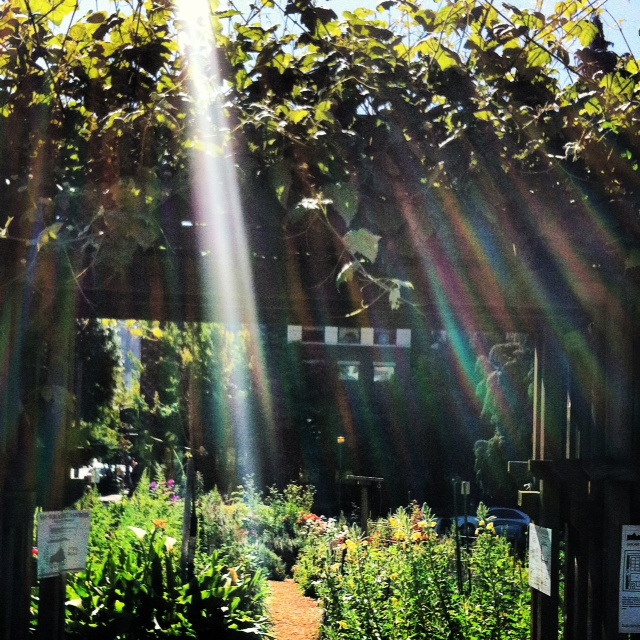
Entrance to the Cascade P-Patch. Delightful community
garden to walk through in the middle of an urban area
home to one of the largest global companies Amazon.com.

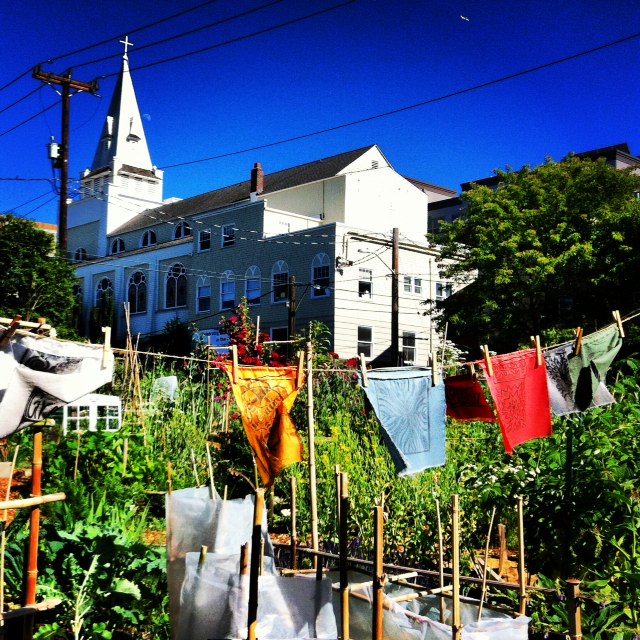
Creative scarecrows dot the p-patch landscape.

Cascade Playground+P-Patch with historic
Immanuel Lutheran Church.
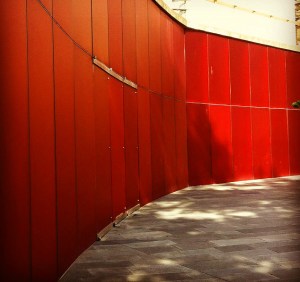
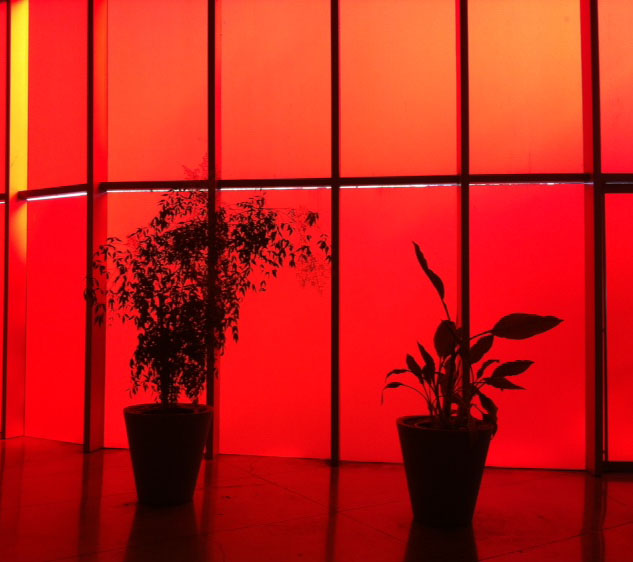
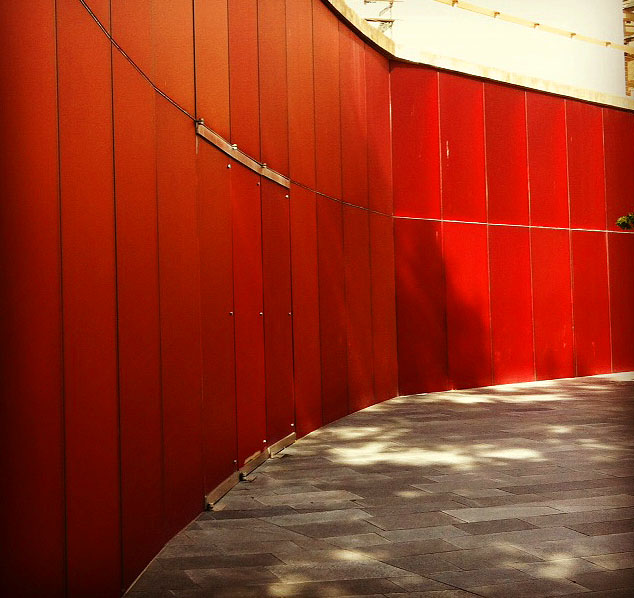
There is no denying the power of RED.
Seattle City Hall has these fantastic red doors
that dazzle in sunlight. The first two images are
taken from inside; the third image is an exterior view.
Awesome indeed.

Red is the color of fire and blood. Hebrew words for blood and red have the same origin: “dm” means red and “dom” means blood. Blood and fire have both positive and negative connotations: bloodshed, aggression, war, and hate are on one side, and love, warmth and compassion on the other side. In ancient Egypt, red was the color of life and of victory. During celebrations, Egyptians would paint their bodies with red ochre. The normal skin tone of Egyptian men was depicted as red, without any negative connotation.
Ancient Greeks associated the bright, luminous red with the male principle. Red was also the color of the Greek gods of war, Phoebus and Ares. In prehistoric cultures, however, red was associated with the female principle. Mother Earth provided the Neolithic peoples with red ochre, which was credited with life-giving powers. The association of the red color with the female principle in Japan survives to the present day.
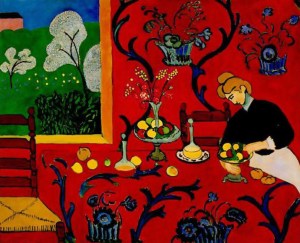
Henri Matisse, The Dessert: Harmony in Red, 1908

Piet Mondrian, Composition Red Yellow Blue, 1919
The oldest pigment was probably red ochre, which was used in cave art. The ancient world had red madder lake, artificially-made red lead, and vermilion (natural mineral cinnabar). Artificially-made vermilion was the most prominent red pigment until the manufacture of cadmium red in 1907.